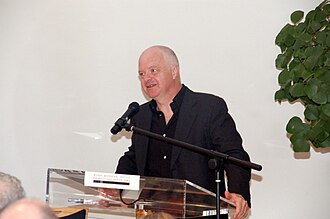
[The Van Pelt Report]: Electronic Edition
by Robert Jan van Pelt · edition 2003
Preface
1. The purpose of this report
This report is prepared for the purposes of assisting the Court in providing an expert opinion on the issue of David Irving's statements about Auschwitz, its gas chambers and incineration facilities, and its role in the so-called Final Solution of the Jewish Problem, pursuant to the Order of Master Trench dated 15 December 1998 directing that each party may adduce expert evidence to address relevant issues in the proceedings
2. My qualifications and expertise
I am a Professor of Architecture in the School of Architecture, University of Waterloo, Waterloo, Canada. I have been teaching at this university since 1987, when I was appointed as Assistant Professor of Architecture after an open and international search. In 1991, after a thorough internal and external peer review of the quality of my teaching and scholarship, I was tenured and promoted to Associate Professor. In 1996, after a thorough internal and external peer review of the quality of my scholarship, I was promoted to Full Professor.
I have earned all the usual academic qualifications necessary for a senior academic position at a major research university. I hold a Doctorate in the History of Ideas, the Dutch equivalent of a Master's degree in the History of Architecture, and the Dutch equivalent of a Bachelor's degree in Classical Archeology and the History of Art--all from the University of Leiden, Leiden, The Netherlands. I am the recipient of a major, internationally recognized academic award, given on the basis of scholarship.
I am the author or co-author of five academic books, one of which (critically acclaimed and translated into two other languages) directly deals with the history of Auschwitz, and another which deals with the historiographical implications of the history of Auschwitz. I have also contributed chapters in thirteen other academic books, three of which deal with Auschwitz and one with the Holocaust. I am the (co-) author of eleven peer-refereed articles in journals and conference anthologies, four of which deal with Auschwitz, and eighteen non-refereed articles, five of which deal with Auschwitz. My work on Auschwitz has been the subject of one BBC documentary, and was featured in one movie. It has been discussed in articles and has been made the object of historiographical discussion and even extended philosophical meditation. I have spoken about Auschwitz at 20 academic conferences, and more than 50 universities, colleges, academies, research libraries and other institutions of (higher)learning in North America, Europe and Israel. In all of these contributions to our knowledge of Auschwitz and the Holocaust, both written and spoken, I have substantiated all my claims and conclusions with solid empirical evidence.
My book on Auschwitz has been given two major awards, and has been positively reviewed by well-known historians in many of the leading newspapers, magazines and scholarly journals in North America and Europe.
I am the Director of the collaborative that was commissioned by several Jewish organizations to produce a Master Plan for the future preservation and management of Auschwitz.
I began to study the history of Auschwitz in a more general way in 1987, and I have undertaken systematic primary research into the history of Auschwitz since 1989. Since that year, I have visited Auschwitz for research purposes almost yearly, staying for longer or shorter times.
3. Material instructions
This report has been prepared on the instructions of Davenport Lyons and Mishcon de Reya, the First and Second Defendants solicitors respectively (my "Instructing Solicitors"). I received both written and oral instructions which consisted of a conversation held at the offices of Mishcon de Reya on 24 February, 1998, a letter received from Mishcon de Reya dated June 9, 1998, and a letter received from Davenport Lyons dated August 21, 1998.
In the letter from Mishcon de Reya,my task was described as follows: “You will be submitting a report on the gas chambers and exterminations at Auschwitz which will show that what Irving says about the camps in this respect is untrue.” The contract for my work on the matter, which took the form of a letter from Davenport Lyons dated August 21, 1998, stated that there were five points of contention, two of which--(i) and (ii)-- directly concern my own expertise: The Defendants seek to justify the following:-- “(i) That Irving has on numerous occasions denied the Holocaust -ie the systematic extermination of Europe's Jewish population by the Nazis -and denied that gas chambers were used by the Nazis as a means of carrying out that extermination; (ii) That he holds extremist views and has allied himself with others who do so, including individuals such as Dr Robert Faurisson,and Ernst Zü;ndel; ” After having established that the "[t]he burden of proof is on the defendants," the letter continued as follows: “We would like to engage you to be one of the Defendants' team of experts. Your role will be to provide a written report on the aspect(s) of the case within your area of expertise as instructed by us. You will obviously liaise with Richard Evans who is co-ordinating the expert team. You are specifically asked to provide a report in relation to the true numbers of Jews killed by gassing at Auschwitz and elsewhere, demonstrating that these numbers have been falsified by Irving and that Irving's denial of mass gassings and of the existence of gassing facilities at Auschwitz and elsewhere is a falsification or distortion of history.Also to show that the supposed "scientific" evidence presented by Irving is false or misleading.” I accepted this description of my task by countersigning the two copies of the letter, returning one to Davenport Lyons.
This report addresses the issues raised in the letters of Mishcon de Reya and Davenport Lyons. It particularly addresses the core issues under dispute listed under sections 1 and 2 of the "Defence of the Second Defendant," and in Irving's "Reply to Defence of Second Defendant." It will demonstrate that there were gas chambers in Auschwitz, that there is wartime archival evidence for this, that the silence in the SS ciphers about the gassings does not mean they did not take place,and that the absence of "one million cadavers ...produced by killing operations at Auschwitz" does not point at the absence of the crime--as Irving argues in his "Reply to Defence of Second Defendant"--but to the efficiency of the crematoria.
4. Relevant documentation in the action
I have been given access to the following documents which have come into the Defendants 'possession in the course of this litigation or have been created for the purposes of this litigation:
- (a) The pleadings:
- (i) the Statement of Claim served on 5 September 1996;
- (ii) the Defences of the First and Second Defendants served on the 12 February and 18 April 1997 respectively;
- (iii) the Reply to both Defences served on the 19 April 1997.
- (b) Documents disclosed by the Plaintiff pursuant to his discovery obligations: various documents from the Plaintiff's various Lists of Documents as referred to in the footnotes to this report.
5. Relevant material and opinions
- (a) The relevant material on which I have based my report and conclusions is detailed in the footnotes to my report.
- (b) The material relating to the history of Auschwitz is derived from various evidential historical sources which can be categorized as follows:
- (i) contemporaneous documents such as letters, blueprints, minutes of meetings held in the Auschwitz Central Construction Office, budgets, contractors' bids, requests for material allocations, invoices, and so on, which are found in the archive of the Auschwitz-Birkenau State Museum in Oswiecim, the Osobyi archive in Moscow (this collection has been microfilmed, and is available in microfilm format at the United States Holocaust Memorial Museum in Washington D.C.), and the German Federal Archive in Koblenz;
- (ii) unpublished transcripts of the trials of (a)Rudolf Höss, held in Warsaw in 1947; (b)the Auschwitz architects Walther Dejaco and Fritz Ertl, held in Vienna in 1972;
- (iii) published transcripts of the trials of (a) Josef Kramer and others held in Lüneburg in 1945; (b) Hermann Goering and others held in Nuremberg in 1945 and 1946; (c) Adolf Eichmann held in Jerusalem in 1961; (d) Mulka and others held in Frankfurt in 1963, 1964 and 1965;
- (iv) contemporary newspaper articles, magazine articles and other publications reporting on the situation in the concentration camps;
- (v) contemporary documents and reports,such as the Vrba-Wetzlar report or the transcripts of the Höss interrogations in Nuremberg, published after the war in edited collections;
- (vi) memoirs, such as the autobiography of Rudolf Höss, written and published after the war;
- (vii) academic historical studies published after the war.
- (c) The material relating to Holocaust Denial in general, the Faurisson Affair, the Zündel Trial and the Leuchter Report is derived form various evidential historical sources which can be categorized as follows:
- (i) contemporaneous documents such as letters that became available in Irving's Further Discovery;
- (ii) unpublished transcripts of the trials of Ernst Zündel held in Toronto in 1985 and 1988;
- (iii) the published writings of Holocaust deniers like Paul Rassinier, Robert Faurisson, Arthur Butz, Thies Christophersen, Wilhelm Stäglich, and Fred Leuchter;
- (iv) contemporary newspaper articles, magazine articles and other publications reporting on Holocaust denial;
- (v) published academic studies of Holocaust denial.
- (d) The material relating to David Irving's engagement with Auschwitz, the Holocaust, Holocaust Denial in general, the Zü;ndel Trial, and the Leuchter report is derived from various evidential historical sources which can be categorized as follows:
- (i) contemporaneous documents such as letters, audiotapes and videotapes that became available in Irving's Further Discovery;
- (ii) unpublished transcripts of the trial of Ernst Zündel held in Toronto in 1988;
- (iii) the published writings of Irving;
- (iv) contemporary newspaper articles, magazine articles and other publications reporting on Irving;
- (v) published academic studies of Holocaust denial. In my research, I have considered that there is a hierarchy of reliability in respect of these categories of sources which I have taken into account when preparing this report. The most important reliable source is contemporaneous documents and the published and unpublished trial transcripts. The reliability of the rest of the categories depends on the context in which they have been produced, organized or extracted. I have avoided any over reliance on one evidential source.
I have taken into account the fact that archival records are invariably organized and structured in a particular way when they are first put together and are necessarily set up to serve a particular purpose. The reliability of oral evidence depends on their distance in time from the event they are recalling, their role in the particular event, the interests of the witness in giving his or her account of the event and of the interlocutor in recording the account. I know that historians may be predisposed to accept the information uncritically in order to show that they have made a new discovery,and have tried to consider the evidence in its context, having put aside all political or personal persuasions.
INTRODUCTION
(In color): We are moving at a walking pace across a verdant landscape; a blue sky filled with fluffy clouds.
[Narrator:] "A peaceful landscape ..."
Barbed wire nailed to high wooden posts. Then moving along another field; a cottage on the horizon; birds take wing.
"An ordinary field with flights of crows, harvests, grass fires."
Moving along another fence, the wires severed and limp.
"An ordinary road where cars and peasants and lovers pass."
Moving past abundant grass in bright sunlight. Two walls of wire appear, weeds growing high between them, a watchtower in the distance.
"An ordinary village for vacationers--with a marketplace and a steeple--can lead all too easily to a concentration camp."
A camp today, surrounded by wires and posts cutting across the field.
"Struthof, Oranienburg, Auschwitz, Neuengamme, Belsen, Ravensbruck and Dachau were names like any others on maps and in guidebooks."
Still moving, a closer view of the maze of wires, with weeds growing around the fence posts.
"The blood has dried, the tongues are silent. The blocks are visited only by a camera. Weeds have grown where the prisoners used to walk. No footstep is heard but our own."
The following pages aim to assist the Court in gaining insight in the complex spectrum of issues embodied in the proper name "Auschwitz," and the nouns "Holocaust," and "Holocaust Denial," and seek to establish the way David Irving has engaged this nexus, concentrating on the decade 1987 to 1997. The report attempts to provide material and a consideration of that material that can allow us to answer what I see to be the central issue at stake in the complaint of the plaintiff against the defendants where it concerns my own expertise. This can be summarized in the folowing 10 questions:
- (i) Has it been proven beyond reasonable doubt that Auschwitz was equipped with homicidal gas chambers, and has it been proven beyond reasonable doubt that these gas chambers were systematically used?
- (ii) Has it been proven beyond reasonable doubt that Auschwitz functioned between the summer of 1942 and the fall of 1944 as an extermination camp for Jews?
- (iii) Has it been proven beyond reasonable doubt that most of the Jews who arrived in Auschwitz were murdered shortly after their arrival in the aforesaid gas chambers?
- (iv) Has it been established beyond reasonable doubt how many Jews were killed in the gas chambers upon arrival in Auschwitz, how many Jews were killed or died from the effect of incidental cruelty, general deprivation, exhaustion or disease whilst in the camp, and how many others died in the camp as the result of various causes?
- (v) Did David John Cawdell Irving deny that Auschwitz had homicidal gas chambers and that these gas chambers were systematically used?
- (vi) Did David John Cawdell Irving deny that Auschwitz functioned between the summer of 1942 and the fall of 1944 as an extermination camp for Jews?
- (vii) Did David John Cawdell Irving deny that most of the Jews who arrived in Auschwitz were murdered shortly after their arrival in the aforesaid gas chambers?
- (vii) Did David John Cawdell Irving deny, without having done any serious research in the matter, the results of studies into the number of people who died in Auschwitz done by responsible scholars?
- (ix) Did David John Cawdell Irving ally himself with well-known Holocaust deniers, including individuals such as Dr Robert Faurisson, and Ernst Zündel?
- (x) Was David John Cawdell Irving, by the time Deborah Lipstadt's Denying the Holocaust went to press, a Holocaust denier? The report seeks to contribute material that allows us to answer these questions. To that end, it is organized in five distinct parts.
Part One, entitled "Concerning History," seeks to introduce the reader to the most important elements that shape current knowledge of the Auschwitz extermination camp, and discuss the great complexity of the camp's history and the way this occasionally creates confusion for the uninitiated and opportunity for those who seek to deny the Holocaust. In this section of the report, I will discuss why Auschwitz became the symbol of the Holocaust, and the attempts by modern scholarship to come to an assessment of the number of victims.
Part Two, entitled "Concerning Evidence," presents and reviews the blinding evidence of the use of the camp as a site for mass extermination as it became slowly available during the war as the result of reports by escaped inmates, as it was narrated in the eye-witness accounts by former Auschwitz inmates immediately after their liberation in other concentration camps, as it was confirmed in forensic investigations undertaken in 1945 and 1946, and as it was corroborated by confessions of leading German personnel employed at the camp during its years of operation. In this section of the report it will become clear that it is highly implausible that knowledge about Auschwitz was a war-time fabrication by British propagandists, as Irving has claimed. Instead it will be shown how our knowledge about Auschwitz emerged from a convergence of independent accounts, how it emerged cumulatively, in geometrical progression, acquiring an epistemological status located somewhere in the realm framed on the one hand by a judgement that knows a fact "beyond reasonable doubt," and on the other hand by the always receding horizon that promises unqualified certainty. It will be shown that, in the words of John Wilkins, we may assert as "moral certainty" the statement that Auschwitz was an extermination camp where the Germans killed around one million people with the help of gas chambers, and where they incinerated their remains in crematoria ovens.
Part Three, entitled "Concerning Documents," discusses the few surviving German documents, produced during the war, that confirm the use of Auschwitz as an extermination camp, and allow us to gain an insight into the course of development that changed an "ordinary" concentration camp designed to incarcerate (political)opponents into an extermination camp for a whole ethnic group. Only a few documents survived the general systematic destruction of evidence which took place as the Final Solution unfolded in Auschwitz, and which was completed with the burning of the archives of the Auschwitz Kommandantur in January 1945. Together, the first three parts will amply establish beyond reasonable doubt that Auschwitz was an extermination camp that claimed by means of purposefully designed crematoria equipped with gas chambers the deaths of at least a million people, most of whom were Jews.
Part Four, entitled "Concerning Denial," analyzes why Auschwitz became the focus of Holocaust denial, and reviews the most important aspects of the so-called "Faurisson Affair" which brought Holocaust denial into the public eye. It reviews the false dichotomy that forces everything that cannot be established as absolute truth into the rubbish-bin of manufactured falsehood, and refutes the hermeneutical and pseudo-scientific arguments created by various Holocaust deniers such as Paul Rassinier, Arthur Butz, Thies Christophersen, Wilhelm Stäglich, Fred Leuchter and, most importantly, Robert Faurisson to cast doubt or even reject the use of Auschwitz as an extermination site. Since the late 1980s, David Irving has made eclectic use of the trumpery produced by Rassinier, Faurisson, Butz, Christophersen, Stäglich and Leuchter. In his endorsement and subsequent publication of the Leuchter Report, Irving embraced the form of hard-core Holocaust denial developed, refined and propagated by Faurisson in the preceding years--a position that centered on the thesis that the gas chambers of Auschwitz did not work. Irving's position regarding Auschwitz, in other words, is not one of his own invention. He very much adopted Faurisson's line, and therefore one may legitimally claim that the resulting developments--the publicity Irving generated at the time of the trial when he was quoted as saying that as few as 100,000 Jews may have been killed, the account of Irving's participation in the trial given in Lipstadt's Denying the Holocaust and the present legal case--are to be considered aftershocks of the original Faurisson Affair.
Part Five, entitled "Concerning Irving," finally discusses the way David Irving has used his contacts with Holocaust deniers, and arguments derived from their writings, to further his own ends. It will demonstrate how in the early 1990s he became, as a publisher and a public speaker, the most effective evangelist of the negationist gospel wrought by Rassinier, Faurisson and others, and how he changed his tactics, but not his strategy, in the mid 1990s.
The Conclusion will raise these questions again, and provide my answers.
Whilst having been commissioned by the lawyers for the defendants, I have written this report salvo jure towards the plaintiff. I do not believe that questions of history belong in the courtroom, and have opposed in the past the prosecutions of Holocaust deniers like Zündel in Canada, Faurisson in France, and Irving in Germany. If Irving had been the defendant in this case, I would not have consented to give, under instructions of a prosecuting attorney, the questions raised by the nexus of "Auschwitz," "Holocaust," "Holocaust Denial," and "David Irving" much thought.
Yet while I set out without prejudice to the plaintiff or the defendants, I did and continue to have a commitment to those who cannot speak for themselves. With Edith Wyschogrod, I believe that the primary responsibility of the historian is not to the living--may they be right or wrong, good or evil --but to the dead. The historian must be the spokesman for those who have been silenced. “The promise to convey the truth about the past presupposes that the presentation of that which was is always already implicated in a pre-discursive ethics before it is a conveying of facts. But this space prior to historical description is one in which signs disappear, of designing. The historian when bound by a responsibility toward the dead for whom she claims to speak becomes what I call the "heterological historian." She assumes liability for the other, feels the pressure of an Ethics that is prior to her construal of the historical object. Responsibility thus interpreted is Janus-faced: its moral authority is expressed in its disinterestedness, but its psychological force is experienced as a sense of inescapable urgency. The heterological historian is driven, on the one hand, by an impassioned necrophilia which would bring to life the dead others for whom she speaks. On the other hand, as "objective," she consciously or otherwise assumed responsibility for a dispassionate relation to events.” I believe that no historian can responsibly touch the world of Auschwitz without, in some way or another, becoming a "heterological historian." I believe, too, that the first question one should ask about any historian's attempt to deal with the history of an extermination camp--or for that matter any other atrocity-- is the way he or she either accepts or rejects the ethical responsibility that comes with all history, but especially with the history of Auschwitz. No historian should ever play games with the past--especially not a past such as that marked by the word "Auschwitz," a past marked by the massive betrayal of human solidarity.
And so, while I wrote this report as an amicus curiae without prejudice for the defendant and against the plaintiff, I do declare my loyalty with the victims of Auschwitz and against their murderers. And with that, I declare my purpose to ensure that the aim of the men who conceived, constructed and operated the camp will not come to be--an aim sadly shared by most civilized people, because there is a fundamental collusion between the wish of the murderer to deny the crime, and the wish of the bystander not to bear witness. Alexander Donat, who ascribed his survival of the Warsaw Ghetto uprising and his subsequent deportation to Maidanek Auschwitz to his sense of having been "charged with the sacred mission of carrying the Ghetto's history through the flames and barbed wire until such time as I could hurl it into the face of the world," recorded in his The Holocaust Kingdom how a fellow inmate in Maidanek, Dr Schipper, anticipated the difficulties the survivors would have in preserving their story. Even if some were to survive, and "write the history of this period of blood and tears--and I firmly believe we will--who will believe us? Nobody will want to believe us, because our disaster is the disaster of the entire civilized world..... We'll have the thankless job of proving to a reluctant world that we are Abel, the murdered brother...."
The Italian survivor Primo Levi recorded in his The Drowned and the Saved the following admonishment that the SS guard enjoyed to give to the prisoners. “However this war may end, we have won the war against you; none of you will be left to bear witness, but even if someone were to survive, the world will not believe him. There will be perhaps suspicions, discussions, research by historians, but there will be no certainties, because we will destroy the evidence together with you. And even if some proof should remain and some of you survive, people will say the events you describe are too monstrous to be believed: they will say that they are exaggerations of Allied propaganda and will believe us, who will deny everything, and not you. We will be the ones to dictate the history of the Lagers.”
I believe that both Dr Schipper, Alexander Donat, and Primo Levi saw the central historiographical problem facing anyone who approaches the history of Auschwitz--historian, lawyer, survivor, bystander, perpetrator. And they touched on a metaphysical problem which, in the early 1980s, the French philosopher Jean-Francois Lyotard subjected to his rigorous analysis. “"It's not for nothing that Auschwitz is called the 'extermination camp'." [Auschwitz physician Dr. Kremer in his diary entry of October 3,1942 ] Millions of human beings were exterminated there. Many of the means to prove the crime or its quantity were also exterminated.[....] What could be established by historical inquiry would be the quantity of the crime. But the documents necessary for the validation were themselves destroyed in quantity. That at least can be established.[....] But the silence imposed on knowledge does not impose the silence of forgetting, it imposes a feeling. Suppose that an earthquake destroys not only lives, buildings and objects but also the instruments used to measure earthquakes directly and indirectly. The impossibility of quantitatively measuring it does not prohibit, but rather inspires in the minds of the survivors the idea of a very great seismic force. The scholar claims to know nothing about it, but the common person has a complex feeling, the one aroused by the negative presentation of the indeterminate. Mutatis mutandis, the silence that the crime of Auschwitz imposes upon the historian is a sign for the common person.[....] The silence that surrounds the phrase, Auschwitz was the extermination camp is not a state of mind, it is the sign that something remains to be phrased which is not, something which is not determined. This sign affects a linking of phrases. The indetermination of meanings left in abeyance, the extermination of what would allow them to be determined, the shadow of negation hollowing out reality to the point of making it dissipate, in a word, the wrong done to the victims that condemns them to silence--it is this, and not a state of mind, which calls upon unknown phrases to link onto the name of Auschwitz.--The "revisionist" historians understand as applicable to this name only the cognitive rules for the establishment of historical reality and for the validation of its sense. If justice consisted solely in respecting these rules, and if history gave rise only to historical inquiry, they could not be accused of a denial of justice. In fact, they administer a justice in conformity with the rules and exert a positively instituted right. Having placed, moreover, themselves in the position of plaintiffs, who need not establish anything, they plead for the negative, they reject proofs, and that is certainly their right as the defense. But they are not worried by the scope of the very silence they use as an argument in their plea, by this does one recognize a wrong done to the sign that is this silence and to the phrases it invokes. They will say that history is not made of feelings, and that it is necessary to establish the facts. But, with Auschwitz, something new has happened in history (which can only be a sign and not a fact), which is that the facts, the testimonies which bore the traces of here's and now's the documents which indicated the sense or the senses of the facts, and the names, finally the possibility of various kinds of phrases whose conjunction makes reality, all this has been destroyed as much as possible.” Therefore Lyotard defined the task of the historian of Auschwitz as one that forced him or her not only to look at positive evidence, but also to venture forth "by lending his or her ear to what is not presentable under the rules of knowledge." This, of course, applied to every fact of history, in which one moves from the evidential to what it implies. Only in the case of Auschwitz, this applies evenmore. And Lyotard concluded that "Auschwitz is the most real of realities in this respect."
Given this context, the question of whether Holocaust Denial serves some current purpose seems to me irrelevant compared to the question if it serves the historic interest of the men who conceived of Auschwitz and who operated with the aim of destroying not only countless human beings, but also the evidence of their own acts--men like Himmler, Heydrich, and Höss.
PART ONE CONCERNING HISTORY
I Auschwitz.
“The concentrationary universe shrivels away within itself. It still lives on in the world like a dead planet laden with corpses.”
“Normal men do not know that everything is possible. Even if the evidence forces their intelligence to admit it, their muscles do not believe it. The concentrationees do know....They are set apart from the rest of the world by an experience impossible to communicate.”
The great majority of people who know anything about the Second World War know that Auschwitz played a pivotal role in the National Socialist attempt to exterminate European Jewry--a deed which the perpetrators euphemistically called the Endlösung der Judenfrage ("Final Solution to the Jewish Question"), which the victims experienced as a Sho'ah or Hurban ("Catastrophe "), and which today is commonly known as the "Holocaust." Since the liberation of Auschwitz by the Red Army (January 27,1945), forensic reports and historical studies, undertaken by many different people from different backgrounds living in different countries, have resulted in an increasingly detailed and sophisticated understanding of the origin, context and development of Auschwitz, and the way it assumed, as a result of often contingent circumstances and evolving ambitions, different and seemingly contrary functions during the almost 57 months of its existence.
In my own work, based on careful study of the site, primary archival sources and secondary studies, conducted in collaboration with Debrah Dwork over a period of ten years, I have distinguished ten functions.
- 1. A concentration camp to serve local German security needs (1940-45). After the fall of Poland Hitler incorporated large areas of Poland into the Reich--amongst them the former Duchy of Auschwitz, located in eastern Upper Silesia. Hitler charged Reichsführer-SS Heinrich Himmler with the task to Germanize the annexed territories by deporting the local Slav and Jewish populations to the occupied territories, the so-called Government General, and by moving in ethnic Germans from territories promised to the Soviet Union in the Ribbentrop-Molotov Pact. As Reichskommissar für den Festigung deutschen Volkstums (Reich Commissioner for the Consolidation of the German Nation), Himmler initially considered Auschwitz to be just one of the many towns in the annexed territories to be emptied of Poles and Jews and filled with Germans. But that formula did not work in Auschwitz. Due to the unique demographic and economic conditions in the German-annexed territory of eastern Upper Silesia, the Germans were unable to use mass-scale deportations of Poles into the adjacent Government General as a tool of repression. Some of the local Polish population could not be deported as they were employed in industry, and there were no skilled ethnic German workers to replace them. Therefore the SS created in 1940 a concentration camp in a suburb of Auschwitz to terrorize the Polish population of Upper Silesia's industrial area.
- 2. A production site for gravel and sand (1940-44). Through its subsidiary DESt (German Earth and Stone Works), the SS had been heavily involved in the production of building materials since the late 1930s. Auschwitz, famous for the high quality gravel and sand from the Sola river, became one of the production sites of DESt.
- 3. An execution site for the Gestapo Summary Court in Kattowitz (1940-44). Providing security, killing and cremation facilities, Auschwitz became an execution site for Poles condemned by the Gestapo Summary Court in Kattowitz. Those executed in the camp on orders of the Gestapo Summary Court (3,000 in total) were not registered in the camp.
- 4. An experimental farm (1940-45). The area around Auschwitz became the focus of a massive ethnic cleansing operation in 1940. In order to service the incoming ethnic Germans with expertise and livestock and facilitate German agricultural development of the area, Himmler decided to create a large experimental farm in Auschwitz, using concentration camp labour. The camp claimed increasingly larger territories for this new function, and Himmler began to see that its future might be different from what he had originally envisioned. As a concentration camp it was assumed to be a temporary facility; as an agricultural estate it claimed permanence.
- 5. A forced labour pool for the construction of the IG Farben Plant at Monowitz (1941-45). Himmler slated Auschwitz to be the jewel in his crown of the German East. From a small compound surrounded by a double barbed-wire fence the camp had grown into a 15-square mile SS "Zone of Interests." A huge influx of money and building materials was needed to develop this zone. In 1941 the camp became a pawn in Himmler's attempt to attract the huge chemical giant to Auschwitz. The terms of the bargain were that the camp was to supply inmate labour to construct Farben's synthetic rubber or Buna plant. In return, IG Farben was to finance and supply Himmler's Germanization project in the area with building materials.
- 6. A forced labour pool for the construction of an IG Farben company town (1941-43). In order to convince IG Farben to move to Auschwitz in Upper Silesia and not to Rattwitz in Lower Silesia, Himmler promised the IG Farben management that he would initiate the construction of a new company town to house the employees. One hundred thousand Soviet prisoners-of-war were to be concentrated in Auschwitz to provide labour for that project of urban (re)construction. When in early 1942 the promised 100,000 Soviet prisoners-of-war did not materialize, Himmler decided that Jews were to take their place. He had by then assumed full authority over the Final Solution of the Jewish Problem, and could dispose of the Jews within German-controlled Europe as he pleased.
- 7. An execution site for certain categories of Soviet prisoners (1941-42). In the summer of 1941 the SS, in agreement with the German army, began to separate various categories of prisoners (communist cadres, Jews, and so on) from the prisoner-of-war camps housing Soviet soldiers. Auschwitz became one of the execution sites for these selected prisoners.
- 8. A selection and extermination site for Jews (1941/2-1944). When large-scale mass murder of Jews began in the summer and fall of 1941 in the wake of Operation Barbarossa, the SS in Auschwitz was still fully committed to Himmler's project to develop the town and the region. It was when Göring directed Soviet prisoners of war from Auschwitz to German armament factories in January 1942 that Himmler began to consider the systematic use of the slowly emerging program for the Final Solution of the Jewish Problem within the context of what he called "The Auschwitz Project." In early 1942 Himmler was still very much committed to make Auschwitz the centerpiece of his racial utopia. Only now this was not to be created on the backs of Soviet prisoners-of-war: Jewish slave labourers were to take their place. The Wannsee Conference gave Himmler (through Heydrich) the power he needed to negotiate with German and foreign civilian authorities for the transfer of Jews to his SS empire. The first transports of Jews fit for labour started to leave Slovakia for Auschwitz-Birkenau soon thereafter. When the Slovak government suggested that Himmler also take Jews unfit for labour in exchange for cash payments, Himmler decided to transform a peasant cottage in Birkenau into a gas chamber. Two months later, on July 4,1942, the first transports of Jews from Slovakia were submitted to selection. Those who could work were admitted to the camp Those who could not were killed in the peasant cottage, now known as Bunker I. At that time, selected categories of Jews were killed at Auschwitz, but the camp still had not become the epicentre of the Holocaust. The main purpose of Auschwitz, at this time, remained construction (of a plant, a city, and a region), and not destruction (of Jews). The systematic extermination of Jews was still an auxiliary function of the camp. Around mid July 1942, Himmler increased his authority as Reich Commissioner for the Consolidation of the German Nation, and acquired the responsibility for German settlement in Russia--an authority that he had coveted for more than a year. His view of Auschwitz and his plans for Auschwitz changed rapidly and dramatically. The "Auschwitz Project," was no longer of interest to him--at least not for the duration of the war. The camp could be used to serve the systematic killing of Jews. In Auschwitz the by then well-established practice of mass-killing became policy. The camp architects got the order to design crematoria (4 and 5) equipped from the outset with homicidal gas chambers on 20 August, 1942. The two crematoria under development (2 and 3), were retro-actively fitted with homicidal gas chambers.
- 9. A forced labour pool for various German factories built in the surrounding region (1942-45). Following the precedent set by the agreement between the SS and IG Farben, the camp became a labour pool for other German factories, moved from the West to the Auschwitz area because of the threat of bombing. By 1944, the Stammlager Birkenau, and 27 satellite camps served these industries.
- 10. A transfer station for Jews selected for work in the Reich (1944). In the Spring of 1944 the Germans, faced with a great shortage of workers, reversed their earlier policy not to allow any Jews within the boundaries of the German Reich. Hungarian Jews were sent to Auschwitz; those considered "unfit for work" were killed conforming to existing policy; many of those considered "fit for work" were temporarily held in transit until they could be transported to concentration camps in the Reich as slave labour.
These different functions show that Auschwitz was a very complex place with a tangled, complex, and confusing history. In a sense, it would be possible to write ten histories of Auschwitz: Auschwitz as a concentration camp for Poles, Auschwitz as a production site for gravel and sand, and so on. Each of these histories has their own political, institutional and financial context, each its own unique spatial impact on the site and temporal regularities, variabilities, and times of crisis and change. At times these histories run at cross-purposes, at times parallel without interfering with one another, at times they communicate, converge, and unite. As a result, a historian who desires to make a judgement about any aspect of the history of Auschwitz must take into account an often labyrinthine context, which is made even more difficult to negotiate because of intentional camouflage of certain aspects of the camp's history during the war and the willful destruction of archival and other material evidence at the end of the war.
The following example, using extensive quotes from the book on Auschwitz that Debrah Dwork and I co-authored, will suffice to show some the problems. As I have observed above, in early 1941,the promise to build a camp at Birkenau (Auschwitz II)served as a tool of negotiation between Himmler and the IG Farben management. At the time that IG Farben engineers identified Auschwitz as one of two possible sites for the establishment of a large synthetic rubber plant, Himmler had great financial and political interest in the area, and he believed that the influx of money and building materials, which would follow the establishment of the plant, would enable him to realize his own project to quickly Germanize the eastern part of Upper Silesia. “The creation of the camp at Birkenau, which by the end of 1942 had become a major center for the annihilation of Europe's Jews, was directly connected to Himmler's program to transform Auschwitz into a paradigm of German settlement in the East. To convince IG Farben that Auschwitz was the place to go, Himmler had to do more than make promises. On his first visit to the camp in March 1941 he therefore proposed not only to increase the camp population to 30,000, but also to establish a huge satellite camp of 100,000 prisoners in the agricultural estate area. Himmler "discussed this," Höss recalled, "and pointed out the approximate area that he wanted me to use." If Höss was surprised, the provincial authorities were chagrined. Upper Silesia was poor in water and they had identified the wetlands around Birkenau as a major water supply. Furthermore, they realized immediately that 100,000 prisoners would create a massive sewage problem. "Himmler just smiled and disposed of their objections saying, 'Gentlemen, this project will be completed; my reasons for this are more important than your objections.'" Himmler's visit to Auschwitz and Birkenau and his instructions to build what later became the site where more than one million Jews were killed was a carefully staged event to impress the directors of IG Farben. He had no intention of beginning construction right away--that order came more than six months later--but wanted to declare his commitment to the future of Auschwitz. By ordering the establishment of a 100,000-inmate camp Himmler had taken care of labour availability, which (as we have seen) was key to the development of the region. Furthermore, the precedent of using inmates for municipal projects had been established in December 1940 when the camp and the town had agreed that chain-gangs of prisoners would improve the dikes along the Vistula and the Sola, and the trajectory of the two rivers; a few months later crews were put to work at demolition sites in the town. Himmler's gesture in Birkenau was to impress on the rest of the entourage that the camp would be able to service the town reconstruction project. All those present--IG Farben officials, Provincial Governor Fritz Bracht and other civic authorities, the SS liaison with IG Farben, Karl Wolff, and the SS head of agricultural affairs, Heinrich Vogel, as well as the camp officials--heard him, as did SS leaders a year later. The deployment of a massive army of slaves was a simple necessity in the cause of laying a stable foundation for a German future in the East, Himmler told his men. "If we do not create the bricks here, if we do not fill our camps with slaves--in this room I state these things precisely and clearly--with work slaves who will build our cities, our villages, and our farms, irrespective of losses, then, after a long war, we will not have the money to create settlements that will allow a truly Germanic people to live with dignity and to take root within one generation."”
In early 1941 Himmler was not in a hurry to commit resources to the construction of the camp. When the IG Farben managers made the decision to establish the large synthetic rubber plant in Auschwitz, the immediate purpose of Birkenau, which was at that time a mere promise, had been fulfilled. Yet six months later IG Farben called Himmler's bluff, and the latter was forced to make good on his promise given at March 1,1941. He negotiated the transfer of 100,000 Soviet prisoners-of-war from the army to his own SS, and ordered the construction of a camp in Birkenau to house them. Yet in the end only 10,000 of the 100,000 were to arrive in Auschwitz. By December 1941, the deal with the army fell apart. “No more Soviet prisoners-of-war arrived. As it became increasingly clear that Operation Barbarossa had failed as a Blitzkrieg, Germany had to mobilize all its resources to continue the war. With more men called up for service and more demands on German industry--especially the armaments industry--even the Soviet prisoners-of-war became a resource too precious to be wasted. "The lack of workers is becoming an increasingly dangerous hindrance for the future of the German war and armament industry," Field Marshal Keitel informed various military agencies and ministries on 31 October. "The Führer has now ordered that the labour of the Russian prisoners-of-war also should be utilized to a great extent by large-scale assignment for the requirements of the war industry." A week later Reich Marshall Hermann Göring gained control over all prisoners-of-war and he promptly announced that the Russians would be primarily employed in mining, railroad maintenance, armaments industry, and agriculture. Building was given a low priority. Göring charged the Labour Allocation Division of the Office of the Plenipotentiary of the Four Year Plan with the creation and execution of a policy to exploit the labour potential of the Soviets. On 8 January the Division issued a decree. All prisoners-of-war were assigned to the armaments industry and to a selected number of other activities such as agriculture, forestry and mining. None could be employed for construction work. The decree of January 8 brought an end to Himmler's plan to amass a large Soviet labour force to build the town of Auschwitz. He had to look elsewhere, and his eye fell on the Jews.”
Initially Birkenau was going to be filled with young and healthy Jews whom the SS considered to be fit for work. The SS decided to find these Jews in Slovakia, and in February 1942 the German and Slovak governments reached a deal that included the immediate deportation of Jews to Auschwitz. Yet once the agreement was signed, the Slovaks realized that with the deportation of the young and healthy Jews they were left with those "not fit for work ": the very young and old people. Unwilling to feed and shelter them, the Slovaks once more approached the Germans, in the person of Adolf Eichmann. Initially Eichmann refused to discuss the matter, but quickly someone in the SS realized that it would be possible to make some money out of the deal by charging the Slovak government 500 Reichsmark per Jew to de deported (and the Slovaks would be allowed to recover this expense by expropriating the deportees belongings). Slovakia was close to Auschwitz, and if the camp was to be equipped with some discretely camouflaged extermination installation, the SS could take all the Slovak Jews, conduct a selection in Birkenau, admit those who could work, and kill the rest in an adjacent forest. “The Germans had a few practical problems to work out. As the Slovak Jews were to be brought to Birkenau and not to Auschwitz, and as killing them in crematorium 1 would interrupt the life of the main camp, they considered building an extermination installation close to the new satellite camp. [SS construction chief] Hans Kammler arrived in Auschwitz on Thursday 27 February to meet with [Kommandant] Höss and [camp architect] Bischoff. There are no minutes of this conference, but its content can be ascertained from a letter Bischoff wrote to Topf a week later. Kammler had decided to cancel their order for the back-up incinerators included in the Birkenau plan of 6 January, Bischoff explained. The large crematorium with five triple-muffle incinerators that had been designated for the main camp was to go to Birkenau instead. Obviously Kammler wanted construction to proceed quickly. Those furnaces had been ordered almost four months previously and he expected they would be available soon. Furthermore, the designs for the crematorium that was to house these incinerators had been both completed and approved. On paper, at least, everything was ready for the crematorium they had agreed upon the previous October. A blueprint of the prisoner-of-war camp shows that Kammler decided to locate the new crematorium in the north-western corner of Birkenau, adjacent to an abandoned cottage that had belonged to a Polish peasant named Wiechuja. The interior of this cottage, known as "the little red house," was converted into two gas chambers within a few weeks... There is no doubt that Kammler's visit led to the Germans' reversal of their decision about the mass deportation of Slovak Jewry. Once Kammler had organized the construction of the crematorium in Birkenau, the Reich Security Main Office permitted the German Foreign office to negotiate seriously. On 3 March [Slovak Prime Minister]Tuka announced in the Slovak State Council that, pending certain financial arrangements, the Germans had agreed to take the remaining 70,000 Jews. The Germans were doing them a favour and were to be compensated at the rate of 500 marks for every Jew deported. For this sum, however, the Slovak government was guaranteed that "the Jews accepted as part of the de-Judaization of Slovakia will remain permanently in the Eastern territories and will not be offered any possibility of re-immigrating into Slovakia. "The state was free to seize Jewish property left behind .”
With the creation of the gas chamber of "the little red house," also known as "Bunker 1," the mass murder of Jews mass became a fixture of life in Auschwitz, but it was not yet the camp's primary purpose. It was, in a sense, what the Germans so aptly term a Verlegenheitslösung an emergency solution. Only later, when the construction of the town came to a halt and Birkenau lost its purpose as a labour pool for that project, did killing cease to be an auxiliary activity and became one of the main purposes of Birkenau. But even then it competed with other functions.
Each changing use the SS had for Birkenau deposited its own archival and physical sediment, creating a superimposed set of historical layers which, in the end, were to be disturbed in the cataclysmic upheaval of the genocide that occurred at that site. To make matters worse, the speed with which the various deposits settled was not the same, so that the ultimate consequences of earlier events were to appear sometimes after the effects of later events had already become apparent. For example: the transformation of the little red house into a gas chamber only took a matter of days, but the design and construction of crematoria 2 and 3 took more than 18 months, and in this long period the function of Birkenau shifted and changed numerous times. Many of the intended purposes of these crematoria were obsolete even before the blueprints were completed.
The historian of Auschwitz must not forget the Russian proverb that one cannot drive straight on a twisted lane. Anyone who seeks to make a contribution to our understanding of the history of Auschwitz must account for and contend with the historical complexity of the site. If, in the words of the historian Schleunes, the road to Auschwitz proved twisted, so did the road in Auschwitz. This implies that one should be very careful in assessing the evidence and the conclusions drawn on the basis of it. Irving, for example, has argued that "since documents have now been found in the Auschwitz files held in former Soviet archives indicating that Auschwitz prisoners were actually released to the outside world," the camp was not an extermination camp because the documented release "seems incompatible with the character of a top-secret mass extermination centre." Irving's conclusion is the result of the combination of the following two syllogisms: “ Released prisoners are free to divulge information. Prisoners were released from Auschwitz. Therefore Auschwitz was not a top-secret place. Mass extermination is a top secret-operation. Auschwitz was not a top secret place. Therefore Auschwitz was not a top-secret mass extermination center ”
Yet the syllogism is fallacious when applied to Auschwitz because the term Auschwitz covers a very manifold and complex reality. If Auschwitz had only been a (top-secret)mass extermination center, located in one place, such an argument may have been conclusive. Yet Auschwitz encompassed many different sites, and as an institution was engaged in many different functions, and furthermore functioned as a (top-secret)mass extermination center for only part of its history. If the released prisoners had included the so-called Sonderkommando who operated the crematoria, Irving would have a point. They did not. In fact, no Jews were ever included in the category of Erziehungshäftlinge or "re-education inmates," the only prisoner category from which releases did occur. Most of the Sonderkommando were put to death after a few months on the job--to protect secrecy. The few who survived did so because they either escaped from the death march that concluded the camp's history, or because, amidst the chaos of Germany's collapse, they were able to merge (after the death march) in the general camp population in the receiving ] concentration camps in the West.
Given the dichotomy between the very complex nature and history of Auschwitz and the habit of many to consider the camp only as a "top-secret mass extermination center," many people, including bona-fide historians, survivors, and not so bona-fide holocaust deniers, often commit the fallacy of composition: they reason from the properties of the part of Auschwitz that was engaged with mass extermination to the properties of Auschwitz as a whole. A favourite example of the negationists is the so-called swimming pool in Auschwitz I. They argue that the presence of a swimming pool, with three diving boards, shows that the camp was really a rather benign place, and therefore could not have been a center of extermination. They ignore that the swimming pool was built as a water reservoir for the purpose of firefighting (there were no hydrants in the camp), that the diving boards were added later, and that the pool was only accessible to SS men and certain privileged Aryan prisoners employed as inmate-funcionaries in the camp. The presence of the swimming pool does not say anything about the conditions for Jewish inmates in Auschwitz, and does not challenge the existence of an extermination program with its proper facilities in Auschwitz II.
Auschwitz is a prime example of a place where, in the words of Alexander Pope, "fools rush in where angels fear to tread." The labyrinthine history and the resulting intricacy of the evidence demands careful attention to both detail and circumstance. No Holocaust denier has ever come close to the level of historic professionalism that the study of Auschwitz demands. Least of all David Irving. Beyond that, of course, is another issue that transcends the simple issue of "professionalism." It is the recognition that anyone who seeks to understand Auschwitz must do so with a sense of humility in face of the evidence and diffidence in face of our own inability to truly grasp the historical reality that was Auschwitz. As early as 1946 Hannah Arendt observed in a review of The Black Book: The Nazi Crime Against the Jewish People--an account of the Nazi destruction of European Jewry--that any attempt to write a history what a later generation was to define as "The Holocaust " was to end in failure. “The facts are: that six million Jews, six million human beings, were helplessly, and in most cases unsuspectingly, dragged to their deaths. The method employed was that of accumulated terror. First came calculated neglect, deprivation, and shame, when the weak in body died together with those strong and defiant enough to take their own lives. Second came outright starvation, combined with forced labor, when people died by the thousands but at different intervals of time, according to their stamina. Last came the death factories--and they all died together, the young and the old, the weak and the strong, the sick and the healthy: not as people, not as men and women, children and adults, boys and girls, not as good and bad, beautiful and ugly--but brought down to the lowest common denominator of organic life itself, plunged into the darkest and deepest abyss of primal equality, like cattle, like matter, like things that had neither body nor soul, nor even a physiognomy upon which death could stamp its seal. It is in this monstrous equality without fraternity or humanity--an equality in which cats and dogs could have shared--that we see, as though mirrored, the image of hell. Beyond the capacities of human comprehension is the deformed wickedness of those who established such equality. But equally deformed and beyond the reach of human justice is the innocence of those who died in this equality. The gas chamber was more than anybody could have possibly deserved, and in the face of it the worst criminal was as innocent as the new-born babe. Nor is the monstrousness of this innocence made any easier to bear such adages as "better to suffer ill than do ill. "What mattered was not so much that those whom an accident of birth condemned to death obeyed and functioned to the last moment as frictionlessly as those whom an accident of birth condemned to life (this is so well known, there is no use hiding it). Even beyond that was the fact that innocence and guilt were no longer products of human behavior; that no possible human crime could have fitted this punishment, no conceivable sin, this hell in which saint and sinner were equally degraded to the status of possible corpses. Once inside the death factories, everything became an accident completely beyond control of those who did the suffering and those who inflicted it. And in more than one case, those who inflicted the suffering one day became the sufferers the next. Human history has known no story more difficult to tell. The monstrous equality in innocence that is its leitmotif destroys the very basis on which history is produced--which is, namely, our capacity to comprehend an event no matter how distant we are from it.”
Thirty-five years later, philosophers were still grappling with the impossibility to grasp the world of the camps. "There is something in the nature of thought--its patient deliberateness and care for logical order--that is alien to the enormity of the death camps," the late Arthur A. Cohen wrote in his short but magisterial The Tremendum: A Theological Interpretation of the Holocaust (1981). “There is something no less in the reality of the death camps that denies the attentions of thought. Thinking and the death camps are incommensurable. The procedures of thought and the ways of knowing are confounded. It is to think the unthinkable--an enterprise that is not alone contradictory but hopeless--for thought entails as much as moral hope (that it may be triumphant, mastering its object, dissolving the difficulties, containing and elucidating the conundrum) as it is the investment of skill and dispassion in a methodic procedure. The death camps are a reality which, by their very nature, obliterate thought and the humane program of thinking. We are dealing, at the very outset, therefore, with something unmanageable and obdurate--a reality which exists, which is historically documented, which has specific beginnings and ends, located in time, the juncture of confluent influences which run from the beginnings of historical memory to a moment of consummating orgy, never to be forgotten, but painful to remember, a continuous scourge to memory and the future of memory and yet something which, whenever addressed, collapses into tears, passions, rage. The death camps are unthinkable, but not unfelt. They constitute a traumatic event and, like all decisive trauma, they are suppressed but omnipresent, unrecognized but tyrannic, silted over by forgetfulness but never obliterated.”
Cohen's insight must, in the end, apply to anyone who has seriously tried to understand the Holocaust in general, or Auschwitz in particular. Elie Wiesel recorded that, after the end of the Eichmann Trial, he met by chance one of the judges, a "wise and lucid man, of uncompromising character." “He refused to discuss the technical or legal aspects of the trial. Having told him that side was of no interest to me, I asked him the following question: "Given your role in this trial, you ought to know more about the scope of the Holocaust than any living person, more even than those who lived through it in flesh and in their memory. You have studied all the documents, read all the secret reports, interrogated all the witnesses. Now tell me: do you understand this fragment of the past, those few pages of history?" He shuddered imperceptibly, then, in a soft voice, infinitely humble, he confessed: "No, not at all. I know the facts and the events that served as their framework; I know how the tragedy unfolded minute by minute, but this knowledge, as if coming from outside, has nothing to do with understanding. There is in all this a portion which will always remain a mystery; a kind of forbidden zone, inaccessible to reason. Fortunately, as it happens. Without that ..." He broke off suddenly. Then, with a smile a bit timid, a bit sad, he added: "Who knows, perhaps that's the gift which God, in a moment of grace, gave to man: it prevents him from understanding everything, thus saving him from madness, or from suicide."”
Having studied for years the evidence this judge had to consider, it is difficult not to agree with him. For all our knowledge, the world of the camps continue to offer an ever-receding horizon that seeks to escape our understanding every time we seek to close in on it. It is with this in mind that I present at the end of this first chapter the end of the last chapter of Auschwitz: 1270 to the Present. The main protagonist, Sarah Grossman-Weil, is a very dear friend of mine, and an aunt of my co-author Debrah Dwork. Her testimony was one of the invaluable gifts that allowed us to write and complete our book--a gift that somehow helped us to negotiate that gap between knowledge and understanding. “In August 1944,as the Hungarian Action came to an end and the crematoria stood idle, Sara Grossman-Weil, her husband Menek, her mother-and father-in-law Feigele and Wolf, her brother-in-law Adek, his wife Esther, their adolescent daughter Regina, and their little girl Mirka were herded into a train of cattle cars in Lodz, the last of the hundreds of ghettos the Germans had established to cleanse the German East of Jews. The ghetto of Lodz, which had been organized in early 1940 as a holding pen for the Nisko project, had survived at the expense of most of its inhabitants as a vast workshop. The German-appointed Eldest of the Jews, Chaim Rumkowski, had developed a policy to make the ghetto indispensable to the German war effort. If work would not set Jews free, it should at least guarantee survival. The Germans agreed, with a caveat: if the ghetto were an enormous workshop, only those who were capable of work could stay. Selections were instituted, and Sara put rouge on her gaunt cheeks to look healthy. "You would try to look straight, not to look sick. You would not bend, because this would suggest that you're not capable of doing the work you're doing. You would walk straight, or as well as you could, to show them that you are fit to remain." But there were those who could not be saved by all the rouge and posture in the world. In early September,1942, the Germans decreed that those who could not work--children under ten and old people over sixty-five--would have to leave. Forcing Rumkowski, his Jewish Council and the Jewish ghetto police to share moral responsibility, the Germans ordered them to execute the order. Their families would be exempt. When the decree was made known, it seemed that the nadir of perdition had been reached. "The sky above the ghetto is unclouded," Josef Zelkowicz recorded. "Like yesterday and the day before, the early autumn sun shines. It shines and smiles at our Jewish grief and agony, as though someone were merely stepping on vermin, as though some one had written a death-sentence for bedbugs, a day of Judgement for rats which must be exterminated and wiped off the face of the earth." Like Josef Zelkowicz and everyone else, Sara witnessed dragnet operations to catch infants, toddlers and elementary school children. "The children were taken away; thrown, literally thrown, on to the wagon. And when the mother objected, either she was taken with them, or shot. Or they tore the child away from her and let her go. And all the children, small children, little ones, five-, six-, four-, seven-year-old ones were thrown, literally thrown, into this wagon. The cries were reaching the sky, but there was no help, there was no one to turn to, to plead your case, to beg." Mirka Grossman was one of the few children to survive the selection. With the action against the children and the elderly, the two-year death knell of the last Jewish community on Reich territory had begun. It ended on Wednesday,2 August 1944 when the German mayor of Lodz informed Rumkowski that the ghetto would be resettled, workshop by workshop. "Factory workers will travel with their families," Rumkowski's final proclamation read. Sara Grossman-Weil left with her husband's family. They were herded to the train station and ordered on to the cattle cars. "You couldn't throw a pin in, one was sitting on top of the other, with the bundles. We were in this cattle car, this wagon, and we were riding, riding, riding. There was no end to it. And the little one asked, in Polish, 'Daddy, isn't it better that today it's a bad day, but tomorrow it will be better?' She was five years old. And her father said, 'Today doesn't matter, tomorrow will be much better.'" Tomorrow proved him wrong. The train with the survivors of the Lodz ghetto passed by Kattowitz and Myslowitz, and crossed the Vistula at Neu-Berun. They arrived at the station of Auschwitz. The train turned into a spur and stopped. When the sun began to set, the train backed onto another spur, through a gate, and entered the enormous compound of Birkenau. It came to a halt. The bolted doors were opened. Sara Grossman, her relatives, and the rest of the people on the train were hauled out and told to form two columns, one of men, and one of women and children. I was standing there not knowing what's going on, overwhelmed with the amount of people around us, not believing that they threw us all out from these wagons in the manner they did. How they pushed and shoved and screamed. And these SS men with the dogs in front of us. I lost sight of what was going on. It's crazy. And I was standing with my mother-in-law and my sister-in-law with her little girl, when someone approached us, and said, "give this child to the grandmother." And my sister-in-law gave the child to my mother-in-law. They went to the left, and we went to the right. ”
Sara and the other women considered fit for work entered the camp. "As we were marching, I saw columns of women marching on the other side in the opposite direction who were half naked, shaven heads, stretching out their arms. 'Food, food. Give me your bread!' Screaming, shouting. I was overwhelmed. I thought that I found myself in an asylum, in a madhouse, in a place with only crazy people." This was the place she had heard about, always in whispers and always with dread. "They always called it Auschwitz, but we didn't know what it meant."
They arrived at the delousing station, were registered, shaved and showered, and handed some rags and wooden shoes. “From there they gathered us again in columns, in rags like the people whom I had seen an hour ago in the columns marching in the opposite direction. We had the same look, except we weren't shouting. We looked like crazy people, just like the rest of them. We were led to a lavatory where we had to take care of our needs, and from there we went to a barrack, which was the house where we would be staying. In this barrack we were given a bunk. The size of the bunk was approximately the size of not quite a twin bed, I would say considerably smaller. And on this bunk bed, five people had to find their sleeping quarters. And this was our new home.”
Sara remained in Birkenau for ten days, and then she was brought on another transport to a munitions factory at Unterlüss, 18 miles northeast of Celle. Most of the inmates were Hungarian women. Sara recalled that sulphur was everywhere, "in the air, and in the bread that you were given as a ration at work, and in your mouth, eyes, hands, fingers, everything turned yellow. I was sick with the smell."
Production at Unterlüss came to an end in March 1945. The satellite camp was closed, and the inmates were sent to Bergen-Belsen where Sara was put in a barrack with hundreds of other women. "On the outside were hundreds of women dying of thirst, thirst, and thirst again." “It was a sight that is beyond any description or understanding or imagination. You cannot, because when you see the pictures of the dead bodies, you just see pictures. You don't see the bodies, the eyes that talk to you and beg you for water. You don't see the mouths quietly trying to say something and not being able to utter a word. You see and you feel as I did, the agony of these people for whom death would be a blessing. They are just dying and can't die.”
All around the camp were mounds of bodies, and Sara was ordered to move corpses to a large pit. “These mounds that you see on some of the pictures that are being shown about the Holocaust, they were real people. They were living, breathing, eating, feeling, thinking people, thousands upon thousands of them. Mothers and daughters and children. These pictures are real. And I saw it, I smelled it, I touched them. They were very, very real. This was Bergen-Belsen in March and the beginning of April in 1945.” Sara survived, and was liberated on her birthday, the 15th of April.
There were no mounds of corpses in Auschwitz. The crematoria took care of that. "I was standing with my mother-in-law and my sister-in-law with her little girl, when someone approached us, and said, 'Give this child to the grandmother.' And my sister-in-law gave the child to my mother-in-law. They went to the left, and we went to the right. And I said, 'Why?' My mother-in-law took the little one and went to the left." None of the new arrivals knew what "left " meant, and no one who went to the left survived to give testimony. It is from the accounts and reports of the slave or willing workers, and from documents and drawings, that we can follow the route that Feigele and Mirka took. They went to the left, crossed a train track, and came to a road parallel to the rails, running from the gate building at their left to two relatively large buildings at their right. An SS man directed them to the right, towards the two buildings. Another SS man 500 yards down the road told them to turn left, into a compound surrounding one of the two identical brick buildings with their square, squat chimneys. They were not led to the large entrance below the chimney, but walked past the building and then, beyond, along a 70-yard-long terrace. At the end of the paved asphalt they were told to take a sharp turn to the left, and descend a staircase ending at a door leading into a basement.
Today, in 1995, that underground space, and a room connected to it at right angles, are shallow pits overgrown with grass. In 1944 this place, originally designed as a mortuary, served as the penultimate stage in a process of destruction that had begun with the identification of Feigele and Mirka as Jews, and had continued with their incarceration in the Lodz ghetto, their deportation to Auschwitz, and their selection at the station. Robbed of their home and financial assets in 1939, of most of their other property during the four long years in the ghetto, and of their suitcases at the Auschwitz station, they now were to surrender the last things they owned: the clothes they wore. The basement they entered served as the undressing room.
Very few of the hundreds of thousands people who entered that basement survived. One of them was Filip Müller. "At the entrance to the basement was a signboard, and written on it in several languages the direction: To the baths and disinfecting rooms. The ceiling of the changing room was supported by concrete pillars to which many more notices were fixed, once again with the aim of making the unsuspecting people believe that the imminent process of disinfection was of vital importance to their health. Slogans like Cleanliness brings freedom or One louse may kill you were intended to hoodwink, as were numbered clothes hooks fixed at a height of 1.50 meters."
Feigele, Mirka and the other Jews who had survived the Germans' abuse until that point were told to undress, and then herded into a small vestibule. Someone pointed to the right, to the doors of an oblong white-washed room resembling the one they had just left. But, as Filip Müller knew, there were some important visible, and even more important invisible differences between the two rooms. "Down the length of the room concrete pillars supported the ceiling. However, not all the pillars served this purpose: for there were others, too. The Zyklon-B gas crystals were inserted through openings into hollow pillars made of sheet metal. They were perforated at regular intervals and inside them a spiral ran from top to bottom in order to ensure as even a distribution of the granular crystals as possible. Mounted on the ceiling was a large number of dummy showers made of metal. These were intended to delude the suspicious on entering the gas chamber into believing that they were in a shower-room." Feigele, Mirka and the others were crammed in, the doors closed, and the lights were turned off.
While Feigele and Mirka were driven into the underground room, a van marked with a Red Cross sign parked along its side, which projected 1.5 feet above ground. Two "disinfecting operators " climbed on the roof of the basement, carrying sealed tins manufactured by the Degesch Company. They chatted leisurely, smoking a cigarette. Then, on signal, each of them walked to a one foot high concrete shaft, donned a gas mask, took off the lid, opened the tin, and poured the pea-sized contents into the shaft. They closed the lids, took off their masks, and drove off.
Müller witnessed everything from a short distance. "After a while I heard the sound of piercing screams, banging against the door and also moaning and wailing. People began to cough. Their coughing grew worse from minute to minute, a sign that the gas had started to act. Then the clamor began to subside and to change to a many-voiced dull rattle, drowned now and then by coughing." Ten minutes later all was quiet.
An SS man ordered Müller and the rest of the death squad workers to take the lift down into the basement. There they waited for the ventilating system to extract the gas from the room and, after some twenty minutes, unbolted the doors to the gas chambers. Contrary to Höss's assertion that he had adopted Zyklon-B as a killing agent because it offered an easy death, the victims showed the marks of a terrible struggle.
This is the place where and the method by which Germans killed Feigele, Mirka, and countless other human beings. Within hours of their arrival in Auschwitz nothing of the Jews remained but smoke, ashes, and our memory of them. Their bodies were brought to the ground floor with the same lift that Müller had used to go down to the basement, and there they were cremated in one of the five incinerators with three muffles each in the center of the crematorium.
Today we know where Feigele and Mirka died: in a town the Germans always called Auschwitz. We know they built the town in 1270, and a Polish king bought it in 1457. We know the town declined under Polish rule. We know it had a modest existence along a major railway line in the nineteenth century. We know that the region became the object of German rage in the 1920s. We know the National Socialists annexed the town to the Reich in 1939. We know that they intended to repeat the initiatives of the middle ages.
Today we know that Feigele and Mirka died in a camp originally created as a labour exchange, that then served as a Polish army base, and that the Germans adapted into a concentration camp to terrorize a local population too useful to deport. We know that the camp accrued one function after another: it became a production site for sand and gravel, an execution site for the Gestapo in Kattowitz, the center of a large agricultural estate to support ethnic German transplantees, a labour pool to construct a synthetic rubber plant and a new town. We know that, throughout these transformations, Auschwitz remained the centerpiece of Himmler's ambitions in the recovery of German history in this one-time area of German settlement. We know that it became a centre of extermination when he lost interest in the town and the region, and that it also served as the heart of a network of satellite camps to service various industries in the region, and that it finally became a labour exchange again, only this time the labourers were Jewish slaves.
Today we know who designed the building: Georg Werkmann, Karl Bischoff and Walther Dejaco. We know who constructed the furnaces: the Topf and Sons Company in Erfurt. We know the power of the forced-air system (over 4 million cubic feet per hour) to fan the flames. We know the official cremation capacity (32 corpses) per muffle per day. We know that it was Bischoff who took the decision to change the larger morgue into an undressing room, and the smaller one into a gas chamber. We know that Dejaco drafted the plan that transformed a mortuary into a death chamber. We know the specifications of the ventilation system that made the room operable as a site for mass extermination: seven horsepower is required to extract the Zyklon-B from the gas chamber in 20 minutes. We know that the building was brought into operation on 13 March 1943 and 1,492 women, children and old people were gassed. We know about the difficulties the Germans had getting everything just the way they wanted. We know who paid the bills and how much was paid.
We know all of that. But we understand very little about many issues central to this machinery of death. Research about the history of the region, the intended future of the town, the development of the camp, and the changing design of the crematoria has been useful, but is not the whole story about the Holocaust at Auschwitz. It is the questions of the victims and the survivors which loom large.
When Sara Grossmann faced selection upon arrival at Auschwitz in August 1944, “I lost sight of what was going on. It's crazy. And I was standing with my mother-in-law and my sister-in-law with her little girl, when someone approached us, and said, give this child to the grandmother. And my sister-in-law gave the child to my mother-in-law. They went to the left, and we went to the right. And I said, 'Why?' My mother-in-law took the little one and went to the left. Regina, Esther, and I went to the right. To the left were all the people who were led to the gas chambers, crematorium, however you call it.”
"Gas chambers, crematorium, however you call it." Half a century later, Sara Grossman was not precise. What mattered was that the men were separated from the women, and that the grandmother Feigele and the little girl Mirka went to the left, and the adolescent Regina, and the two sisters-in-law Esther and Sara to the right. And she is correct. That process of selection is the core and moral nadir of the horror of the Holocaust--the selection, and not the gas chambers and crematoria. The Germans and their allies had arrogated to themselves the power to decide who should live and who would die. "As though," Hannah Arendt accused Eichmann, "you and your superiors had any right to determine who should and who should not inhabit the world."
Mirka, Sara, and hundreds of thousands of other deportees lined up for selection by a physician. Had he worked alone, he could have done little harm. But he did not. His work was but a small part of a system envisioned by ideologues, organized by bureaucrats, financed by industrialists, serviced by technocrats, operated by ordinary men, and supported by millions of Germans whose daily lives were improved by the goods shipped home to the Reich for their use.
And Sara's question remains: "And I said, 'Why?'"
II Auschwitz and the Holocaust
Our turn came. My mother, my sons, and I stepped before the "selectors." Then I committed my second terrible error. The selector waved my mother and myself to the adult group. He classed my younger son Thomas with the children and the aged, which was to mean immediate extermination. He hesitated before Arvad, my older son.
My heart thumped violently. This officer, a large man who wore glasses, seemed to be trying to act fairly. Later I learned that he was Dr. Fritz Klein, the "Chief Selector." "This boy must be more than twelve," he remarked to me.
"No," I protested.
The truth that Arvad was twelve, and I could have said so. He was big for his age, but I wanted to spare him from labors that might prove too arduous for him.
"Very well," Klein agreed amiably. "To the left!"
I had persuaded my mother that she should follow the children and take care of them. At her age she had the right to the treatment accorded to the elderly and there would be someone to look after Arvad and Thomas.
"My mother would like to remain with the children," I said.
"Very well," he again acquiesced. "You'll all be in the same camp."
"And in several weeks you'll all be reunited," another officer added, with a smile.
"Next!"
Auschwitz is the central site of the Holocaust. This is attested by the fact that, at least since the year 1951 when Theodor Adorno stated that "to write a poem after Auschwitz is barbaric," the word Auschwitz has become a synecdoche for the Holocaust in general.
There are various reasons why Auschwitz is legitimately seen as the center of the Holocaust. First of all, it is the site where the single largest group of Jews were murdered. According to Raul Hilberg's rather conservative figures, which I hold to be the most reliable estimate of total Jewish deaths, the Holocaust claimed 5.1 million Jewish lives. Of this number, over 800,000 Jews died as the result of ghettoization and general privation, over 1.3 million were murdered in open-air shootings, and up to 3 million died in the camps. Of these, Auschwitz had the highest mortality with 1 million Jews, followed by Treblinka and Belzec with 750,000 and 550,000 Jews respectively.
Theodor Adorno, "Kulturkritik und Gesellschaft," Kulturkritik und Gesellschaft I: Prismen. Ohne Leitbild (Frankfurt am Main: Suhrkamp, 1977), 33. Adorno's "after Auschwitz" became a popular figure of speech to denote the great historical rupture wrought by the Holocaust. See, for example, Ignaz Maybaum, The Face of God after Auschwitz (Amsterdam: Polak and Van Gennep, 1965); Richard L.Rubenstein, After Auschwitz: Radical Theology and Contemporary Judaism (Indianopolis:Bobbs-Merrill, 1966); André Neher,L'exil de la Parole: du silence biblique au silence d'Auschwitz (Paris: Êditions du Seuil, 1970); Hans Jansen, Christelijke theologie na Auschwitz: Theologische en kerkelijke wortels van het antisemitisme (The Hague: Boekencentrum, 1982); Peter Mosler, ed., Schreiben nach Auschwitz (Cologne: Bund Verlag, 1989); David H.Hirsch, The Deconstruction of Literature: Criticism after Auschwitz (Hanover and London: Brown University Press, 1991).
It is important to note here that at least one prominent Jewish philosopher, the late Arthur A Cohen, protested against the use of "Auschwitz" as a synecdoche of the Holocaust, which he denoted with the term tremendum a word that denotes a vast terror. "Note that I have not referred to Auschwitz as the name by which to concretize and transmit the reality of the tremendum," Cohen wrote. "Auschwitz was only one among many sites of death. It was not even the largest death camp, although it may well have claimed the largest number of victims. Auschwitz is a particularity, a name, a specific. Auschwitz is the German name for a Polish name. It is a name which belongs to them It is not name which commemorates. It is both specific and other." Arthur A. Cohen, The Tremendum: a Theological Interpretation of the Holocaust (New York: Crossroads, 1981),11.
Second of all, Auschwitz is seen as the central site because the camp became the destination to a greater variety of Jews than any other. From at least twelve European countries Jews were deported to Auschwitz, and as such Auschwitz testifies to the pan-European character of the Holocaust.
Then Auschwitz may be seen as a particularly pointed attempt to destroy not only Jews, but also the soul of Judaism. As the great Jewish philosopher Franz Rosenzweig reminded the generation that was to succumb in Auschwitz, the Jews were the first to understand that the son is born so that he may bear witness to his father's father "The grandson renews the name of the forebear. The patriarchs of old call upon their last descendant by his name--which is theirs." Thus God planted eternal life in the midst of the Jewish people. Rosenzweig observed how the Jewish concept of a linked sequence of everlasting life which goes from grandparent to grandchild will know its eternity to be present in the child of its child. Because of this, Jews could forego to claim its eternity by means of the possession of land. In the grandchild, the Jewish nation knew itself to "begin again." As Elie Wiesel wrote in a commentary on the new beginning Adam and Eve made after they had been thrown out of Paradise, "it is not given to man to begin." This, so he argues, is God's privilege. "But it is given to man to begin again--and he does so every time he chooses to defy death and side with the living." This, in a nutshell, is the eternal foundation of a people which defines itself in the relationship between the old and the young. In Auschwitz the Germans annulled this link, and with that tried to destroy the very basis of Jewish existence: on arrival the old and the young, the grandparents and the grandchildren, were immediately sent to the gaschambers. And thus the linked sequence of the everlasting life which, for the Jews, goes from grandparent to grandchild, was to be destroyed from the very beginning. The generation in between was allowed to live for somewhat longer, in the barracks adjacent to the ramps where the selection took place, under the smoke of the crematoria. Auschwitz was, in the testimony of a survivor Yehiel Dinur given during the Eichmann Trial, a different planet. “Time there was not like time on earth. Every fraction of a minute there passed on a different scale of time. And the inhabitants of this planet had no names, they had no parents nor did they have children. There they did not dress in the way we dress here; they were not born there and they did not give birth; they breathed according to different laws of nature; they did not live--nor did they die--according to the laws of this world.”
In this world, the old covenants between people were destroyed--not only at the moment of selection, but also for those "lucky" enough to survive their initial confrontation with Auschwitz. The whole camp system was designed to make fathers strangers to their sons, mothers strangers to their daughters, to set brother against brother and sister against sister. Primo Levi commented in his The Drowned and the Saved that in Auschwitz "almost everybody feels guilty of having omitted to offer help." “The presence at your side of a weaker--or less cunning, or older, or too young--companion, hounding you with his demands for help or with his simple presence, in itself an entreaty, is a constant in the life of the Lager. The demand for solidarity, for a human word, advice, even just a listening ear, was permanent and universal but rarely satisfied. There was no time, space, privacy, patience, strength; most often, the person to whom the request was addressed found himself in his turn in a state of need, entitled to comfort.” Those whose ancestors had given the world knowledge of a God who had created a good world from nothing were confronted with the truth of Auschwitz--the revelation that "man, the human species--we, in short--had the potential to construct an infinite enormity of pain, and that pain is the only force created from nothing, without cost and without effort. It is enough not to see, not to listen, not to act." Therefore Auschwitz has remained such an enormous challenge to survival of Judaism, a religion that centers on a covenant of life between God and Abraham, a covenant that stipulates that the stronger will bear witness to the suffering of the weaker in a world that God acknowledged to be "good."
Furthermore, and perhaps more importantly for those concerned with the general cultural-historical impact of Auschwitz, the camp may be considered the center of the Holocaust because it was in its technology and organization thoroughly "modern." For Henry Feingold, Auschwitz marked the juncture where the European industrial system went awry. "[I ]nstead of enhancing life, which was the original hope of the Enlightenment, it began to consume itself." Therefore Auschwitz was "a mundane extension of the modern factory system." “Rather than producing goods, the raw material was human beings and the end product was death, so many units per day marked carefully on the manager's production charts. The chimneys, the very symbol of the modern factory system, poured forth acrid smoke produced by burning human flesh. The brilliantly organized railroad grid of modern Europe carried a new kind of raw material to the factories. It did so in the same manner as with other cargo. In the gas chambers the victims inhaled noxious gases generated by prussic acid pellets, which were produced by the advanced chemical industry of Germany. Engineers designed the crematoria; managers designed the system of bureaucracy that worked with a zest and efficiency more backward nations would envy. Even the overall plan itself was a reflection of the modern scientific spirit gone awry.”
As the nexus of technological prowess, bureaucratic discipline and ideological determination, Auschwitz was not only thoroughly modern, but also "civilized." As Franklin H. Littel observed, the death camps were not planned, built and operated by illiterate, unschooled savages. "The killing centres were, like their inventors, products of what had been for generations one of the best university systems in the world." The architect who designed Birkenau was a Bauhaus graduate. Dr. Josef Mengele had a degree in philosophy from the University of Munich, and a degree in medicine from the University of Frankfurt am Main, and believed himself to be a herald of a new era. Inspired by Mengele, the German dramatist Rolf Hochhuth had the camp doctor state in his controversial play The Deputy that Auschwitz marked the end of the old and the beginning of a new age. “The truth is, Auschwitz refutes creator, creation, and the creature. Life as an idea is dead. This may well be the beginning of a great new era, a redemption from suffering. From this point of view only one crime remains: cursed be he who creates life. I cremate life. That is modern humanitarianism--the sole salvation from the future.”
As Hochhuth's doctor declares, the modernity of Auschwitz was partly embodied in the crematoria, which offered in their logical arrangement of undressing rooms, gas chambers, and crematoria ovens a carefully thought-out production facility of death. Yet the modernity of this technology of mass destruction is not merely embodied in the statistics that state that the gas chambers could kill so-many people in so-many minutes, and the ovens could reduce to ashes so-many corpses in so-many hours. It is also embodied in the anonymity of the killing procedure itself. Ancient German law, going back to the pre-Christian era, stipulated that sentences of death should be pronounced in the midst of the community in the open air, and the judges who had condemned a person to death should be present at the execution, which likewise had to take place in full view of the community, and the gods. All of this embodied a profound sense that when humans decide to take the life of another human being on behalf of society, they inflict a wound in the created world, and should accept public responsibility of this. In the modern world, issues of personal responsibility and accountability tend to become diffused. At no point has this become so clear as in the case of Auschwitz, where Jews were executed without having been subjected to a clearly established judicial procedure, and where the killing itself took place hidden from the world, in (mostly) underground gas chambers.
It is at this point useful to quote the following consideration by Pierre Vidal-Naquet “In what way do the gas chambers have a specificity, not only in relation to the Gulag (which is obvious) or in relation to other methods of state sponsored terror, but also in relation to the Nazi concentration camp system as a whole, and even in relation to the collective murders carried out by the Einsatzgruppen in the USSR? Between death by gas and death by bullets, or even death by exhaustion or by the action of exanthematous typhoid, is there a difference in kind? My personal response is that there is a difference in kind. What, in the context of the SS State, do the gas chambers actually represent Not only, not essentially, do they represent the industrialization of death--by which I mean the employment of industrial techniques for purposes of killing and not for production (which was still being carried out, moreover, just besides the slaughterhouses). While the "crematory ovens" of Auschwitz were highly refined tools, the techniques used to operate the gas chambers were of a very low level. The essential issue does not lie there. The key point is the negation of a crime within the crime itself. The problem has been posed very well by a German lawyer, Attorney Hans Laternser, during the course of the Auschwitz trial (1963-1965). Starting from the moment the order to kill was given, those who selected, not--as is often said and as I myself once happened to say--in order to separate those fit for work from those unfit but in order to separate those who would be sent to replace the disappeared work force from those who would be killed right away, were in reality not killers of Jews but saviors of Jews. This lawyer was expressing in his own way something real: the reality of the diffusion of responsibility, the reality of the near-disappearance of responsibility. Who, then, was the killer at Auschwitz? Was it the person who put the Zyklon B tablets under the lid that led into the gas chambers? All the operations from the directing of victims as they left the trains to the undressing and cleaning of bodies to their placement inside the crematoria were basically under SS control, of course. But all this was done through the intermediary of members of the Sonderkommandos who, in the end, were the only ones placed in direct contact with death.” In other words, the very modernity of Auschwitz--that is the anonymity of the killing--is embodied in the uniquely modern phenomenon that has arisen from it: the fact of Holocaust Denial. As Vidal Naquet noted, "[t]he crime can be denied today because it was anonymous."
The American theologian Richard L. Rubenstein explored some other dimensions of the "modern humanitarianism" of Auschwitz. Rubenstein defined Auschwitz as the supreme example of absolute domination that, thanks to technology and bureaucracy, has become possible in the modern age. As a place which combined extermination with slave labour, Auschwitz constituted a new kind of society which allowed, so Rubenstein believes, a prophetic vision of a future increasingly confronted with the assumed problem of "surplus populations." “The death-camp system became a society of total domination only when healthy inmates were kept alive and forced to become slaves rather than killed outright. To repeat, as long as the camps [Treblinka, Sobibor, Belzec, Chelmno] served the single purpose of killing prisoners, one can speak of the camps as places of mass execution but not as a new type of human society. Most of the literature on the camps has tended to stress the role of the camps as places of execution. Regrettably, few ethical theorists or religious thinkers have paid attention to the highly significant political fact that the camps were in reality a new form of human society. Only when the doomed inmates were kept alive for some time did the new society develop. It was at Auschwitz that the most effective system of extermination, mass gas chambers using Zyklon B coupled with on-the-spot crematoria, was first put to use. It was also at Auschwitz that the most thorough going society of total domination in human history was established. Much has been written about the infamous Dr. Joseph Mengele, the physician at Auschwitz, who used to meet the new arrivals and separate those who were to be killed immediately from those who were to be worked to death as slaves. Such a selection process did not take place at camps like Treblinka because they functioned only as killing centers. At Auschwitz, the camp served two seemingly contradictory purposes: Auschwitz was both a slave-labor and an execution center. Given the nature of slavery as practised by the Germans, only doomed slaves could successfully be dealt with as things rather than as human beings.”
Rubenstein believed that, as things are going, Western urban civilization is doomed to end in Necropolis, the new city of the dead. As the Holocaust was to him "an expression of some of the most significant political, religious and demographic tendencies of Western civilisation in the twentieth century," so Auschwitz was the terminal expression of the chalice of modernization: the city. “At Auschwitz, the Germans revealed new potentialities in the human ability to dominate, enslave, and exterminate. They also revealed new areas in which capitalist enterprise might profitably and even respectably be employed. The camps were thus far more of a permanent threat to the human future than they could have been had they functioned solely as an exercise in mass killing. An extermination center can only manufacture corpses, a society of total domination creates a world of the living dead.”
As not all deportees were killed on arrival, many more survived Auschwitz than any other of the death camps. Of the 1.1 million Jews who were deported to Auschwitz, some 100,000 Jews left the camp alive. Many of those survivors were to succumb during the death march to the West, or during their stay during the Spring of 1945 in concentration camps like Buchenwald and Bergen-Belsen. Yet tens of thousands saw liberation, and testified after the war about their ordeal. And some even did so during the war. The most important war-time report on the German genocide of the Jews, sponsored by the War Refugee Board, was written by two escapees from Auschwitz, and described the extermination installation in some detail. And of the 100,000 gentile survivors of Auschwitz, of whom the Poles, with 75,000, were the largest group, all who could did bear witness to the use of the camp as an extermination center for Jews.
The technology of mass destruction as it existed in Auschwitz also points at another important issue: the significance of the so-called Final Solution of the Jewish Problem as a state-initiated, state-sponsored, and state-controlled program of genocide. Like any major historical problem, there has been, is, and probably will remain legitimate disagreement between historians about various aspects of the history of the Holocaust. Yet there has been, is, and probably will remain a general consensus that the German destruction of at least five and possibly as many as six and half million European Jews was not the result of countless individual initiatives taken, as Irving phrased it in 1984, by "Nazi criminals, acting probably without direct orders from above." The evidence of the operations of the Einsatzgruppen in the German-occupied parts of the Soviet Union, of the ghetto-clearings in Poland with the subsequent mass-killings in the Operation Reinhard death camps, and of the deportations of Jews from many countries over long distances to the killing centres in Poland reveals a high level of organization involving many state officials. Furthermore Auschwitz was constructed in the middle of the war, in a time that there was a general building stop in Germany, with public funds. Many levels in the German bureaucracy were involved in the process, providing special construction permits and rationed building materials. The German state railways cooperated when it gave after careful consideration permission for the construction of a railway spur connecting the existing railway tracks at Auschwitz to the crematoria in Birkenau. As Dwork and I have shown in our book Auschwitz: 1270 to the Present the concentration camp at Auschwitz was originally not intended as an extermination center for Jews. Yet its staged transformation from a prison camp for Poles to a death camp for Jews occurred on the initiative of, and under control of, the state--primarily as it was embodied in Reichsführer-SS Heinrich Himmler in his capacity as Chief of the German Police.
Finally, Auschwitz is considered the center of the Holocaust because enough of at least the two most important parts, the Stammlager and Birkenau, still remain to give the visitor a sense of the nature and scale of the operation. Treblinka, Belzec, and Sobibor, which together hosted the murder of 1.5 million Jews, were small camps demolished by the Germans at the end of 1943. Very little to nothing of the original arrangement can be seen. Only recently in Belzec, with the uncovering of the enormous mass graves, has it become possible to acquire, at the location of the massacre, some visual sense of the atrocities that passed there.
In Auschwitz I, and more importantly in Auschwitz II, this is different. When the SS evacuated the camps, they had been able to dismantle the gas chambers and blow up the crematoria. But the Soviets found the rest of the Stammlager and Birkenau largely intact. In 1947 the Polish Parliament adopted a law "Commemorating the Martyrdom of the Polish Nation and other Nations in Oswiecim," and the Minister of Culture included both Auschwitz I and II in the new State Museum Auschwitz-Birkenau.
Given the many remains of the death camps--the guard towers, the barbed wire fences, the gatehouse, the tracks, the barracks, the ruins of the crematoria, and so on--it is not surprising that in a largely visual culture dominated by photography, film and television, the landscape of Auschwitz became an icon of the Holocaust. Alain Resnais' and Jean Cayrol's 1955 magnificent movie Night and Fog was largely shot in and around Birkenau. The opening scenes showed the banal, seemingly innocent fields around the camp. Filming the remains at Birkenau, Resnais allowed the horror to slowly emerge from the midst of banality. As the camera panned the empty barracks in Birkenau, the narrator immediately warned us not to take the image of the present for the reality of the past. “No description, no picture can restore their true dimension: endless, uninterrupted fear. We would need the very mattress where scraps of food were hidden, the blankets that was fought over, the shouts and curses, the orders repeated in every tongue, the sudden appearance of the S.S., seized with a desire for a spot check or for a practical joke. Of this brick dormitory, of these threatened sleepers, we can only show you the shell, the shadow.” Resnais tries to evoke an impression of the deportations by filming what remained of the deportees, in the showcases of the museum at Auschwitz I. As he filmed their contents, the narration which until then had so quietly recalled and probed, become halting, as the unimaginable and unspeakable is brought home. Finally it stops -as if there is nothing more to say about the world of the camp. Resnais constantly returned to the fields of Birkenau, and with every scene he confirmed the factuality of the events that happened there, and the centrality of Auschwitz for the modern understanding of the world.
Revolutionary in its visual language, and brilliant in its counterpoint of image and sound, past atrocity and present landscape, Night and Fog simultaneously established and confirmed the central role of the landscape of Auschwitz in the modern imagination of atrocity. It is not surprising that, ever since, Auschwitz has become one of the world's most important places of pilgrimage. The recollections of the American Konnilyn Feig stand for the experience of many. When she first visited Auschwitz, she was not very impressed with the place, which turned out to be the Stammlager: "It is truly like visiting just another museum." Later that day, Feig discovered Birkenau-- by accident. “We left Auschwitz when it was dark, but a full orange Polish moon stood in the sky. Wrong turn, and suddenly, silhouetted starkly against the sky, the strangest, eeriest sight I had ever seen. No one was around. It was silent. We got out, walked to the gates, and then peered through the fences. I did not know what I was looking at, but it frightened me to my depths--a young American girl standing with a friend in Poland in the deserted countryside, at Birkenau. I felt an overwhelming sense of evil--not horror, as in the Auschwitz warehouses, but evil. God, it was awful. I stood with my eyes wide and my mouth open, speechless. I had no idea what it was, but I felt evil, and that moment, that time, has never left me.”
This brings me to an autobiographical note. Seeing Night and Fog as a high school student in the early 1970s, and reading Feig's Hitler's Death Camps as a doctoral candidate in the early 1980s, I became interested in Auschwitz as a symbolic landscape. I travelled there in order to make a pilgrimage to the central site of the modern world. Yet walking around Auschwitz, and noting not only the camp grounds, but also the substantial German wartime civic construction in the town of Auschwitz, I had to revise my view of the camp. I realized that having grown up in a culture that had defined itself as one "after Auschwitz," I had also "mythified" Auschwitz, ignoring descriptions of historical contingency for the sake of assertions about some unchanging nature of the site, subsuming, in the case of Auschwitz, my general understanding as a historian for the complexity of human acts in a belief in the simplicity of essences, and taking statements of fact as explanations. Remembering Ronald Barthes dictum that the critique of a mythified object begins when we recall that it once was made, I began to investigate the archives in Poland, and found evidence that increased my confusion. The camp in Auschwitz had been not merely built right next to an existing town, but one that the same men who had ordered the construction of the camp had designated as a centre of growth. National Socialist Auschwitz was to become the German capital of a German district, and the site of massive German industrial activity. It became clear that the mythification of Auschwitz,in which I had participated unwittingly, had blinded me for a more complex reality in which seemingly opposing things such as the design for a utopia and the construction of a dystopia existed alongside each other. I became a truly "revisionist" historian when, with the help of my friend and colleague Debrah Dwork, I decided to strip away the myth, to lay bare the place, and reconstruct the where, how, when, and finally why of Auschwitz. In our work, it became clear that while Auschwitz did become the largest death camp for Jews, it was not pre-ordained to become the major site of the Holocaust. Reclaiming the many different and contrary intentions the Germans had for Auschwitz, we became able to square the way Auschwitz became the central site of the Holocaust with the ways of the world--a world in which the mysterious, mythifiable forces of malevolence seem often so ludicrously irrelevant compared to the profane, utterly intelligible and very effective tendencies of insufficiency and expediency. As a result, our book, Auschwitz: 1270 to the Present recovers the ambiguous and often paradoxical realities that are at the bottom of the crisp, consistent and in many ways convenient scheme earlier historians accepted as the war-time history of Auschwitz.
The history of Auschwitz is not carved in stone, but like all accounts of the past it is subject to revision. Contrary to what Holocaust Deniers assert, serious historians who accept that Auschwitz was a central site of the Holocaust do not turn-off their critical faculties when they consider the topic. They do not consider the inherited history of the camp a religious dogma. At no point is this so clear as in the way the historical community has accepted and endorsed a major revision of the death count of Auschwitz from 4 million to 1.1 million. I would like to review here, in some detail, the way and manner in which the responsible revisionist scholarship of Dr. Franciszek Piper, chief historian of the Auschwitz-Birkenau State Museum, has established these numbers.
Before we begin, it is important to note that the Germans did not keep any records as to the number of people killed in the gas chambers. There are many German testimonies to that effect. One of them is from SS-Unterscharführer Pery Broad, who worked in the Political Department at Auschwitz--the office that served among other things as a liason between Berlin and the camp for the purpose of the Final Solution. Immediately after the war, Broad gave some valuable information regarding record keeping. “When information was requested by the Reich Main Security Office concerning a past transport, as a rule nothing could be ascertained. Former transport lists were destroyed. Nobody could learn anything in Auschwitz about the fate of a given person. The person asked for "is not and never has been detained in camp," or "he is not in the files"--these were the usual formulas given in reply. At present, after the evacuation of Auschwitz and the burning of all papers and records, the fate of millions of people is completely obscure. No transport or arrival lists are in existence any more.” Broad's statement was confirmed by Commandant Rudolf Höss, who wrote after the war in a document that was submitted and accepted as evidence in the Eichmann Trial that he had not been allowed to keep records. Eichmann was "the only SS officer who was allowed to keep records concerning these liquidation operations, according to the orders of the Reichsführer-SS. All other units which took part in any way had to destroy all records immediately." And Oswald Pohl ,who ran the central administration of the SS, testified during his trial that while he received regular information about the mortality of registered prisoners, he was not informed about the number of deportees killed in the gas chambers upon their arrival in Auschwitz.
The first post-war attempt to establish within the context of a forensic investigation the total number of dead was undertaken by the "Extraordinary State Committee For the Ascertaining and Investigation of Crimes Committed by the German-fascist Invaders and Their Associates On Crimes Committed by the German-fascist Invaders in the Oswiecim Death Camp." The committee came to the conclusion that four million people had been killed in Auschwitz. Their conclusion was based on an assessment of the capacity of the crematoria. The five crematoria would have been able to burn, at least in theory, 5,121,000 bodies. Added to that was the extra capacity provided by the pyres. “Making allowances for possible undercapacity operation of the crematoriums and stoppages, however, the Commission of technical experts established that during the existence of the Oswiecim camp the German executioners killed in it no less than four million citizens of the USSR., Poland, France, Jugoslavia, Czechoslovakia, Rumania, Hungary, Holland, Belgium, and other countries.”
Apart from the engineering approach to the question how many people had died in Auschwitz a second method emerged to establish the number of victims. It was based on an analysis of the number of deportations to the camp. As early as 1946, Nachman Blumental, using this method, came to an informed guess that the number of victims ought to have been somewhere between 1.3 and 1.5 million. In the early 1950s, Gerald Reitlinger also tried to make a rough guess of the number of victims on the basis of the number of deportees. “As to the total number of Jews brought to the selection place at Auschwitz, it is possible to estimate fairly closely for the Western and Central European countries and the Balkans but not for Poland. There is no real guide to the percentage gassed. It was low before August,1942,and generally low again after August,1944, but in the meantime gassings might vary between fifty and nearly a hundred per cent. The following list makes allowances for a number of French and Greek transports sent to Majdanek and 34,000 Dutch Jews who went to Sobibor: Belgium22,600 Croatia4,500 France57,000 Greater Reich [....direct transports only ]25,000 Greater Reich [ via Theresienstadt]32,000 Greece50,000 Holland62,000 Hungary (wartime frontiers)380,000 Italy5,000 Luxembourg2,000 Norway700 Poland and Baltic States180,000 Slovakia (1939 borders)20,000 840,800 (*uncertain) Of this total,550,000 to 600,000 may have been gassed on arrival and to this must be added the unknown portion of the 300,000 or more, missing from the camp, who were selected. ”
It is important to note that Reitlinger systematically chose, if confronted with different estimates about the number of victims, the lowest one. The first reason was that exaggeration would serve those who wished to deny the Holocaust. The second one must be located in his unusually cheerful disposition vis-a-vis the whole story, which was rooted in his very bleak assessment of human nature: as he wrote the book, he always reminded himself that it could have been worse--a sentiment few have shared.
Finally there were different assessment made by witnesses. The most important of these was, without doubt, Commandant Rudolf Höss. During his initial interrogations, Höss seems to have confirmed an initial assessment done by his interrogators that three million people had been killed in Auschwitz. In Nuremberg, he gave different numbers at different occasions. During his interrogations he gave detailed list of numbers for each nationality that came to over 1.1 million deportees. In his affidavit, however, he stated that "at least 2,500,000 victims were executed and exterminated [in Auschwitz ] by gassing and burning, and at least another half million succumbed to starvation and disease, making a total dead of about 3,000,000." He confirmed this number in a conversation with the prison psychologist Dr. Gilbert. "He readily conformed that approximately 2 1/2 million Jews has been exterminated under his direction." In a short memorandum which he wrote for Gilbert later in April Höss returned to the lower number. He now stated that the number of 2.5 million referred to the technical potential. "[T]o the best of my knowledge, this number appears to me much too high. If I calculate the total of the mass operations which I still remember, and still make allowance for a certain percentage of error, I arrive, in my calculation, at a total of 1.5 million at the most for the period from the beginning of 1941 to the end of 1944." Finally, in Poland, Höss re-affirmed that the number of victims had been most likely less than 1.2 million persons, commenting that "I regard the number of 2.5 million as far too high. Even Auschwitz had limits to its destructive capabilities."
Thus, by the beginning of the 1950s, there were basically three estimates of the number of victims, each based on different sources: a high one of 4 million based on the assumed capacity of the crematoria, a low one of around 1 million based on the number of transports and Höss's final assessment given to Dr. Gilbert in Nuremberg and Dr. Jan Sehn in Cracow, and a middle one of around 2.5 million, based on Eichmann's number as related by Höss, and as initially substantiated by Höss in his Nuremberg affidavit.
Until the early 1980s no original scholarship was undertaken to come to a resolution of the unacceptably great range between the lowest and highest estimate. The Cold War was largely to blame: the figure of 4 million had been established by the Soviets, and the figure of 1 million had been first proposed in the West. As relations between the East and West deteriorated, with the largest part of Germany becoming part of NATO and with that country refusing to recognize the legitimacy of the post-war Polish annexation of the former German territories of East Prussia, Pomerania, and Silesia, the issue of the number of victims became an object of politics. The communist rulers of Poland were unwilling to give an inch on their claims against Germany as long as the Bonn government did not recognize the territorial integrity of the People's Republic of Poland, and therefore they continued to maintain, as a matter of policy, that 4 million people had been killed in Auschwitz. In the West, most historians of the Holocaust who, given the political climate, were unable to do original research in the matter tended to accept, with reservations, the middle figure of 2.5 million. Initially only Raul Hilberg, who did important statistical analysis into the number of victims of the Holocaust, supported the lower figure of 1 million. He reasoned--with justification--that given the total number of victims of the Holocaust (5.1 million in his conservative estimate), and given more or less reliable assessments about the number of Jews who died of general privation in the ghettos, who were executed in open-air shootings, and who died in other extermination and concentration camps, the total number of Auschwitz victims could not have been more than 1 million.
The advent of Solidarity and the election of the Pole Karol Wojtyla as Pope John-Paul II (1978)changed the intellectual climate in Poland. While the government was still committed to the official figure of 4 million victims, Dr.Piper of the Auschwitz Museum, who had been banned until then from researching the issue, began to focus his attention on the question of how many people had died in the camp. A catalyst for his research were new figures produced in France by Georges Wellers, who had come to the conclusion that 1,613,455 persons had been deported to Auschwitz (of whom 1,433,405 were Jews) and that 1,471,595 of them had died (of whom 1,352,980 were Jews).
Piper, brought his work to a first completion in 1986. Given the fact that he largely endorsed the figures that had been proposed in the West by Reitlinger and Hilberg, he decided to proceed carefully--a smart move considering that Poland was in the mid 1980s subjected to military rule. He first subjected his conclusions to a process of internal review within the museum, and then to a thorough external review by the leading Polish research institute on the Nazi era, the Main Commission for the Investigation of Nazi Crimes in Poland. In 1990, after endorsement of his findings (and with the first post-communist government in power), Piper made his new estimate of 1.1 million victims known to the international community. This figure has been endorsed by all serious, professional historians who have studied the complex history of Auschwitz in some detail, and by the Holocaust research institutes at Yad Vashem in Jerusalem and at the United States Holocaust Memorial Museum in Washington D.C.
When he began work, Piper realized that the remaining papers of the camp administration, which the SS had largely destroyed before they abandoned the camp, would provide little help in establishing the total number of people deported to and killed in the camp. All the deportees who had been selected for the gas chambers on arrival had never been registered as inmates, and so about them no administrative record within the camp had ever existed except for reports made by the head of the labour allocation of the inmates to his superiors in Berlin, stating that of such-and such transport that contained so many deportees a certain number had been selected as "fit for work," while the rest, judged to be "unfit for work," had been subjected to "Special Treatment" ("wurden sonderbehandelt")or had been "specially lodged" ("gesondert untergebracht")-an obvious euphemism for killing as firtsly there was no accomodation in the camp to provide "special lodging" for those declared "unfit for work," and secondly these people subsequently disappeared without a trace. Three of such reports survive. According to the SS man Pery Broad, who worked in the Political Department of Auschwitz, similar reports were sent by his department to Eichmann at the nerve center of the whole operation to kill the Jews: the Reich Security Main Office. None of these survive. As we have seen above, Broad declared that, immediately after the numbers had been dispatched to Berlin, the Political Department was under instruction to destroy all records.
Piper also decided not to make use of the estimates of the number of people murdered made by eyewitnesses. With one exception--Kommandant Rudolf Höss--none of the German personnel who confessed after the war, and none of the survivors of the camp, belonging either to the resistance organization within the camp, or who had worked in administrative offices, or as Sonderkommando in the crematoria, had been in a position to gather sufficient aggregate data over the whole period of the camp's history to establish a credible figure.
Piper also discarded the early attempts, made by Soviet and Polish forensic investigators in 1945, to establish the total number of victims on the basis of the incineration capacity of the crematoria. As we have seen, the experts had decided that, over the period of their existence, the crematoria could have incinerated up to 5,121,000 corpses. To be on the safe side, they had assumed that the crematoria had operated on four-fifths of capacity, and therefore they finally assumed a number of four million. Given the fact that the investigators probably over-estimated the incineration capacity of the crematoria (on the basis of a multiplication of the official German figures for each crematorium and the time they were in operation, one would come to a figure of 2.6 million corpses) and underestimated the sometimes considerable time that the crematoria had been idle, Piper also concluded that it would be difficult to reach conclusions on that basis alone.
The best approach, so he argued, was to follow Nachman Blumental's method and proceed on the basis of research on the numbers of people who had been deported from the various countries to Auschwitz. Analysis of the transports had been the basis for Reitlinger's guestimate that some 900,000 people had died in the camp, and Wellers's conclusion that 1,471,595 people had died in Auschwitz.. Yet Piper was sceptical of Wellers's figures. Wellers, so he argued, had used some arbitrary premises, not considered data of great importance, and combined approximate figures with precise numbers. Failing to take into account transfers of inmates to other camps, inmates who had been released and who had escaped, he had underestimated the number of survivors by 80,000. Added to that, Wellers had overestimated the number of deportees to Auschwitz by around 320,000 people, chiefly by overcalculating the number of Polish Jews brought to the camp (622,935 instead of 300,000).
On the basis of archival research done by scholars in various countries, and especially the three-decade long project known in the Auschwitz archive as the "Kalendarium," and undertaken by the Polish scholar Danuta Czech, Piper was able to come to an estimate of the number of Jews deported to Auschwitz. The Kalendarium--a day-by day, fully annotated chronicle of the history of the camp--is a massive reference work which has been since 1956 the core of the long-term research policy of the Auschwitz-Birkenau State Museum. Early instalments of the Kalendarium were published in the late 1950s and early 1960s. Work continued, however, throughout the 1960s, 1970s and 1980s, with constant refinements as more source material became available. Finally, in 1989, the German publishing house Rowohlt published the massive German edition of the Kalendarium, followed a year later by the English-language edition entitled Auschwitz Chronicle: 1939-1945. This work includes, after twelve pages of introductory remarks, 805 pages chronicling the pre-history of the camp from the outbreak of the war to the establishment of the camp in the Spring of 1940, and almost every day of the camp's operation until its liberation on January 27, 1945. Added to that are 19 pages with short biographies of the major perpetrators, a four-page glossary, and an eight-page bibliography that includes 152 individual entries.
A typical entry, randomly chosen, reads as follows: “ November 14 [1942]
- Prisoner No.69656 is shot at 5:40 A.M. By the SS sentry on duty at Watchtower B of the main camp "while escaping."
- The standby squad is ordered to the unloading ramp at 1:45 A.M. to take charge of a transport.
- 2,500 Jewish men, women and children arrive with an RSHA transport from the ghetto of the Zichenau District. After the selection, 633 men and 135 women are admitted to the camp and receive Nos. 74745 -75377 and 24524 -24658. The remaining 1,732 are killed in the gas chambers.
- 1,500 Jewish men, women and children arrive with an RSHA transport from the ghetto in the Bialystok District. After the selection, 282 men and 379 women are admitted to the camp and receive Nos. 75378 -75659 and 24659 -25037. The remaining 839 deportees are killed in the gas chambers.
- 71 male and two female prisoners sent to the camp by the Sipo and SD for the Krakow District receive Nos. 75660 -75730, 25038, and 25039.
- The SS Camp Doctor makes a selection in the prisoners' infirmary. He selects 110 prisoners, who are taken to Birkenau and killed in the gas chambers. ”
The Kalendarium must be regarded as the basis of any research into the history of deportations to Auschwitz, but it must be pointed out that it is not perfect. Especially with regards to the final liquidation of the Lodz ghetto, and the subsequent deportation of its remaining population to Auschwitz, the absence of a clear indication of the size of 11 of the 12 listed transports is troublesome. The transport of September 18, 1944 had a size of 2,500 deportees. If this was a typical transport, this would mean that the ten listed transports account for a total of 25,000 deportees. However, the Statistical Office of Lodz shows that in August and September 73,563 Jews were deported from Lodz, most of them were sent to Auschwitz. This means that all record of a maximum of 20 transports (some 50,000 people) are lost, at least in the account of the Kalendarium. This "disappearance" of up to 20 transports seems, in my opinion, to be the single greatest anomaly in the Kalendarium.
Using both the Kalendarium and the research done by historians in various countries on the precise number of Jews of each national group deported--in the case of France the total number of victims was established by Jacob Letschinsky in early 1947, in the case of the Netherlands all deportation lists were found intact and included in the Parliamentary Report on the German occupation, and so on--Piper was able to come to precise estimates of deportations to Auschwitz of Jews from the following national groups (rounded up or down to the next thousand for all numbers larger than 10,000): “
- (i) France: 71 transports between March 27, 1944 and August 22, 1944; transport lists total to a number of some 69,000 deportees.
- (ii) The Netherlands: 68 transports between July 15, 1942 and September 3, 1944; transport lists total to a number of 60,000 deportees.
- (iii) Greece: 22 transports between March 20, 1943 and August 16, 1944; railway tickets show the deportation of some 49,000 Jews from Saloniki to Auschwitz, and transport lists show the deportation of another 6,000 Jews from Athens and Corfu to Auschwitz.
- (iv) Bohemia and Moravia: 24 transports between October 26, 1942 and October 1944; transport lists total a number of some 46,000 deportees.
- (v) Slovakia: 19 transports between March 26, 1942 and October 20, 1942; various other transports in the fall of 1944; transport lists total a number of some 27,000 deportees;
- (vi) Belgium: 27 transports between August 4, 1942 and July 31, 1944; transport lists total a number of some 25,000 deportees;
- (vii) Italy: 13 transports between October 18, 1943 and October 24, 1944; transport lists total a number of some 7,500 deportees;
- (viii) Norway: 2 transports between December 1, 1942 and February 2, 1943; transport lists total a number of 700 deportees. ” This brings a sub-total of some 290,000 deportees based on relatively straightforward archival information. All the deportees were either killed on arrival, and therefore not registered, or admitted to the camp, and registered.
The figures concerning the Jews from various other countries demanded more involved analysis. In one case there are precise figures for the number of deportees, but a significant number of those not killed on arrival were not admitted or registered in the camp. These so-called Durchgangs-Juden (transit Jews) were kept temporarily in transit, to be dispatched to concentration camps in the Reich. “ • (ix) Hungary: according to a telegram dated July 11, 1944, sent by the German ambassador in Budapest to the Foreign Ministry in Berlin, a total of 437,402 (438,000) Jews were deported to Auschwitz. The total number of transports was 148. Of the 438,000 Jews, as much as 25,000 could have been qualified as Durchgangs-Juden. ” This brings a revised sub-total of 728,000 deportees--all Jews--from nine countries. In all the foregoing cases, Piper's numbers came close to those of Wellers.
Finally there are the countries for which the data, for various reasons, proved less straightforward, or for which, at one point or another, there has been substantial disagreement between scholars. “
- (x) Poland: there is relatively reliable information, based on records kept by the camp resistance movement, about the number of regular transports with Polish Jews (except those from Lodz) that arrived in Auschwitz between May 5, 1942 and August 18, 1944 (142). These transports averaged some 1,500 people each, with three going as high as 5,000 people (June 1942 from Bielsko-Biala, August 1942 from Bendzin, September 1943 from Tarnow), three exceeding 4,000 people (June 1942, January 1943 from Lomza, November 1943, from Szebnie), and thirteen transports of between 3,000 and 4,000 people. The usual size of Polish transports was either 1,000 or 2,000 people. Thirty-six transports counted less than 1,000 people. The total number of deportees from these transports were some 221,000 people. Added to this number should be the transports that liquidated the Lodz ghetto in August and September 1944. Of these ten transports are listed. In July 1944 the ghetto counted a little below 74,000 people. By the end of September there were none. Most of the transports went to Auschwitz. Hence the total number of Polish Jews deported to Auschwitz was between 280,000 and 290,000. Piper rounded this up to 300,000 people to accommodate possible discrepancies. This round figure of 300,000 Polish Jewish deportees to Auschwitz seems also confirmed by a consideration of the fate of all the Jews of prewar Poland. Before the war, some 3.1 million Jews lived in Poland. After the Polish Campaign of 1939, the Germans gained control of some 1.8 million Polish Jews. With Operation Barbarossa, another million Polish Jews came under German control, which brings a total of 2.8 million Jews. Of these 100,000 survived. The Polish historian Czeslaw Madajczyk determined that of these some 200,000 were executed through shooting by Einsatzgruppen or police units, and 500,000 died in the ghettos. Some two million Polish Jews were killed in the German camps. Madajczyk estimated that between 1.6 million and 1.95 million Jews were killed in Treblinka, Belzec, Sobibor and Chelmno; Hilberg estimated the number at 1.7 million. Of these 1.7 million, 100,000 victims came from Germany, the Netherlands, and Czechoslovakia, and the rest (1.6 million) from Poland. Which leaves (2 million -1.6 million =)400,000 Polish Jews unaccounted for at this point in our calculation. Between 50,000 and 95,000 Polish Jews were killed in Maidanek, from which one may conclude that at least 300,000 and possibly as much as 350,000 Polish Jews died in Auschwitz. This figure is roughly half the figure of 622,935 Polish Jews assumed by Wellers.
- (xi) Germany and Austria: according to research done by the German Federal Archive in Koblenz, 38,574 German Jews were killed in Auschwitz. Of these, a number had, before the war, found refuge in France, Belgium and Holland, and were included in transports from those countries to Auschwitz. Others were first deported to Poland, or Bohemia and Moravia (Theresienstadt), and were included in transports from those places. In order not to count these people twice, their number (some 15,000) must be deducted from the 38,574. As a result some 23,000 German Jews were deported directly from Germany to Auschwitz.
- (xii) Yugoslavia: the data for Yugoslav Jews is confusing. Between 60,000 and 65,000 Yugoslav Jews were killed during the war. Most of them were killed in Yugoslavia, either through public executions, pogroms, or in camps organized by Croats or Serb fascists. From some of these camps Germans deported groups of Jews to Auschwitz--some 5,000 in total. After the Italian capitulation in 1943 the 4,000 remaining Jews in Croatia were deported to Auschwitz in May 1943. Adding in some smaller transports in 1944, Piper estimates the total number at around 10,000. ” This brings a revised sub-total of 1,061,000 Jews deported to Auschwitz.
Finally, a number of Jews, some 34,000 in total, arrived in Auschwitz from other concentration camps (not including Theresienstadt, or the transit camps in the various countries mentioned above). This brings a final total of 1,095,000 (1.1 million) Jews deported to Auschwitz.
How many of these deportees were killed on arrival? There are precise data for the number of registered inmates. The registration numbers ran consecutively, and once a number had been issued, it was never re-issued again. In total 400,207 numbers were issued for six categories of prisoners: “
- a. General number system, given to gentiles and Jews (May 1940 and later): 202,499 men and 89,325 women. Total:291,824 inmates.
- b. Jews, A series (May 1944 and later): 20,000 men and 29,354 women.
- Total: 49,354 inmates.
- c. Jews, B series (May 1944 and later): 14,897 men.
- d. Re-education prisoners: 9,193 men and 1,993 women. Total 11,186 inmates
- e. Soviet prisoners of war: 11,964. Total 11,964 inmates.
- f. Romani: 10,094 men and 10,888 women. Total 20,982 inmates.
- Total: 400,000 registered inmates. ” Groups b and c total 64,251 Jewish inmates. On the basis of calculations taking into account the fact that virtually no Jews were registered in the camp before March 1942, and that after that date all the transports sent by the Reich Security Main Office contained exclusively Jews, Piper came to the conclusion that slightly less than half of the 291,824 inmates registered under the general number system were Jews. This brings a total of some 205,000 (64,000 +141,000) registered Jews.
Given the fact that 1,095,000 Jews were deported to Auschwitz, and 205,000 were registered as inmates in the camp, it follows that 890,000 Jews who arrived were not registered. Of these some 25,000 would have been Durchgangs-Juden, which leads to the conclusion that 865,000 Jews were killed on arrival.
The mortality of the registered Jews is more difficult to determine. It is clear that, of the registered inmates, 190,000 were transferred to other concentration camps--most of them after the death marches of January 1945. A total of 8,000 inmates were liberated by the Red Army on January 27, 1945, some 1,500 inmates were released, and some 500 escaped. This means that some 199,500 inmates, or roughly half of all the registered inmates, are accounted for. The rest, or 200,000, must have died in the camp. According to Piper, the mortality rate for the general camp population (mainly Poles and Jews), was around 50 per cent over the life of the camp--for the Soviet prisoners- of-war and the Romani it was much higher. As a result Piper came to a rough estimate of 100,000 registered Jews that died in the camp. The result is that the total mortality of Jews in Auschwitz was 960,000.
Added to this number are a number of other victim groups, such as unregistered Poles sent for execution to Auschwitz by the Gestapo Summary Court, registered Polish inmates, unregistered Romani, registered Romani, unregistered Soviet prisoners-of-war sent for execution, registered Soviet Prisoners-of-war, and others (Czechs, Russians, Belorussians, Ukrainians, Yugoslavs, Frenchmen, Germans, Austrians and so on):
- 1. Jews: 860,000 unregistered and 100,000 registered inmates. Total 960,000 victims.
- 2. Poles: 10,00 unregistered and 64,000 registered inmates. Total 74,000 victims.
- 3. Romani: 2,000 unregistered and 19,000 registered inmates. Total 21,000 victims.
- 4. Soviet prisoners-of-war: 3,000 unregistered and 12,000 registered. Total 15,000 victims.
- 5. Others: 12,000 registered inmates. Total 12,000 victims.
- Total: 1,082,000 victims.
Since its publication, Piper's assessment that some 1.1 million people died in Auschwitz has found only one substantial challenge. In 1993 the French researcher Jean-Claude Pressac came to the substantially lower figure of around 800,000 dead in a five page appendix to his Les Crématoires d'Auschwitz. The major reason for Pressac's disagreement with Piper is in the former's belief that both the number of Hungarian and Polish Jews killed in the camp were substantially lower than Piper assumed. Pressac agreed with Piper that 438,000 Hungarian Jews had been deported to Auschwitz, yet assumed that 118,000 of these had been Durchgangsjuden who had been transferred to other camps immediately after selection. Piper had assumed that only 25,000 of these Hungarian Jews had been Durchgangsjuden which meant that Pressac felt justified to reduce, on the basis of this assumption alone, the mortality of Auschwitz with (118,000 - 25,000 =)93,000 people. Pressac also assumed, on the basis of a very quick and rough calculation that instead of 300,000 only 150,000 Polish Jews had been deported to Auschwitz. As a result, Pressac came to a total number of 945,200 Jews deported to Auschwitz, of whom 118,000 were Durchgangsjuden (Piper's number is 1.1 million, of whom 25,000 were Durchgangsjuden, and subtracting from that number 200,000 registered Jews, Pressac assumed that 630,000 Jews were gassed on arrival (Piper's number is 860,000). Because Pressac also assumed a lower mortality for registered inmates (130,000 instead of 200,000) whilst assuming the same numbers for the Soviet prisoners-of-war (whilst "forgetting" the Romani!), he arrives at a total mortality of (630,000 + 130,000 + 15,000 =) 775,000 dead (or roughly 75 % of Piper's numbers.
In the German translation of Les Crématoires d'Auschwitz which appeared in 1994 under the title Die Krematorien von Auschwitz: Die Technik des Massenmordes, Pressac had changed his mind. Now he presented in an eleven-page appendix a substantially lower figure of at least between 631,000 and 711,000 dead. This new range of figures was the result of a new assumption that the number of Hungarian Jews deported to Auschwitz was substantially lower than both Piper and Pressac himself had assumed. Instead of 438,000 Hungarian Jews, Pressac now used a number of between 160,000 and 240,000. As a result, Pressac came to a total number of between 667,200 and 747,200 Jews deported to Auschwitz (Piper's number is 1.1 million), and subtracting from that number 200,000 registered Jews, Pressac assumed that between 470,000 and 550,000 Jews were gassed on arrival (Piper's number is 860,000). Because Pressac also assumed a lower mortality for registered inmates (126,000 instead of 200,000) whilst assuming the same numbers for the Soviet prisoners-of-war and the Romani, he arrives at a total mortality of between 630,000 and 710,000--or roughly between 57% and 65% of Piper's number.
Are Pressac's challenges to Piper's numbers to be taken seriously? Let us first consider the general credibility of his research. There is no doubt that Pressac has rendered important service to the historiography of Auschwitz through his research on the development of the gas chambers and the crematoria. Yet it is also true that, having achieved a deserved recognition through the study of one aspect of the history of Auschwitz, Pressac did not hesitate to pronounce himself, at least in my own presence, not only the ultimate expert in all matters relating to the history of Auschwitz, but even to claim expertise in all matters relating to the Holocaust. As a result, Pressac did not hesitate to make far-reaching claims on issues he had not studied, and which were beyond his judgement. His desire to "escape" the narrow perspective of his study of the gas chambers by offering his contribution to the question of the number of victims is a case in point. His lack of true expertise becomes clear when one considers how he radically changed his assessment of the number of people murdered in Auschwitz from one edition to the next.
Reviewing his arguments, it seems to me that Pressac could have a point, which he however fails to prove, when he claims that Piper was too low in his assessment of the number of Hungarian Jews who were qualified as Durchgangsjuden on arrival in Auschwitz. Given the German policy during the Hungarian Action to use Auschwitz as a selection station, I have always had some problem with Piper's number--but would have no data to prove him wrong. If Pressac were to be right, or somewhat right on this issue, then it could be that the total number of Jewish people murdered in Auschwitz would be lower than 960,000, and that the total number of victims would be closer to 1 million than the 1.1 million people which Piper calculated. Pressac's argument that 150,000 and not 300,000 Polish Jews were deported to Auschwitz is, however, based on some very arbitrary observations regarding the liquidation of the ghetto of Bendin and Sosnowitz in early 1943. It is clear that, in the first week of August, more than 30,000 Jews from these ghettos arrived with convoys of either 2,000 or 3,000 people in the camp, and that more than 22,000 of them were killed in the gas chambers. Pressac reasons that the average killing and incineration rate should have been close to 4,000 per day during this period. Theoretically, this should have been possible, given the fact that the official daily incineration capacity of the crematoria was 4,756 corpses. Pressac reasons, however, that in the first week of August the total incineration capacity of the camp had been less than halved because of problems with crematoria 2 and 5,and that as a result the camp incinerators could not have "accommodated" within the given period the (close to) 22,000 victims. Hence, Pressac assumes that because the incineration capacity of the crematoria was half during this period, the number of victims was half, and that therefore the number of Bendin and Sosnowitz Jews deported to Auschwitz was half--ignoring the fact that there was independent confirmation from the chief of police of Sosnowitz of the number of 30,000 deported Jews. Undeterred by this, Pressac reasons that because the number of deportees was half, the size of each of the transports was half (that is 1,000 or 1,500 people per transport and not 2,000 or 3,000 people per transport) and, committing the fallacy of composition, he now assumes that all transport of Polish Jews were half of what they were supposed to have been, and that therefore the total number of Polish Jews had been half of the 300,000 people Piper assumed. Thus a potentially legitimate observation that during the first week of August 1943 half of the ovens were out of order led Pressac to conclude that, over the whole history of the camp, only 150,000 and not 300,000 Polish Jews had been deported to the camp. And he "saves" these 150,000 Polish Jews in an argument that takes a little over a page.
It will be clear that Pressac's methodology, and hence his revision of the number of Polish Jews deported to Auschwitz, is not to be taken seriously. As a result, Piper's numbers remain the only ones that are supported by substantial investigation into the matter. As a scholar working on the history of Auschwitz, I reviewed Dr. Piper's methodology and his conclusions both in conversation, through study of his writings, and by considering the evidence he has presented, and I fully join the scholarly consensus that he has put the matter to rest. And while it is not impossible that at some future date they could be revised if, for example, more information becomes available about the number of Hungarian Durchgangsjuden I do not expect such a revision to be beyond a range of about 10 per cent. Even if the total number of Jewish victims of Auschwitz were to be closer to 900,000 than 1,000,000, Auschwitz was to remain the center of the Holocaust, and as such the likely focus of Holocaust denial.
PART TWO CONCERNING EVIDENCE
III Intimations, 1941 - 1945
“We do not exactly know how things have happened, and the historian's embarrassment increases with the abundance of documents at his disposal. When a fact is known through the evidence of a single person, it is admitted without much hesitation. Our perplexities begin when events are related by two or by several witnesses, for their evidence is always contradictory and always irreconcilable.”
More than fifty years after the liberation of Auschwitz, serious scholars have reached a consensus that some 1.1 million people died in Auschwitz. If it has taken considerable research to establish the number of victims, it has been relatively easy to establish the manner in which these people were brought to their deaths: while epidemics may have caused some 10,000 deaths in Auschwitz, and the violence of the guards and the deprivation of the inmates may have caused ten times as many victims, the vast majority of people who died in Auschwitz were murdered in gas chambers, and their bodies were incinerated in crematoria. Knowledge about the existence and operation of the gas chambers as the main means of mass-extermination was already wide-spread before the liberation of Auschwitz, and was confirmed and further detailed through forensic investigations of the site and study of the remaining documentation, and through post-war statements by witnesses and confessions by perpetrators alike.
I will now present some of the most important pieces of evidence for our knowledge of the genocidal function of Auschwitz. My discussion consists of two parts: in this and the following two chapters, organized as Part Two, I seek to establish the historiographical context within which this evidence became available. In Part Three, I seek to discuss one particular class of evidence: the documents and blueprints which the Germans produced during the war, and which were preserved in the archive of the Zentralbauleitung der Waffen SS und Polizei, Auschwitz O/S (Central Building Authority of the Waffen SS and the Police, Auschwitz in Upper Silesia)--the construction office that oversaw the building of the gas chambers and the crematoria. By means of both accounts, I seek to establish, beyond reasonable doubt, that there is substantial and positive evidence that Auschwitz was a site where gas chambers and crematoria operated as instruments of genocide. I will not offer the evidence for the historical and institutional context for the development of Auschwitz as an extermination camp. In our book Auschwitz: 1270 to the Present, Debórah Dwork and I reconstructed this dynamically evolving context in great detail, and presented both the direct and circumstantial evidence for our reconstruction in our endnotes.
Before we begin with an account of the slow development of our knowledge about Auschwitz, it is good to consider the context of that development. A basic argument of Irving, expressed for example at the press conference convened on June 23, 1989, to celebrate the launch of the so-called Leuchter Report, is that the gas chambers of Auschwitz, Treblinka and Majdanek were a piece of atrocity propaganda. The flyer that announced the press conference claimed that ";[b]y writing the introduction to the U.K. Edition of The Leuchter Report, [Irving] has placed himself at the head of a growing band of historians, worldwide, who are now sceptical of the claim that at Auschwitz and the other camps there were 'factories of death' in which millions of innocent people were systematically gassed to death."
“Irving has a record of exposing fakes and swindles: he once used City of London fraud laboratories to discredit cleverly-faked "diaries" of Hitler's Intelligence chief Wilhelm Canaris that had been offered to William Collins Ltd., and in April 1983 he was the first to unmask Adolf Hitler "diaries" as fraudulent, creating a sensation at Der Stern's Hamburg press conference until the magazine had him evicted. Now he is saying the same thing about the infamous "gas chambers" of Auschwitz, Treblinka and Majdanek. They did not exist--ever--except, perhaps, as the brainchild of Britain's brilliant wartime Psychological Warfare Executive (PWE).” The gas chambers were a piece of allied atrocity propaganda which, after the war, no-one had ever wanted to correct. During the press conference, Irving discussed this issue in some detail, changing his accusation against the Psychological Warfare Executive in sofar that he dropped the explicit charge that the accounts of mass gassings were instances of atrocity propaganda manufactured by a British government agency to bolster morale to replace it with the thesis that propagandists presented unproven rumors about the gas chambers as proven facts
“I think that, as I have said often before, that in wartime governments produce propaganda. The propaganda flywheel starts to spin, [and] nobody at the end of the war has a motive to stop the propaganda flywheel spinning. It should be the job of the historians, but the historians have become themselves part of the propaganda process. Now we find in the British archives a lot of evidence that we willingly propagated the gas chamber story because it was a useful propaganda line for us to take. However it was based on such tenuous evidence, as you can see from the document in the press pack,that the people who themselves spread the lie then urged that Her Majesty's Government should not even attach their name because for fear that eventually it should be shown up.”
Whatever the particular elements of Irving's shifting position of what the Psychological Warfare Executive actually did, the core of his thesis --which he shares with most other Holocaust deniers--remains constant: the idea that the gas chamber story belonged to a genre of official disinformation that took its inspiration from the well-documented atrocity stories from the First World War. In the following pages I will show that this is highly implausible: during the Second World War the general public showed a great reluctance to believe accounts of atrocities because they remembered how they had been fooled by wild stories and outright lies of a quarter-century earlier.
Many of the English who went to war in 1939 remembered Arthur Ponsonby's best-selling 1928 study Falsehood in War-Time. Chapter 28, entitled "The Manufacture of News," consists of only one page, and offers an account of five short newspaper clippings recording the fall of Antwerp.
“The Fall of Antwerp November1914”
By the end of the 1930s Ponsonby's account of the living clappers had become the staple of textbooks, and his more general conclusions, such as that "in war-time, failure to lie is negligence, the doubting of a lie a misdemeanour, the declaration of the truth a crime," had become part and parcel of common parlance. The overall effect of the relentless exposure of the atrocity stories was, however, a general resentment of the public against those who had roused its passion, inflamed its indignation, exploited its patriotism, and desecrated its highest ideals by government initiated concealment, subterfuge, fraud, falsehood, and trickery. Significantly in the context of the history of Auschwitz, the most notorious symbol of the atrocity story was the gruesome account of the Kadeververwerkungsanstalt (corpse exploitation establishment), operated behind the front lines by the DAVG-Deutsche Abfall-Verwertungs Geselschafft (German Offal Utilization Company inc.). This is the manner in which George Sylvester Viereck described the origin of the story in his Spreading Germs of Hate (1930) “"By Jove!" Brigadier General J.V. Charteris exclaimed. He whistled softly. The Chief of the British Army of Intelligence was fingering a series of photographs. Chuckling to himself he summoned his orderly. A uniformed youth answered the summons. "Bring me," the Chief asked, "a pair of shears and a paste pot." Charteris, his face one broad grin, was comparing two pictures captured from Germans. The first was a vivid reproduction of a harrowing scene, showing the dead bodies of German soldiers being hauled away for burial behind the lines. The second picture depicted dead horses on their way to the factory where German ingenuity extracted soap and oil from the carcasses. The inspiration to change the caption of the two pictures came to General Charteris like a flash. When the orderly arrived, the General dexterously used the shears and pasted the inscription "German cadavers on Their Way to the Soap Factory" under the picture of the dead German soldiers. Within twenty-four hours the picture was in the mail pouch for Shanghai. This is the genesis of the most perfect specimen in our collection of atrocity stories. The explanation was vouchsafed by General Charteris himself in 1926, at a dinner at the National Arts Club, New York City. It met with diplomatic denial later on, but is generally accepted. General Charteris dispatched the picture to China to revolt public opinion against the Germans. The reverence of the Chinese for the dead amounts to worship. The profanation of the dead ascribed to the Germans was one of the factors responsible for the Chinese declaration of war against the Central Powers. General Charteris did not believe that the story would be taken seriously anywhere outside China.”
In fact, it was taken seriously. Charteris's account of the Kadaververwerkungsanstalt appeared in The Times on 17 April 1917. Its source, so the editorial introduction claimed, was a Belgian newspaper published in England, which in turn had received it from another Belgian newspaper published in neutral Holland. “The factory is invisible from the railway. It is placed deep in forest country, with a specially thick growth of trees about it. Live wires surround it. A special double track leads to it. The works are about 700 ft. long and 110 ft. broad, and the railway runs completely around them. In the north-west corner of the works the discharge of the trains takes place. The trains arrive full of bare bodies, which are unloaded by workers who live at the works. The men wear oilskin overalls and masks with mica eye-pieces. They are equipped with long hooked poles, and push bundles of bodies to an endless chain, which picks them with big hooks, attached at intervals of 2 ft. The bodies are transported on this endless chain into a long, narrow compartment, where they pass through a bath which disinfects them. They then go through a drying chamber, and finally are automatically carried into a digester or great cauldron, in which they are dropped by an apparatus which detaches them from the chain. In the digester they remain for six to eight hours, and are treated by steam, which breaks them up while they are slowly stirring the machinery. From this treatment result several procedures. The fats are broken up into stearin, a form of tallow, and oils, which require to be redistilled before they can be used. The process of distillation is carried out by boiling the oil with carbonate of soda, and some of the by-products resulting from this are used by German soap makers. The oil distillery and refinery lie in the south-eastern corner of the works. The refined oil is sent out in small casks like those used for petroleum, and is of yellowish brown colour.”
It was a lie, but it was plausible, and it was incapable of complete refutation during the war. In the weeks that followed The Times published many letters that seemed to corroborate the account. On April 25 the satirical magazine Punch included a cartoon entitled "Cannon-Fodder--and After," showing the Kaiser and a German recruit. Pointing out of a window to a factory with smoking chimneys and the signs "Kadaververwerkungs[anstalt]," the Kaiser tells the young man: "And don't forget that your Kaiser will find a use for you--alive or dead." On April 30 the issue was raised in the House of Commons, but the government refused to endorse the news. In the months that followed, the account of the Kadaververwerkungsanstalt gained international circulation but, remarkably enough, never expanded beyond the few lines printed in The Times No eye-witnesses ever appeared, nor did any report amplify the original report. By the end of the war, the story of the Kadaververwerkungsanstalt died, only to be revived by General Charteris in an after-dinner speech at the National Arts Club in New York. On his return to Great Britain, Charteris denied that he had claimed authorship for the story, but enough passions were raised to make the story once more a topic of discussion in the House of Commons. On December 2, 1925, Sir Austen Chamberlain declared in Parliament that "the Chancellor of the German Reich has authorized me to say, on the authority of the German Government, that there was never any foundation to it. I need scarcely add that on behalf of His Majesty's Government I accept this denial, and I trust that this false report will not again be revived." Finally, in 1928, the legend of the corpse factories was put to rest in Ponsonby's Falsehood in War-Time.
The long term effect of stories that told of human clappers in Belgian towers or human bodies used as raw material for the production of soap was that few were prepared to be fooled once again by such a fabrication. Indeed, during the late 1930s and 1940s most people tended to disbelieve anything that did not fit their customary, liberal view of the world. The English historian Tony Kushner described this resistance in his excellent The Holocaust and the Liberal Imagination (1994). Before the war German Jewish refugees were often not believed when they told what had happened to them. The physician Dr. Ludwig Gutmann, one-time director of the Jewish hospital in Breslau, recorded that when he told his acquaintance the philosopher Professor F.A. Lindemann of the events of Kristallnacht, the latter "somewhat sneeringly interrupted me, saying 'You must not tell me atrocity legends.'" And Lindemann was a staunch anti-Nazi.
The fear to be taken in once more by atrocity propaganda combined often with an either latent or even open antisemitism within mainstream British society. The case of the widely read author Douglas Reed is particularly interesting. The correspondent of The Times in Berlin in the early 1930s, Reed published extremely popular accounts of the rapid developments in Central European politics, and predicted, among other things, the Austrian Anschluss and the course of the Czechoslovakian crisis that was to end with Hitler's absorption of the Czech lands within the Reich. As a result, Reed was widely perceived as one of the very few Englishmen with any understanding of Hitler's Germany.
Disgrace Abounding (1939) proved one of Reed's most popular books, and it did not only describe Hitler's machinations to fool the English and French governments, but also the manner in which the Jews had been able to draw attention to their suffering in the British media. According to Reed, the suffering of the Jews under Hitler was negligible compared with the "holocaust" of the Chinese under Japanese occupation. "In China nearly a million men had been killed or disabled-- killed or disabled, nearly a million men--and the Japanese had butchered several tens of thousands of civilians and had rendered destitute and homeless some 30,000,000 more." Yet the British government had paid scarcely any attention to that suffering. Instead, they were concerned about the fate of the German Jews. “Just as the Jews tend to monopolize the callings and professions into which they penetrate, when there is no anti-Semitism, so did I find them monopolizing compassion and succour when there was anti-Semitism, and as their numbers are small compared with the great mass of non-Jews who are suffering from brutality and persecution in our times, I thought this to be the old evil, the squeeze-out of non-Jews, breaking out in a new place. The organized Jewish communities in the countries where anti-Semitism exists, or which it is approaching, have complete command of the technique of enlisting foreign help and sympathy. They understand it; this looking across the frontiers is in their blood. If a group of twenty Jews is put into no-man's land, the British and American Legations and Consulates in the nearest capital are stormed, the British newspaper offices too, the next day the entire British and American Press rings with the story, photographs appear, bishops write letters, committees get busy, soon the Jews are released and are on their way to a new land. Not far away 300 or 400 non-Jewish refugees may be starving in a hut. They have no organized community to care for them, to raid the Legations and newspaper offices on their behalf, nobody visits them, nobody knows that they are there or cares about them. They may rot.” Reed repeated the same litany at various other places in the same book. It was, obviously, very important to him.
During the war reports of German atrocities were commonly interpreted at best as exaggerations. Time mockingly referred to news from Poland as "the 'atrocity' story of the week," and when the Polish government-in-exile published in March 1940 a long report of the Nazi policy of terror in German-occupied Poland, one American editorial felt the need to warn its readers that, twenty years earlier, "a great many of the atrocity stories which were so well attested and so strenuously told, so indignantly believed and so commonly repeated, were found to be absolute fakes." When in April 1940 the British Foreign Office received a fully corroborated account of Jewish life in German-occupied Poland, Assistant Under-Secretary Reginald Leeper dismissed the report. "As a general rule Jews are inclined to magnify their persecutions," Leeper commented. "I remember the exaggerated stories of Jewish pogroms in Poland after the last war which, when fully examined, were found to have little substance." Three years later, when the British government had become well aware of the mass extermination of Jews, senior Foreign Office officials still refused to believe what they knew.
The attitude of Victor Cavendish-Bentinck, chairman of the Joint Intelligence Committee, was typical. He believed that Polish and Jewish sources were unreliable because they had a vested interest in exaggerating German atrocities. Therefore, as late as the summer of 1943, Cavendish-Bentinck opposed the British government to make, at the allied conference in Quebec, a public statement about the systematic gassing of Jews. “It is true that there have been references to the use of gas chambers in other reports; but these references have usually, if not always, been equally vague, and since they have concerned the extermination of Jews, have usually emanated from Jewish sources. Personally, I have never really understood the advantage of the gas chamber over the simple machine gun, or the equally simple starvation method. These stories may or may not be true, but in any event I submit we are putting out a statement on evidence which is far from conclusive, and which we have no means of assessing.” On August 27, 1943, Cavendish Bentinck made the following observation: “In my opinion it is incorrect to describe Polish information regarding German atrocities as "trustworthy". The Poles, and to a far greater extent the Jews, tend to exaggerate German atrocities in order to stoke us up. They seem to have succeeded.... I think that we weaken our case against the Germans by publically giving credence to atrocity stories for which we have no evidence. These mass executions in gas chambers remind me of the stories of employment of human corpses during the last war for the manufacture of fat, which was a grotesque lie and led to the true stories of German enormities being brushed aside as being mere propaganda.” And so one of the most senior officials in the Foreign Office refused to believe what should have become obvious by then. Tragically the noble intentions of Ponsonby's book had such unintended negative consequences.
Douglas Reed added his own voice in his popular Lest We Regret(1943). Reed assumed that the purpose of all the millions of Jews in Europe was to leave for Britain, and that the only reason the British government would let them in was because of their persecution at the hands of the Nazis. If that persecution would stop, the door to Britain would be closed too. This, Reed argued in 1943, was the condition that led to all the talk about the German extermination of the Jews in late 1942. “In November 1942 a great campaign began about the "extermination" of the Jews. At that very moment the prospect of our victory first loomed distinct. The Eight Army conquered Libya; Italy showed signs of distress; the Germans failed to take Stalingrad; that Germany would be beaten, possibly even in 1943, became clear (and I wrote a play foretelling Hitler's disappearance). Victory, then approached. If it came, and found those Jews still in Europe, they would remain there. If they were to leave Europe (if "the problem" was to be solved by transferring it to us) they would need to come away before Victory arrived. Also, the British Government had suspended immigration to Palestine. The "extermination" campaign began. The power which this particular interest wields over our public spokesmen and Press stands revealed as gigantic. Some newspapers gave more space to this matter than would be devoted to any other in any circumstances which I can imagine. The word "extermination" was printed billions of times. It was used habitually, without flinching, by Ministers, politicians and the B.B.C. Any who care to keep note of the things which were said, and to compare them in a few years' time with the facts and figures, will possess proof of the greatest example of mass-misinformation in history. All sound of the suffering of the non-Jews who are Germany's captives was drowned.”
These words initiated a very-long rant against the statements of the government, the clergy, the editors and all others about Hitler's policy regarding the Jews. Reed knew better. "I saw Hitler's work with my own eyes, from the day he came to power until the eve of this war," he claimed. "Nineteen-twentieth of the inmates of his concentration camps were non-Jewish Germans; nineteen-twentieth of his victims outside the German frontiers are non-Jewish non-Germans." And then he juxtaposed all the contradictory information coming from Europe and all the contradictory statements about them by politicians, and subjected them to a mocking analysis. “Readers may compare these quotations for themselves. "Extermination was ordered; it was not ordered, but strongly suspected; it was ordered for half the Jews in Poland; for all the Jews in Poland; for all the Jews in Europe by the end of 1942. Two out of three-and-half million were already dead, on December 4th; one million out of seven million were already dead, on the same day; 250,000 were already dead, three weeks later. Thus spoke our leading men.” Reed refused to believe it. He claimed to be better informed than most people making public statements about the extermination of Jews and observed that "I know of no 'oft-proclaimed intentions' or 'orders' to exterminate the Jews." He added that "Hitler is noticeably reticent on that theme," reserving his threats for the British, the Bolsheviks, "and other things" such as the "Czechs, Poles, and Serbs."
Reed's rants were exceptionally virulent in their antisemitism, but nevertheless fitted neatly in the general reticence to give validity to the stories about Jewish suffering in Europe. Arthur Koestler, a Hungarian-Jewish refugee in Britain, expressed often in public his great frustration with the English unwillingness to believe the news that trickled in from Poland. "The trouble with being a contemporary in times like this," Koestler said in a broadcast talk, "is that reality beats the imagination every step.... For an educated Englishman it is almost easier to imagine conditions of life under King Canute on this island than conditions of life in, say, contemporary Poland." In an article published in early 1944 in the New York Times Magazine, Koestler lamented how so very few were prepared to believe the reports of the exterminations. Nothing seemed to make a difference. “At present we have the mania of trying to tell you about the killing, by hot steam, mass electrocution and live burial of the total Jewish population of Europe. So far three million have died. It is the greatest mass-killing in recorded history; and it goes on daily, hourly, as regularly as the ticking of your watch. I have photographs before me on the desk while I am writing this, and that accounts for my emotion and bitterness. People died to smuggle them out of Poland; they thought it was worthwhile. The facts have been published in pamphlets, White Books, newspapers, magazine and whatnot. But the other day I met one of the best-known American journalists over here. He told me that in the course of some recent public opinion survey nine out of ten average American citizens, when asked whether they believed that the Nazis commit atrocities, answered that it was all propaganda lies, and that they didn't believe a word of it. As to this country, I have been lecturing now for three years to the troops, and their attitude is the same. They don't believe in concentration camps, they don't believe in the starved children of Greece, in the shot hostages of France, in the mass-graves of Poland; they have never heard of Lidice, Treblinka, or Belzec; you can convince them for an hour, then they shake themselves, their mental self-defence begins to work and in a week the shrug of incredulity has returned like a reflex temporarily weakened by the shock. Clearly all this is becoming a mania with me and my like. Clearly we must suffer from some morbid obsession, whereas you others are healthy and normal. But the characteristic symptom of maniacs is that they lose contact with reality and live in a phantasy world. So, perhaps, it is the other way around: perhaps it is we, the screamers, who react in a sound and healthy way to the reality which surrounds us, whereas you are the neurotics who totter about in a screened phantasy world because you lack the faculty to face the facts. Were it not so, this war would have been avoided, and those murdered within sight of your day- dreaming eyes would still be alive.”
Koestler did not mention names, but he could well have thought about Bill Lawrence, the New York Times correspondent in the Soviet Union. When, for example, Lawrence reported in the Fall of 1943 on the mass killing of Jews in Babi Yar near Kiev, he employed a language not much different from that used today by more sophisticated negationists. After mentioning that "Kiev authorities asserted today that the Germans had machinegunned from 50,000 to 80,000 of Kiev's Jewish men, women and children in late September 1941," Lawrence made it absolutely clear that he regarded the claim with great scepticism. “On the basis of what we saw, it is impossible for this correspondent to judge the truth or falsity of the story told to us. It is the contention of the authorities in Kiev that the Germans, with characteristic thoroughness, not only burned the bodies and clothing, but also crumbled the bones, and shot and burned the bodies of all prisoners of war participating in the burning, except for the handful that escaped, so that the evidence of their atrocity could not be available for the outside world. If this was the Germans' intent, they succeeded well, for there is little evidence in the ravine to prove or disprove the story.” After the war Lawrence showed considerable embarrassment about his scepticism, and explained it as a direct result of the atrocity propaganda of the First World war. “I grew up in the generation between the two world wars--a generation which had a natural scepticism and inherent disbelief of all wartime atrocity stories. In our most formative years, we had found out that the propagandists for the Western Allies, including our own government, had fabricated some of the most lurid tales of German behavior to arouse their people to wartime fervor....So by the time I headed off to war in 1943, I was unsure just what to believe of all the stories I had heard and read coming out of Europe about Hitler, his SS troops, and the Nazi armies as they marched east across Poland, Czechoslovakia, Austria, and into the Soviet Union. I had no doubt that Hitler had treated the Jews badly, forcing many of them to flee to the sanctuaries in the West, including the United States. But I was not prepared for, and in my mind did not at first accept, the systematic extermination campaign that Hitler and his minions had conducted.” Lawrence related at length his interrogation of the principal witness, Efim Vilknis, but as it defied credulity, and as there was no supporting evidence, he remained sceptical. Even the fact that the Kiev Jewish community, which had counted more than 100,000 persons before the war, had disappeared, did not help him change his mind. He acknowledged that it was odd that there were no Jews left in Kiev, but he was only prepared to say that "where and how they had departed remained a mystery."
Even when the war came to an end and the allied armies liberated the camps their remained a great resistance to face the facts. One of the 500 diarists, who kept a daily record for the English social survey organization Mass Observation, wrote after the liberation of Bergen-Belsen that the revelations were beyond belief. “I have not forgotten the recent controversy over the last war atrocity stories, and to me they have always smacked of propaganda--the Germans are our enemies, therefore we must hate the Germans, so additional evidence must be given us to whip up this hatred.... Cruelty has obviously been one of the trade marks of Nazism ever since 1933....It is hard to believe, however, that this mass cruelty has been perpetrated on so many thousands of victims.”
General Dwight D. Eisenhower made it his business to change such attitudes. Immediately after the liberation of the concentration camp at Ohrdruf he visited it, as he wrote to his superior General Marshall on April 15, "in order to be in a position to give first-hand evidence of these things if ever, in future, there develops a tendency to charge these allegations merely to 'propaganda.'" He cabled Marshall on April 19 the proposal to give others the opportunity to do the same. “We continue to uncover German concentration camps for political prisoners in which conditions of indescribable horror prevail. I have visited one of these myself and I assure you that whatever has been printed on them to date has been understatements. If you would see any advantage in asking about a dozen leaders of Congress and a dozen prominent editors to make a short visit to this theater in a couple of C-54's, I will arrange to have them conducted to one of these places where the evidence of brutality and cruelty is so overpowering as to leave no doubts in their minds about the normal practices of the Germans in these camps.”
President Truman accepted Eisenhower's proposal, and on April 22 a plane left Washington for Weimar via Paris with six senators and six representatives. The next day a plane with a similar destination left New York. On board were 18 prominent American journalists. Many were sceptical. Malcolm W. Bingay, editor-in-chief of the Detroit Free Press admitted a month later in a meeting at the Economic Club of Detroit that he was "frankly sceptical about the atrocity charges. Having lived through the first world war, I realized too many of them had been exploded as myths and I went over in the attitude of 'being from Missouri.'" Joseph Pulitzer , the publisher of the St. Louis Post-Dispatch, also changed his mind. “I came here in a suspicious frame of mind, feeling that I would find that many of the terrible reports that have been printed in the United States before I left were exaggerations, and largely propaganda, comparable to reports of crucifixions and amputations of hands which followed the last war, and which subsequently proved to be untrue. It is my grim duty to report that the descriptions of the horrors of the camp, one of many which have been and which will be uncovered by the Allied armies have given less than the whole truth. They have been understatements.” Responding to such reports, the American Society of Newspaper Editors felt that it was time to address the issue directly. In an article entitled "Reflections on Atrocities," published in the Bulletin of the American Society of Newspaper Editors, Gideon Seymour argued that the press should be prepared for possible difficulties in the months ahead. “For when the American prisoners of war get back and say that they and their colleagues were fairly well treated, except for underfeeding, and that few or none of their numbers experienced such brutalities as have been reported from Dachau, Buchenwald, Ohrdruf, etc., a lot of Americans are going to say, "Well then all those atrocities stories were bunk and propaganda."” Therefore journalists should take care to make careful distinction in their reports between prisoner- of-war camps and concentration camps.
In the end even the most stalwart supporters of the thesis that all the stories about the systematic extermination of the Jews had been merely atrocity propaganda had to face the facts for what they were. The American magazine The Christian Century, which in 1944 had still chided American news papers for giving much attention to the discoveries made by the Soviets in Maidanek--claiming at the time that the "parallel between this story and the 'corpse factory' atrocity tale was too striking to be overlooked"--had to (hesitantly) admit in 1945 that it had been wrong, and that the parallel did not hold. “We have found it hard to believe that the reports from the Nazi concentration camps could be true. Almost desperately we have tried to think that they must be widely exaggerated. Perhaps they were products of the fevered brains of prisoners who were out for revenge. Or perhaps they were just more atrocity-mongering like the cadaver factory story of the last war. But such puny barricades cannot stand up against the terrible facts. The evidence is too conclusive. It will be a long, long time before our eyes will cease to see those pictures of naked corpses piled like firewood or of those mounds of carrion flesh and bones. It will be a long time before we can forget what scores of honorable, competent observers tell us they have seen with their own eyes. The thing is well-nigh incredible. But it happened.” When even The Christian Century admitted that it had been wrong, it seemed that the world was finally ready for the truth.
For a week or so group after group arrived at the gates of Buchenwald, and by the beginning of May even Eisenhower felt that enough was enough. He wrote to Marshall that "if America is not now convinced, in view of the disinterested witnesses we have already brought over, it would be almost hopeless to convince them through bringing anyone else." A week later, on May 9, General Bradley curtailed all visits to the camps with a cable to headquarters. “Buchenwald concentration has been cleaned up, the sick segregated and burials completed to such an extent that very little evidence of atrocities remains. This negatives any educational value of having various groups visit the camp to secure first hand information of German atrocities. In fact, many feel quite skeptical that previous conditions actually existed. Suggest that further visits [to] camp be discontinued.” The allies faced the paradox that their very efforts to improve the situation in the liberated camps created, once more, the possibility for some to argue that everything had been just atrocity propaganda.
Indeed, for all the full page photos of the camps that had become available, the camps never were admitted to reality. Theodor Adorno brought this problem in philosophical focus at the time that Bradley closed Buchenwald for guided tours. Visits or not: it would not make much of a difference. Something had come to pass which had changed the whole perception of what is a lie, and what is truth. “When the National Socialists began to torture, they not only terrorized the peoples inside and outside Germany, but were the more secure from exposure the more wildly the horror increased. The implausibility of their actions made it easy to disbelieve what nobody, for the sake of precious peace, wanted to believe, while at the same time capitulating to it. Trembling voices persuade themselves that, after all, there is much exaggeration: even after the outbreak of the war, details about the concentration camps were unwanted in the English press. Every horror becomes, in the enlightened world, a horrific fairy-tale.” And Adorno observed that, with the war's end, the situation that had existed before the Nazis had begun to confound truth and lies had not been restored. As lying had come to sound like truth, and truth sounded like lying, it had become "a labour of Sisyphus to hold on to the simplest piece of knowledge." And Adorno concluded, with melancholy: "So Hitler, of whom no-one can say whether he died or escaped, survives."
In 1948 the American Judge Michael A. Musmanno, who had served on Nuremberg Military Tribunal II to hear the case against Oswald Pohl and other members of the SS Wirtschafts-und Verwaltungshauptamt (SS Economic and Administrative Main Department), concluded that, after having sat through 194 sessions of the tribunal, reviewed 1,348 different pieces of written evidence and 511 affidavits, listened to 48 witnesses and testimonies by the defendants, the world of the death camps was still beyond comprehension. In his concurring opinion, Musmanno observed that, when writing of the extermination of the Jews, "the ink runs heavy, the words falter, and a sadness akin to a hopeless resignation enters the soul." “How can one write about a planned and calculated killing of a human race? It is a concept so completely fantastic and so devoid of sense that one simply does not want to hear about it and is inclined to turn a deaf ear to such arrant nonsense. Barbarous tribes in the wilds of South Pacific jungles have fallen upon other tribes and destroyed their every member; in America, Indian massacres have wiped out caravans and destroyed whole settlements and communities; but that an enlightened people in the 20th century should set out to exterminate, one by one, another enlightened people, not in battle, not by frenzied mobbing, but by calculated gassing, burning, shooting, poisoning is simply blood-curdling fiction, fit companion for H.G. Well's chimera on the invasion from Mars. Adolf Eichmann, chief of the Jewish section of the Gestapo, estimated that the Hitler-Himmler extermination policy of the Jews resulted in the liquidation of 6,000,000 Jews, of which 4,000,000 were killed in extermination institutions. The murder of 6,000,0000 human beings is entirely beyond the capacity of man's imagination and one instinctively refuses to believe. But the curtain of incredulity has lifted and the armor of incomprehensibility no longer protects. The evidence is in and what was utter fantasy and a mere macabre playing with numbers, is proved fact. The figure 6,000,000 is written in digits of blood, and no matter which way one turns their crimson horror is upon one.” Fifty years later when Auschwitz has become an accepted part of our intellectual landscape, it is good to remember that, perhaps, the world of the camps ought to have remained within a somewhat forbidden realm. Although the plethora of movies, memoirs, novels, and media revelations about the Holocaust have brought words such as "Auschwitz," "The Six Million" and so on into daily currency and household usage, the mere fact of their familiarity does not connote their fathomability.
The foregoing consideration demonstrates that there is no historical justification to judge and dismiss the accounts of German atrocities during the Second World War within the context of the atrocity propaganda of the First World War. The attitude of the public of 1939-45 was radically different from that 25 years earlier, and it is clear that any attempt to generate the kind of propaganda symbolized by the notorious Kadaververwerkungsanstalt would have merely generated mockery. To understand the difference in the way people experienced these two wars, it is important to remember that the sudden, all-devouring fire of the First World War caught people, who had experienced more than a century of peace and progress, by surprise. No-one could really explain why the war had come, and why it ought to be fought. There was so little relation between the trifle of Sarajevo and the cataclysm of Verdun. Tens of millions of men, coerced into the mass armies, faced incredible suffering amidst a general unintelligibility of events caused by a senseless, overwhelming force. Facing death without knowing why, the demoralized and dejected men who fought in the trenches lost their self-respect. In such circumstances, values collapsed: as the individual act had become irrelevant and individual judgement impossible, the distinction between truth and lie, fiction and reality had become obsolete. Manufacturing useful lies such as the stories of the Kadaververwerkungsanstalt was no better nor worse than the generals' practice to mask the defeat of their strategies by sacrificing some extra armies in order to steal a very small local success that can be trumpeted as a major victory.
The Second World War was different. Instead of confusion there was resolve. From the very beginning, the allies knew that the war would be grim. "No one can predict, no one can even imagine, how this terrible war against German and Nazi aggression will run its course or how far it will spread or how long it will last," Churchill told the House of Commons on October 8, 1940--in the midst of the Blitz against London. “Long, dark months of trials and tribulations lie before us. Not only great dangers, but also many misfortunes, many shortcomings, many mistakes, many disappointments will surely be our lot. Death and sorrow will be the companions of our journey; hardship our garment; constancy and valor our only shield. We must be united, we must be undaunted, we must be inflexible. Our qualities and deeds must burn and glow through the gloom of Europe until they become the veritable beacon of its salvation.” Fighting Hitler under the inspired leadership of men like Churchill and Roosevelt, the allies had no need for atrocity propaganda. In the case of England, Churchill expressed his superb and passionate historical imagination with the consciousness that his words, and those spoken by all Englishmen, would remain the object of scrutiny and judgement to many generations--"Let us therefore brace ourselves to our duties, and so bear ourselves that, if the British Empire and its Commonwealth last for a thousand years, men will still say, 'This Was their finest hour.'" Evoking a dramatic image of what England was, and giving surprisingly little attention to what Germany had become, Churchill was able to mobilize a nation without the need to engage in the very kind of all-too-easily dismissable atrocity propaganda that the weak leaders in the First World War found necessary to employ to bolster morale. "The Prime Minister was able to impose his imagination and his will upon his countrymen, and enjoy his Periclean reign, precisely because he appeared to them larger and nobler than life and lifted them to an abnormal height in a moment of crisis," Isaiah Berlin wrote in a review of Churchill's war memoirs. Churchill's dramatic language "did turn a large number of inhabitants of the British Isles out of their normal selves and, by dramatising their lives and making them seem to themselves and to each other clad in the fabulous garments appropriate to a great historic moment, transformed cowards into brave men, and so fulfilled the purpose of shining armour." And Berlin continued with the following important observation: “This is the kind of means by which dictators and demagogues transform peaceful populations into marching armies; it was Churchill's unique and unforgettable achievement that he created this necessary illusion within the framework of a free system without destroying or even twisting it; that he called forth spirits which did not stay to oppress and enslave the population after the hour of need had passed.”
Indeed, if the caricature of the Kadaververwerkungsanstalt was the legacy of allied propaganda of the First World War--a legacy that continues to embarrass--, the bold and dramatic language of Churchill became the legacy of the Second World War--a language that, almost sixty years later, still never fails to inspire.
Let us return now to the war-time revelations about Auschwitz. In November 1941, that is before Auschwitz had been assigned a central role in the Holocaust, the first substantial information about a concentration camp in Oswiecim became available to the public. The 32nd issue of the Polish Fortnightly Review an English-language newspaper published by the Polish government-in-exile, carried a 2,000-word long article entitled "Oswiecim Concentration Camp." It described the camp as the largest concentration camp in Poland, and provided much detail about its extraordinarily violent regime. According to the article, the mortality rate had reached in the winter of 1940/41 an average of 1 per cent per day, and a peak of 2 per cent per day. During this time, the article continued, "three crematorium furnaces were insufficient to cope with the bodies to be cremated."
One account described the violence of life and death in the camp in a particularly graphic manner. “It happened one day that a prisoner ate two portions of dinner. When it was discovered he was led out before the entrance gate, near the crematorium. By the gate two rows of guards with knouts were lined up. One of them told the prisoner that as he had shown so much ingenuity and cleverness in eating an additional portion, he was to be released. The gate was open, and he could run into freedom. But as stealing was a punishable offence, he must first run the gauntlet of the two rows of guards. He started to run between the lines, being beaten mercilessly on the head and legs with the knouts. Near the end of the line he began to stagger, but he summoned all his strength and ran out through the gate. Then a machine-gun opened fire, and he was wounded in the belly. The guards called to a man with a wheelbarrow working close by, threw the wounded man on the barrow and ordered him to be taken to the crematorium. The prisoner was sufficiently conscious to see where he was being taken, and in a frenzy of despair tried to say something to the crowd of guards watching the sight. But they only laughed and made their way to the crematorium. There he was thrown in the furnace, where there were already two half-burnt bodies. The sight of his struggles aroused only jeers and laughter among the onlookers. The two guards in charge of the crematorium were ordered to divide the ashes into three, as the last victim had moved and so had disturbed the ashes of the other bodies.”
The Polish Fortnightly Review continued to provide updates about the situation in Auschwitz as information became available. In its issue of July 1, 1942 it described the camp in an article entitled "Documents from Poland: German Attempts to Murder a Nation." Again, Auschwitz was characterized as a particularly violent camp. It mentioned a second camp. “In addition to the main camp, built near Oswiecim, there is an additional camp near by, in which the brutalities are so terrible that people die there quicker than they would have done in the main camp. The prisoners call this supplementary camp "Paradisal" (presumably because from it there is only one road, leading to Paradise). The crematorium here is five times as large as the one in the main camp. The prisoners of both camps are finished off in three main ways: by excessive labour, by torture, and by medical means.” This "paradisal" camp was, in all probability, Birkenau, which had been established in the Fall of 1941, and which in the spring of 1942 had received its first inmates. Contrary to the report, Birkenau did not at that time have a crematorium. A large crematorium, many times the size of the one in the main camp, had been designed and approved, but construction had not yet really started. It is unclear if the reference to the crematorium arose from knowledge of the blueprints.
The report listed various popular forms of torture, and mentioned that German doctors used inmates as guinea pigs for medical experiments in the camp. Of particular interest, in view of later developments, was a short discussion of a German experiment to gas inmates. “Among the other experiments being tried on the prisoners is the use of poison gas. It is generally known that during the night of September 5th to 6th last year about a thousand people were driven down to the underground shelter in Oswiecim, among them seven hundred Bolshevik prisoners of war and three hundred Poles. As the shelter was too small to hold this large number, the living bodies were simply forced in, regardless of broken bones. When the shelter was full gas was injected into it, and all the prisoners died during the night. All night the rest of the camp was kept awake by the groans and howls coming from the shelter. Next day other prisoners had to carry out the bodies, a task which took all day. One hand-cart on which the bodies were being removed broke down under the weight.” It is important to note that, after the war, various witnesses confirmed that in early September the Germans had used Block 11 as an experimental gas chamber.
Two weeks later the Polish Fortnightly Review paid attention to Auschwitz once more. It noted the excessive mortality due to the rigors of the camp, and contained in a report on a press conference given by the Polish Minister of Home Affairs Mr. S. Mikolajczyk a reference to the ever increasing size of the inmate population. It also reported on statements given during the same press conference by two members of the Polish National Council on the extermination of Polish Jewry, and a final remark by the Polish Minister of Information that at least 700,000 Polish Jews had died since the beginning of the war. Yet at this time the concentration camp system and the emerging Holocaust were not yet brought into connection.
Only later that year did the Polish Fortnightly Review begin to mention camps as a execution sites of Jews. Many reports had reached the Polish government-in-exile about deportations from the Warsaw ghetto. In the fall of 1942 a eye-witness of the fate of the deportees had made his way to England. The Polish underground fighter Jan Kozielewski (better known by his underground name Jan Karski), had visited an extermination camp at Belzec disguised as a Latvian policeman, and witnessed the destruction of a transport. In England, Karski informed the Polish government-in- exile, and as a result the Polish Fortnightly Review published on December 1, 1942 as its main item an article entitled "Extermination of Polish Jewry." It reported that the Warsaw ghetto had been subject to daily deportations of 7,000 people per day since July 24. Those who were too ill to travel were killed on the spot, or at the Jewish cemetery. The others were loaded in trains. “The deportees were carried off to three execution camps, at Treblinka, Belzec and Sobibor. Here the trains were unloaded, the condemned were stripped naked and then killed, probably by poison gas or electrocution. For the purpose of burying the bodies a great bulldozer has been taken to Treblinka, and this machine works without stopping. The stench of the decomposing bodies has nauseated all the peasants for three miles around and forced them to flight. In addition to Treblinka, there are also camps at Belzec and Sobibor. It has not been possible to ascertain whether any of those who have been carried off have been left alive. We have information only of extermination.”
Remarkably enough, the Polish Fortnightly Review did not publish part of Karski's observations at Belzec, but chose to print as an annex to the report an earlier description of the "Jew- extermination Camp at Belzec." It was dated July 10, 1942, and was obviously based on hearsay. “When a trainload of Jews arrives at the station in Belzec, it is shunted by a side track up to the wire surrounding the place of execution at which point there is a change in the engine crew and train guards. From the wire onward the train is serviced by German drivers who take it to the unloading point where the track ends. After unloading, the men go to a barracks on the right, the women to a barracks situated on the left, where they strip, ostensibly in readiness for a bath. After they have undressed both groups go to a third barracks where there is an electrified plate, where the executions are carried out. Then the bodies are taken by train to a trench situated outside the wire, and some thirty metres deep. This trench was dug by Jews, who were all executed afterwards.” In the summer of 1942, when the report was written, no-one who was not part of the execution team had left Belzec alive, and thus the description of the method of killing was largely based on rumour.
After drawing attention to the fate of the Jews in the Polish Fortnightly Review the Polish government-in-exile issued on December 10, 1942 a note to the other allies concerning the mass extermination of Jews in Poland, repeating in substance the information from the article. In all this publicity, the names of Belzec, Sobibor and Treblinka appeared again and again, but there was silence about Auschwitz. This can be explained because, up to the late fall of 1942, Auschwitz did not play a significant role in the liquidation of Polish Jewry. In the summer and fall of 1942 the majority of transports had come from France, the Netherlands, Slovakia, Belgium, and Yugoslavia, and it can be understood why these escaped the attention of the Polish government-in-exile.
It is more difficult to understand why the Polish government-in-exile decided not to act on a report broadcast in March 1943 by a secret radio station operated by the Polish resistance and received in London. “The statistics for Oswiecim from the establishment of the camp until December 15 [1942] show that more than 640,000 people perished there, with 30,000 still alive. 65,000 Poles have been executed, hanged, tortured, gassed, or have died from starvation and disease with 17,000 still alive. More than 26,000 Soviet POW's have been liquidated; 100 still alive. More than 520,000 Jews have been gassed, including 20,000 from Poland, and the rest from France, Belgium, Holland, Yugoslavia, etc. 6,800 women are alive, mainly Poles, 19,000 have died. Only a portion are registered in the camp records. Thousands are dying without being identified--e.g. Almost all Jews.”
The Polish government-in-exile was one of only two organizations that had both the wish and the means to systematically monitor the camps in Poland. The second organization that received information about the camps on a systematic basis was British intelligence. Beginning in 1941, the Government Code and Cypher School, which trained intelligence officers, had begun to monitor, decipher and process the German police cyphers. Its main reason was that the hand cyphers of the German police and SS formed good raw material for the training of new decoders, and also provided insight in the strategically more important cyphers used by the German army. Furthermore the information obtained provided important data about anti-partisan activities. From the spring of 1942 until February 1943, the Government Code and Cypher School also intercepted crypted radio messages sent by the administration of the concentration camps to Berlin. These included reports from Auschwitz, but not from Belzec, Sobibor, and Treblinka. In a post-war history of this operation, the British historian F.H. Hinsley mentioned that "[t]he daily return consisted of a series of unheaded, unexplained columns of figures," which were interpreted by the students of the Government Code and Cypher School as information about "(a)number of inmates at the start of the previous day, (b) new arrivals, (c) departures by any means, and (d) number at the end of the previous day." Departures by any means was interpreted as a euphemism for deaths. "The returns from Auschwitz, the largest of the camps with 20,000 prisoners, mentioned illness as the main cause of death but included references to shootings and hangings. There were no references in the decrypts to gassings."
A summary of intercepted messages for the month of August, 1942, includes the following item: “Reports on deaths in German prison camps during August reveal the following figures:
- NIEDERHAGEN:24;
- AUSCHWITZ:6829 men,1525 women;
- FLOSSENBURG:88;
- BUCHENWALD:74.(1/9) A message of 4/9, in reply to a request for 1000 prisoners for building the DANUBE railway, states that AUSCHWITZ cannot provide them until the "ban" (Lagersperre)on the AUSCHWITZ camp has been lifted. It appears that although typhus is still rife at AUSCHWITZ, new arrivals continue to come in. As from 1/9/42, "natural deaths" among prisoners in Concentration Camps are to be reported apparently only in writing (durch Formblatt).” The decrypt revealed that the mortality in Auschwitz was about a hundred times that of the large concentration camp at Buchenwald, but also suggested that the main cause of death was typhus. Indeed: the great majority of the 6,829 men and 1,525 women who died in Auschwitz in August 1942 were struck down by disease. It must be remembered, however, that the mortality figures which the concentration camps sent to Berlin only applied to the deaths of registered prisoners, and not to the gassing of deportees who were selected after arrival for immediate extermination. This was made clear after the war during the trial of the head of the central administration of the SS, Oswald Pohl. He was examined in detail about the information he received from the camps about the death rate of the inmates. These, he told the court, were assembled in charts. “[Judge Musmanno ]: "Then you did know how many people were dying in the concentration camps?" [Pohl ]: "Yes. I did." Q.: "And when you saw the number increasing, did you do anything about it?" A.: "Of course I did. That development was always dependent on the development of the diseases. I inquired what diseases actually prevailed there,what measures had been taken in order to eliminate a steady increase of these diseases. The diseases, epidemic diseases, were usually the reason for the deaths, and they depended on the time or on the epidemic that prevailed at the time. In these curves we could not see all the deaths which occurred through the measures of the Reich Security Main Office or the Reich Government. I only dealt with the inmates who were in the camps according to plan, and who could be used for labor allocation."” A couple of minutes later, Pohl's lawyer Seidl came back to the charts. “[Dr.Seidl]: "We know today that in certain camps extermination measures against certain groups were introduced, and I am thinking especially of the extermination of the Jews. Were these groups of people represented in Dr. Lolling's statistics, or did he confine himself to covering only those cases which, on the strength of reports from medical offices of the individual camps, came to his knowledge?" [Pohl]: "The figures about exterminations were not reported to the Inspectorate at all, and consequently Dr. Lolling could not evaluate them for his statistics."” For the administration of the camps, information about the mass-killing of people who were not admitted to the camp, and who therefore did not make any claim on the resources of the SS, was irrelevant.
In 1943, when the four crematoria came into operation in Birkenau,the name "Birkenau" occasionally surfaced in relation to the Holocaust, but no-one made a connection with Auschwitz. There remained a kind of interpretative "gap" between the few accounts of the camp at Auschwitz as a particularly violent concentration camp meant mainly for Polish resistors, Birkenau as a destination for Jews of unknown geographical location, the Holocaust in general, and the town of Auschwitz as a site of massive industrial activity,Martin Gilbert observed that in fact the industrial activity in the Auschwitz region, with its use of slave-labour, "proved one of the most effective means of hiding the main purpose of Birkenau." A good example of this can be found in a report that reached the World Jewish Congress in the summer of 1942. “We receive alarming reports from camps in Upper Silesia. A French deportee worker reports large concentrations of Frenchmen, English prisoners-of-war, ordinary convicts and Jews in labour camps. Large factories with accommodation for workers are being constructed directly above coal mines for the purpose of producing synthetic rubber. 36,600 men work on one building site; 24,000 on another one. Among them are several thousand Jewish deportees between the ages of 16 and 24 who are treated worst....The rate of mortality is so high that in some camps the Jewish personnel has been entirely replaced many times over. Non-Jewish workers are forbidden any contact with Jews.” In June 1944, when as the result of the escape of Rudi Vrba and Alfred Wetzlar finally the truth about the use of Birkenau as a site if systematic extermination became known, the Senior Representative of the Jewish Agency in Geneva, Richard Lichtheim, wrote in a letter to the Jewish Agency executive in Jerusalem that up to then he had always assumed that any reference to deportations of Jews to Auschwitz concerned the German purpose "to exploit more Jewish labour in the industrial centres of Upper Silesia."
And of course it did not help that no maps showed the name "Birkenau." Even in AustroHungarian times, when the town of Oswiecim was also known as Auschwitz, the village the Germans called Birkenau was identified on the official maps with its Polish name: "Brzezinka." A final issue was that, during the war, Birkenau was officially incorporated in the German Reich. Those who knew about transports of Jews to extermination centers knew that these were located in Poland. The term "Poland" carried the assumption of "German-occupied Poland," which was the Government General. The resulting confusion aided the Germans to maintain secrecy about Auschwitz as a place of mass extermination.
And then there was the fact that the many atrocities the Germans enacted elsewhere also proved an effective screen. In April 1943, for example, a report was drafted on Auschwitz by a Pole who, on instructions of the Polish underground, had gone to the town of Oswiecim to find out what was going on in the camp. His findings were based on accounts of freed (gentile)prisoners. According to the report, Auschwitz had become a major extermination camp for Jews. “
- a.Gas Chambers, the victims were undressed and put into those chambers where they suffocated.
- b.Electric Chambers, these chambers had metal walls, the victims were brought in and th6705 en high tension electric current was introduced.
- c.The so-called Hammerluft system. This is a hammer of air. Those were special chambers where the hammer fell from the ceiling and by means of a special installation victims found death under air pressure.
- d.Shootings. This was used as a collective form of punishment, in cases of lack of subordination, thus killing every tenth.” Yet the report was never made public: added as an appendix to a long description of the Warsaw ghetto, it was overlooked when the whole text was dropped because, by the spring of 1943, the situation in Warsaw had changed so dramatically as the result of the uprising that the account in the report was considered obsolete.
Finally there was the general problem to make information available. In March 1944, for example, the Polish Consul-General in Istanbul issued a cyclostyled report that claimed that between the summer of 1942 and the fall of 1943 some 850,000 Jews had been gassed in Auschwitz. Published in a marginal format in a marginal location, it did not attract any attention outside the Polish refugee community in Turkey.
If the Germans aimed to keep killings in Birkenau secret, the Polish Labour Group in New York City and the American Office of War Information in Washington D.C. inadvertently aided them in their mission. In 1942, before the mass killings of Jews had started, the Polish underground had published a book on Auschwitz. Entitled Oboz Smierci (Camp of Death), it chronicled the first two years of the camp's existence--the period in which it only fulfilled a marginal role in the Final Solution. Nevertheless, the account was grim enough and, smuggled out of Poland, the text was translated into English and published March 1944 by the Polish Labour Group in New York City as Oswiecim Camp of Death (Underground Report). The American publication was endorsed by Elmer Davis, the head of the Office of War Information. In a letter dated February 16, 1944 and printed opposite the title page, Davis wrote that he was glad to see the publication of the text. “The record written in blood at Oswiecim and institutions like it in the Nazi dominated countries should be preserved to document the diabolical methods of Nazi suppression and warn the free men of the future against the tyranny which we allowed to rise and blight our time.” The opening lines were grim enough. “Oswiecim concentration camp, Auschwitz in German, has for two years symbolized the sinister reality of Polish life under German occupation. The shadow of Oswiecim falls over the whole of Poland, for the most remote corners of the country have yielded their sons and daughters to its torture chambers. According to verified information up to July 1942, 125,000 persons passed through the camp, while, during all of the camp's existence, barely 7,000 people have been released. This figure includes twelve persons who escaped or who were transferred to other camps. At that time 24,000 men and women remained alive. Consequently, 94,000 people have perished in Oswiecim. In addition to Oswiecim there are a series of other camps, organized somewhat later: Tremblinka, Belzec, and others in the past year in almost every administrative district. Life in any of these camps is an inferno equal to that of Oswiecim. However, in Oswiecim, the methods of cruelty have been lowered to their vilest depth, and applied in every form.”
The text described how information over the camp had only leaked out slowly, and that the editors had checked every detail scrupulously. "Coloring and strong expressions have been eliminated to let the facts speak for themselves." One area of specific interest was the account of gassings in the basement of Block 11, the penal barrack. Regularly, the report claimed, groups of prisoners disappeared into those cellars. Mostly these were sick inmates, but at times also included healthy Russian prisoners of war. After some time cries could be heard. "Then there is silence, an ominous silence that spreads around the double barrack. In the ensuing daylight, the silent barrack seems like a huge slab over an immense grave." The report described how for three days nothing moved. Then, on the fourth night, carts came to collect naked bodies to bring them to the crematorium. When one of the carts overturned, one of the prisoners was able to observe in the moonlight that the dead had a strange, greenish pallor. "Years ago he had seen another like it, in an abandoned trench, with the same spectral appearance. It is the mark of poison gas." “No one emerges alive from the darkness of the underground cells to tell a word, and yet, in the first bit of dawn, the secret of 800 dead men filters through. A trip to Oswiecim, a flight of steps into the "underground," and death by gas.” As we know today, the account was correct: Both Pery Broad and Rudolf Höss were to corroborate it.
In early 1944 Oswiecim Camp of Death (Underground Report) was seen as an important account of German atrocities in Auschwitz. No one pointed out that, as an essentially two-year- old account, it did not bring up-to-date information. Easily interpreted as an account of the contemporary situation in Auschwitz, its publication effectively denied whatever rumours had been floating around about Auschwitz as a place where transports of Jews from all over Europe arrived to be gassed.
In the middle of 1944 substantial information about the use of Auschwitz as a site of systematic genocide became available in the form of three reports. The first and most important account was written by two young Slovak Jews, Rudolf Vrba and Alfred Wetzlar, who had been imprisoned for two years in Auschwitz before their successful escape on April 10, 1944. They returned to Slovakia in the hope to warn the Hungarian Jews, and there they were debriefed by the Jewish underground. A second statement, that corroborated the other, was added. It was older than the Vrba-Wetzlar Report, having been written by a the Polish gentile Jerzy Tabeau shortly after his escape from Auschwitz on 19 November 1943. In the version issued by the War Refugee Board, Tabeau is identified as "a non-Jewish Polish Major."
In June 1944 the Vrba-Wetzlar and the Tabeau reports reached Switzerland, and by the middle of the month various copies were circulating. On June 19, Richard Lichtheim, the senior Jewish Agency representative in Geneva, wrote to the Jewish Agency Executive in Jerusalem that it had now become possible to ascertain "what has happened and where it has happened." The systematic killing of Jews not only occured in the by then well-known camps like Treblinka, but also in "similar establishments situated near or in the labour camp of Birkenau in Upper Silesia." Knowing well the confusion that existed as to the what and where of Birkenau, Lichtheim felt compelled to stress that "[t]here is a labour camp in Birkenau just as in many other places in Upper Silesia, and there are still many thousands of Jews working there and in neighbouring places (Jawischowiz etc.)." Yet the use of Birkenau as labour camp did not preclude an even more grim purpose: “But apart from the labour-camps proper there is a forest of birch trees near Birkenau (Bezinky)where the first large-scale killings took place in a rather "primitive" manner, while later on they were carried out in the labour camp of B itself with all the scientific apparatus needed for this purpose, i.e. In specially constructed buildings with gas-chambers and crematoriums.” Lichtheim also explained that Birkenau was formally subordinated "to the camp of Auschwitz (Oswiecim)which is 4 km from Birkenau." This camp, he observed, was generally known because of its violent regime as a "Death Camp." Yet for all its horror it was now revealed to be a pale foreshadowing of Birkenau. The gentiles imprisoned in Auschwitz "have not been slaughtered wholesale on arrival like 90 per cent of the Jews arriving in Birkenau."
The revelations about the purpose and function of Birkenau occurred at a time that the Germans were in the process of dispatching daily trains full of Hungarian Jews to that location. The Jewish Agency in Jerusalem was likely to do little, but the British Government in London perhaps more, and so Lichtheim contacted the British legation in Geneva with the request (if they would be willing)to cable a text Lichtheim had written to Foreign Office in London. The British diplomats agreed, and on June 27 the Lichtheim telegram was sent to London under signature of the British Minister in Berne. It began as follows: “Received fresh reports from Hungary stating that nearly one half total of 800,000 Jews in Hungary have already been deported at a rate of 10,000 to 12,000 per diem. Most of these transports are sent to the death camp at Birkenau near Oswiecim in Upper Silesia where in the course of the last year over 1,500,000 Jews from all over Europe have been killed. We have detailed reports about the numbers and methods employed. The four crematoriums in Birkenau have a capacity for gassing and burning 60,000 per diem.” A week later the Foreign Office received an eight-page summary of the Vrba-Wetzlar report from the acting Czechoslovak Minister of Foreign Affairs, Hubert Ripka, who had obtained it from the Czechoslovak representative in Geneva.
By the time the facts about Auschwitz had reached London, it also had become known in Washington D.C.. On June 24 Dr. Gerhart Riegner, who represented the World Jewish Congress in Geneva, had given the representative of the War Refuge Board in Berne, Roswell D. McClelland, a summary of the report, and that same day the latter had cabled the most important elements to Washington D.C. “There is little doubt that many of these Hungarian Jews are being sent to the extermination camps of Auschwitz (Oswiecim)and Birke Nau (Rajska)in eastern Upper Silesia where according to recent reports, since early summer 1942 at least 1,500,000 Jews have been killed. There is evidence that already in January 1944 preparations were being made to receive and exterminate Hungarian Jews in these camps. Soon a detailed report on these camps will be cabled.” In fact, it was to take McClelland two weeks before he was able to telegraph an eight page summary to Washington on July 6, promising that "when mailing facilities permit, microfilm copies of the two reports 'in extenso' will be sent." The time-lag can be explained as McClelland desired to obtain certainty about the reliability of the report. A member of the Bratislava Papal Nunciature, who had personally interviewed Vrba and Wetzlar, told McClelland that their story had been thoroughly convincing, and also explained that they had been closely cross-examined by senior members of the Bratislava Jewish community. The latter had taken care that the material finally incorporated into the report included only that about which there was no uncertainty or equivocation.
Having received the assurances he had sought, the American diplomat decided to put his career on the line, and he cabled a summary of the report to Washington D.C. It described the location, the huge size and the atrocious living conditions of Auschwitz, identified as camp "A," and Birkenau, identified as camp "B." After a short account of various medical experiments, and methods of executions through shooting or phenol injections, the summary addressed the core issue: the role of Auschwitz in the Holocaust. “Jews who were brought to A toward end of 1941 were for most part Polish political prisoners and killed by various methods as such. Not until spring of 1942 were transports of Jews en masse sent to B (constructed principally for them) to be exterminated on purely racial grounds.” The telegram mentioned that, up to the escape of the authors of the report, a total of 145,500 people had been admitted to the camp and registered as inmates. Most deportees were, however, not admitted. “As first large transports of Jews began to arrive in spring of 1942 process was to admit about 10% of more ablebodied men and 5% of women into B. This selection was made by Gestapo political commission at unloading of trains. Balance including elderly people, women with small children, those ill or otherwise unsuited for work and abandoned children were taken directly to Birkenwald in trucks and gassed.” The summary mentioned that, initially, the bodies of the murdered people were buried. In the fall of 1942 the Germans had abandoned this practice, and turned to open-air incineration on pyres. “At the end of February 1943 four newly constructed crematoria and gassing units were put into operation in B two larger and two smaller the larger type consisted of vast central hall flanked on one side by furnace room and on other by long narrow gas chamber. About 2000 persons at once were crowded into central hall which was camouflaged to resemble a bathing establishment made to undress given a piece of soap and towel and then herded down a short stairway into ad [j]oining lower gas chamber this is hermetically closed and SS men wearing gasmasks mount to rood and shake down into room from three openings in ceiling a powdered cyanide preparation labelled cyklon manufactured in Hamburg. Within a few minutes everyone in gas chamber is dead, latter is aired and Sonderkommando proceeds with gruesome work of transporting bodies on small flat cars running along track passing under central hall to furnace room here there are nine ovens each with four openings with high smokestack rising in middle each opening can incinerate three normal bodies within one-half hours. Daily capacity of larger crematoria is 2000 of two smaller about 1000 each, total of all four units is some 6000 daily.” After providing details of various transports that had been subjected to selection and extermination, the telegram concluded with a frightful statistic. “Authors set number of Jews gassed and burned in B between April 1942 and April 1944 at from 1.5 to 1.75 million about half of them Poles the others (in thousands followed by country of origin) 150 France, 100 Holland, 60 Germany, 50 Lithuania, 50 Belgium, 50 Yugoslavia, Italy and Norway, together 30, Slovakia, 30; Bohemia, Moravia and Austria together 300 from various camps for foreign Jews in Poland.”
By the time McClelland's summary arrived in Washington D.C., The New York Times had already run three stories on Auschwitz. The first, published on June 20, was only 22 lines long. Entitled "Czechs Report Massacre," it reported the death of 7,000 Czech Jews. "The report said that the victims were dragged to gas chambers in the notorious German concentration camps at Birkenau and Oswiecim." Two weeks later the coverage had increased four-fold in an article entitled "Inquiry Confirms Nazi Death Camps," subtitled "1,715,000 Jews Said to Have Been Put to Death by the Germans Up to April 15." The author, the The New York Times correspondent in Geneva Daniel Brigham, still hedged his language, but three days later, in an even longer article entitled "Two Death Camps Places of Horror" he had lost all doubt: the report had received "incontrovertible confirmation of the facts."
By the middle of July 1944 many had become convinced that the Germans were engaged in the systematic annihilation of Jews in extermination camps, and that Birkenau was one of the most important of these. But few people could really imagine what such places were like. The world of the camps remained intangible. This changed on July 23, 1944. Five days earlier the Soviet army had broken through German lines at Kowel, and on July 23 the Eight Guards Army took the town of Lublin. In Lublin's suburb of Maidanek, General Chuikov's soldiers found a large concentration camp, which the Germans had largely evacuated in the preceding months, but which for unknown reasons they had failed to destroy. The crematorium and various of the gas chambers were captured largely intact. For the first time it became possible to fully imagine what the word "Birkenau" meant. On August 29 the Soviet Embassy in Washington published the first instalment of a long, two-piece article by Konstantin Simonov entitled "Lublin Annihilation Camp." The article began with a statement that was to be repeated almost literally by dozens of journalists as they reported, in the nine months that followed, of the things they witnessed in the German concentration camps upon their liberation: "What I am now about to relate is too enormous and too gruesome to be fully conceived." Simonov admitted that it would take a painstaking inquiry to establish all the facts about the camp. Yet, having seen the place, and talked to around 100 witnesses, he could not wait. "[A] man who has seen what I have cannot hold his peace and cannot wait to speak." “But we open a door and find ourselves in another disinfecting chamber which is built on an entirely different principle. It is a square room, a little over two meters high and roughly six meters long and as many wide. The walls, ceiling and floor are all built of solid gray concrete. There are no shelves for clothes here such as we saw in the other chamber. The room is absolutely bare. A single steel door hermetically closes the entrance to the chamber. It can be fastened from the outside by an impressive steel bar. In the walls of this concrete vault are three apertures. In two of them pipes are fitted which lead out into the open. The third aperture is a little spy hole, a small square window barred on the inside by a stout steel grid fitted into the concrete. A thick panel of glass covers the outer side of the aperture so that it cannot be reached through the grid. What is on the other side of this spy hole? To answer this question we leave the chamber and find that next to it is another and smaller room, also built of concrete. It is into this room that the spy hole leads. Here there is an electric switch. And here too, on the floor, stand several hermetically sealed cylindrical tins on which is inscribed the word "cyclone " and in smaller letters "for special use in Eastern regions." It was the contents of these tins which was poured through the pipes into the chamber next door after it had been filled with people. The people were stripped naked before they were pushed into the room and they were packed so tight they occupied little space. In these 40 square meters or so 250 persons were jammed at one time. The steel door was closed upon them and its edges sealed with clay. Then specially trained operators wearing gas masks poured the "cyclone" out of the cylindrical tins into the chamber. The small bluish innocent-looking crystals, on contact with the oxygen of the air, immediately began to generate poisonous gases which simultaneously affect all centers of the human organism. An SS man of the commanding squad turned on a switch in the next room illuminating the poison chamber and through the spy hole watched all stages of the asphyxiation, which according to various witnesses lasted from two to 10 minutes. He could safely watch the action of the gases and the faces of the dying. The spy hole was set into the wall at roughly the height of a human face. He had no need to look down, for the people were packed so close they did not fall as they died, but continued in an upright position. Incidentally, "cyclone" really is a disinfecting substance. It was actually used for the disinfection of clothes in neighbouring sheds. Everything seemed fair and aboveboard. It all depended on the dose which was poured into the chambers.” In a second part of his report, published a few days later, Simonov reported on the crematoria. “It is a large rectangular building, built of highly resistant firebrick. It contains five brick furnaces arranged one alongside the other, with round, hermetically-closing iron doors which now stand open. The deep furnaces are half-filled with incinerated vertebrae and ashes. In a space in front of each furnace lie skeletons which were made ready by the Germans for cremation. Those in front of three of the furnaces are skeletons of men and women; those in front of the other two are the skeletons of children of 10 and 12, to judge by their size. There are five or six skeletons in front of each furnace. This indicates their capacity. Each furnace was built to accommodate six bodies. If the six bodies would not fit into the crematorium the operators hacked off the protruding parts of the body, an arm, a leg or a head, and then hermetically closed the door. There are five furnaces in all. They could handle a large number of bodies daily. Originally they incinerated a corpse in 45 minutes, but gradually by raising the temperatures in the furnaces the Germans doubled the handling capacity of the crematorium and incinerating process; instead of 45 minutes they took 25 and even less. Experts have already determined the fireproof brick from which the furnaces are built and conclude from the deformations and changes to which it has been subjected that the temperature in the furnaces exceeded 1,500 degrees Centigrade. Additional evidence is furnished by the cast-iron dampers, which have also been deformed and have slightly melted. If we reckon on an average that each batch of bodies took half an hour to cremate, and if we bear in mind, as is generally testified, that since the autumns of 1943 smoke poured from the crematorium chimney-stack incessantly, day and night, we may conclude that the total capacity of the crematorium was 1,400 bodies per day.” The sight that shocked Simonov most was a large shed filled with shoes. “There may be a million, there may be more. They spill over out of the hut through the windows and the doors. In one spot the weight of them pushed out part of the wall, which fell outwards together with piles of shoes. Every kind of footwear can be found here: torn Russian military top-boots, boots of Polish soldiers, men's shoes, women's slippers, rubber overshoes, and what is the grimmest of all, thousands upon thousands of pairs of children's footwear--boots, shoes and sandals of children ten years old, eight years old and even of babies. It is hard to imagine anything more gruesome than this sight, a silent witness of the destruction of hundreds of thousands of men, women, and children....Like everything else in the death camp, this storehouse was built for utilitarian purposes; nothing belonging to the slaughtered victims was to be wasted, neither clothes, shoes, bones nor ashes.”
One day after the Soviet Embassy in Washington published the first instalment of Simonov's account of Maidanek, the American public found confirmation in The New York Times. On August 30 it carried on the front page an article entitled "Nazi Mass Killing Laid Bare in Camp," written by the same Bill Lawrence who, nine months earlier, had shown such scepticism about the alleged mass killing of Jews in Babi Yar. This time Lawrence did not hedge his statements anymore. “I have just seen the most terrible place on the face of the earth--the German concentration camp at Maidanek, which was a veritable River Rouge for the production of death, in which it is estimated by Soviet and Polish authorities that as many as 1,500,000 persons from nearly every country in Europe were killed in the last three years. I have been all-through the camp inspecting its hermetically sealed gas chambers, in which victims were asphyxiated, and five furnaces in which the bodies were cremated, and I have talked with German officers attached to the camp, who admitted quite frankly that it was a highly systemized place for annihilation, although they, of course, denied any personal participation in the murders.... This is a place that must be seen to be believed. I have been present at numerous atrocity investigations in the Soviet Union, but never have I been confronted with such complete evidence, clearly establishing every allegation made by those investigating German crimes. After inspection of Maidanek, I am now prepared to believe any story of German atrocities, no matter how savage, cruel and depraved.”
While seeing Maidanek may have convinced Lawrence that his earlier scepticism had been inappropriate, the editors of The Christian Century felt no need to let go of the scepticism they had shown all along about the atrocity stories coming from Europe. On September 13, 1944 they provided under the heading "Biggest Atrocity Story Breaks in Poland" a short summary of Lawrence's account, and noted that "chief evidence for the charge that 1,500,000 persons had been killed in this manner was a warehouse 'about 150 feet long' containing clothing of people of all ages who were said to have been done to death in the camp." It did not convince the editors back home in America. “Many newspapers gave the Lublin charges the big headline of the day, but the parallel between this story and the "corpse factory " atrocity tale of the First World War is too striking to be overlooked. That story started in 1917 and was not finally discredited until 1925. There may or may not be a relation between the fact that the Lublin account came out immediately after it was charged by London Poles that the Russians had stopped their advance within artillery range of Warsaw and waited until the Germans had killed 250,000 Poles within the city who had risen to fight for their freedom in response to the call of the Polish government-in-exile.” And thus the editors of one of the leading Christian magazines in the United States concluded their coverage of the discovery of Maidanek.
The editors of Time showed less hesitance to accept facts for what they were. On August 21 they had provided a first account of the "gigantic murder plant," largely taken from notes by the Russian war correspondent Roman Karmen. Three weeks later they printed an almost full-page article entitled "Murder, Inc." written by their Moscow correspondent Richard Lauterbach, who had visited the camp sometime earlier. He was puzzled by the banality of the camp. "I took notes calmly, feeling little emotion. It was all so cold and bare." After having inspected the gas chambers, his guide, the secretary of the Soviet Atrocities Commission Dmitri Kudriavtsev, showed him some cabbage patches. “The big, leafy cabbages were covered with a sooty, grey dust and next to them were high mounds of grey brown stuff. "This," said Kudriavtsev, "is fertilizer. A layer of human bones, a layer of human ashes, a layer of manure. This is German food production. Kill people; fertilize cabbages."” Lauterbach noted the Soviet expert's explanation of the ultimate result of capitalist logic without comment. And neither did he dispute the expert's interpretation of German efficiency. “The crematorium might have been a big bakeshop or a very small blast furnace. Here the Nazis carted the bodies, straight from the gas chambers. They cut them up scientifically. They put the chunks on iron stretchers, slid them on rollers into the five greedy mouths of the coke-fed ovens. They could disintegrate 1,900 people a day. "There was great economy," said Kudriavtsev. "These furnaces also heated the water for the camp."” Lauterbach ended with an extensive description of the warehouses with shoes.
A week later Life ran another of Lauterbach's articles on Maidanek. It was entitled "Sunday in Poland." “It was not the gas chambers where victims were snuffed out standing up, or the crematorium where they were chopped up and then burned in construction ovens. This part of the "death factory" didn't get to me somehow. Too machine-like. It wasn't even the open graves with skeletons or skulls or stacks of fertilizer made from human bodies and manure. The full emotional shock came at a giant warehouse chock-full of people's shoes, more than 800,000 of all sizes, shapes, colors, and styles. In some places the shoes had burst out of the building like corn from a crib. It was monstrous. There is something about an old shoe as personal as a snapshot or a letter. I looked at them and saw their owners: skinny kids in soft, white, worn slippers; thin ladies in black highlaced shoes; sturdy soldiers in brown military shoes.”
By this time a joint Soviet-Polish commission, that comprised of three Russian and eight Polish members (amongst whom a priest, the President of the Lublin Red Cross, two academics and two lawyers), and which was assisted by a six-member Board of Medico-Legal Experts and a four-member board of Technico-Legal and Chemical Experts, had begun a systematic forensic investigation, following procedures that had been well established in nineteen earlier enquiries into German atrocities. They were lucky in that they had been able to obtain not only testimonies from former inmates, but also from a number of SS men who had not been able to escape in time. Furthermore some parts of the camp administration had been captured and, as we have seen, the gas chambers and crematoria had remained intact and were available for forensic investigation. In October the commission issued its report, the English-language version of which was made available by the Soviet embassy in Washington D.C. on October 17.
After a short introduction, the report came immediately to the point. “The Hitlerite hangmen set up a huge death factory at Maidanek in Lublin. They named it "Vernichtungslager" ((Extermination Camp). Germans who had served in this camp and were taken prisoner testified before the Commission. SS Rottenfuehrer Theodor Scholen stated: "This camp was called the 'Extermination Camp'--'Vernichtungslager'--just because a tremendous number of people were exterminated there." Heinz Stalbe, a member of the Kampfpolizei, stated: "The main purpose of this camp was to exterminate the greatest number of people, and for this reason it was named the 'Vernichtungslager,' i.e.'Extermination Camp.'"” Of course, the designation "Vernichtungslager" was only an informal one used by the SS guards in their conversations with the Soviets, and perhaps amongst themselves. The official designation of Maidanek was, like that of Birkenau, as a "Prisoner-of-War Camp of the Waffen SS Lublin" (Kriegsgefangenenlagers der Waffen SS Lublin)--a designation that preserved Himmler's original but quickly thwarted intention to use the camp as a forced labour pool of Soviet prisoners of war.
The bulk of the report was devoted to an extensive description of life in the camp, the constant starvation and exhaustion, the diseases, the humiliations, beatings, tortures, and hangings. One chapter chronicled the mass shootings, which had culminated on November 3, 1943 in the execution of 18,400 people on one day. Another chapter described extermination by gas. “One of the methods most widely used for the mass extermination of people in Maidanek Camp was asphyxiation with gas. A board of technico-legal and chemical experts--presided over by the architect engineer of the town of Lublin, KELLES-KRAUSE, and consisting of Major Engineer, Assistant Professor TELANER, Master of Technical Science GRIGORYEV, and Master of Technical Science PELKIS, established that cells built on the territory of the camp had been used chiefly for the mass extermination of human beings. There were six such cells. Some had been used for killing people with "S.O." gas, others for killing with the poisonous chemical substance called "cyclone." On the camp territory there were discovered 535 drums of "Cyclone-B2" preparation and several steel cylinders containing carbon monoxide.... On the basis of precise calculation used in the technical examination of the gas cells, chemical analysis of the carbon monoxide and "cyclone," the experts have ascertained: "Technical and sanitary-chemical analysis of the gas cells in Maidanek Concentration Camp fully confirms that all these cells, especially cells Nos. 1,2,3 and 4, were destined and used for the large-scale extermination of people by poison gasses such as hydrocyanic acid (the 'cyclone' preparation) and carbon monoxide."”
The conclusions by the technical experts were corroborated by eye-witness testimony of the captured SS men. “At a session of the Commission German SS men who had served in the camp related the following about the large-scale gassings of people: SS Rottenfuehrer Haensche stated that on September 15, 1942, 350 people, including women and children, were killed in a gas cell. SS Oberscharfuehrer Ternes told the Commission about the asphyxiation of 500 people, including many women and children, in gas cells on October 16, 1943. The selection of people for asphyxiation was done systematically by the German camp doctors Blanke and Rindfleisch. The same Ternes stated: "On the evening of October 21, 1943, Camp Doctor SS Untersturmfuehrer Rindfleisch told me that on that very day 300 children of three to 10 years of age had been asphyxiated with the "cyclone" preparation in a gas cell." Bodies were regularly removed from the gas cells to be burned in the crematorium or on bonfires. The bodies were transported on trucks or on special platforms hauled by tractors. Many eyewitnesses gave evidence on this point. The German prisoner of war SS Rottenfuehrer Theodor Scholen, who had worked in the camp, stated: "I often saw the truck, with a trailer attached, running from the gas cell to the crematorium and back. It took dead bodies from the gas cell, and then returned empty.”
The next chapter dealt with the technology of incineration. The crematorium had been completed in 1943 and counted five furnaces designed to burn continuously. “The technical experts who thoroughly examined the structure of the furnaces came to the following conclusion: "The furnaces were intended for burning bodies and designed to function uninterruptedly. Four bodies with hacked off extremities could be placed in one furnace at a time. It took 15 minutes to burn four bodies, and so with all furnaces working round the clock it was possible to burn 1,920 bodies in 24 hours. Taking into account the great quantity of bones discovered all over the camp (in pits, in vegetable gardens and manure heaps), the Committee of experts believes that bones were taken out of the furnaces before they could be completely consumed, and that therefore, in fact, many more than 1,920 bodies were burned in 24 hours."” There was also ample evidence that the Germans had incinerated corpses on large pyres, and the commission had found at least 18 large mass graves within the camp area, and 1,350 cubic meters of compost that consisted, among other things, of human ashes and small human bones. On the basis of the capacity of the old incinerators and the new crematorium, the assumed capacity of the pyres both inside and outside the camp, the commission estimated that some 1.5 million people had been killed in the camp. This latter figure was found suspect from the beginning, and led in 1948 to a new, official estimate of 360,000 victims based on analysis of transports, lists of the dead, and the occupancy of the barracks.
By the time the report appeared, the shock of the initial discovery had passed. The forensic investigation had confirmed the initial accounts, and so it was not really news. Few newspapers paid attention. Yet the work of the commission made an impact on the German leadership. Maidanek was "a public relations" disaster. David Irving tells in his Hitler's War that at a war conference of October 27 Press Chef Otto Dietrich handed Hitler an English newspaper that carried a summary of the Soviet report. “A hush fell on the war conference. Hitler angrily laid the newspaper aside: "That's that 'hacked-off hands again--pure enemy propaganda!" .... But the consternation among his circle persisted. A perplexed Ribbentrop showed the newspaper to his son Rudolf, visiting him on injury leave from his Waffen SS unit. Rudolf too exclaimed, "Father, can't you recognize atrocity-propaganda when you see it--it's the 'hacked-off hands' again!!" Ribbentrop uneasily pressed Hitler in private. "It's Himmler's affair," replied the Führer dismissively, "and his alone."” Indeed: Himmler became determined that it would not happen again. Within days after the incident in the Führer headquarters, he decided that, for all practical purposes, the Jewish Question had been solved as much as it was in his power to do, and he ordered the cessation of gassing in Auschwitz, and the dismantling of the extermination installations in the crematoria.
Just at the time that crews of prisoners completed the demolition of the gas chambers in Auschwitz the War Refugee Board published the Vrba-Wetzlar and Tabeau reports, which had been made available in summary in early July, and a third text drafted by Arnost Rosin and Czeslaw Mordowicz, who had escaped Auschwitz in late May, and who provided important information about the early phase of the Hungarian Action. The collated text was entitled German Extermination Camps--Auschwitz and Birkenau. In its press release, the Board stated that, with exceptions for the figures concerning the number of people admitted to the camps--"declared by the authors to be no more than reliable approximations"--it accepted the accounts as providing "a true picture of the frightful happenings in these camps."
The first time gassing is mentioned concerns the killing of prisoners in the summer of 1942. At this time Vrba had been the administrator of the sick barrack, and hence knew of the selections. “At the same time the so-called "selections" were introduced. Twice weekly, Mondays and Thursdays, the camp doctor indicated the number of prisoners who were to be gassed and then burned. These "selectees" were loaded into trucks and brought to the Birch Forest. Those still alive upon arrival were gassed in a big barrack erected near a trench used for burning the bodies.” In the report Vrba and Wetzlar also correctly identify the completion of Crematorium 2. “At the end of February, 1943 a new crematorium and gassing plant was inaugurated at BIRKENAU. The gassing and burning of the bodies in the Birch Forest was discontinued, the whole job being taken over by the four specially built crematoria. The large ditch was filled in, the ground levelled, and the ashes used as before for fertilizer at the farm labour camp of HERMENSE, so that today it is almost impossible to find traces of the dreadful mass murder which took place there. At present there are four crematoria in operation at BIRKENAU, two large ones, I and II, and two smaller ones, III and IV.” There followed a long description of crematoria 2 and 3 (in their numbering I and II ) accompanied by a sketch. It is clear that the account of the lay-out of the interior is based on second-hand information, probably derived from members of the Sonderkommando. Indeed: in sworn deposition Vrba made in 1961, and in his later book I Cannot Forgive (1963), Vrba stated that he received all the specific information on the crematoria from Sonderkommando Philip Müller and his colleagues.
On the basis of direct observation, people who had been on transports, the people who handled the property of the deportees, the reports of the registry office of the Quarantine Camp in Auschwitz, and the information provided by those who worked the crematoria, Vrba and Wetzlar estimated that about 1,765,000 Jews had died in Auschwitz up to April 1944.
Jerzy Tabeau's report, which had a independent origin, provided much detailed information on life in the camp. More importantly, it corroborated the Vrba-Wetzlar account of the use of Birkenau as a site of mass extermination. Tabeau mentions that the first large transports of Jews began to arrive in the spring of 1942. "Certain large scale preparations had to be made to receive these mass transports and a special concentration camp was opened at BIRKENAU (The Polish name of the village is RAJSKO)." It describes the selections in detail, and the killing in the summer and fall of 1942 of the Jews in the gas chamber in the birch forest. Tabeau mentions the problems with getting rid of the corpses. “The crematoria had not yet been constructed, although there was a small one at AUSCHWITZ which, however, was not employed for burning these bodies. Mass graves were dug at that time into which the corpses were simply thrown. This continued into the autumn of 1942.By this time extermination by gas was being intensified and there was no more time as such for summary burial. Row upon row of bodies of murdered Jews, covered only by a thin layer of earth, were widely dispersed in the surrounding fields, causing the soil to become almost marshy through the putrefaction of the bodies. The smell emanating from these fields became intolerable. In the autumn of 1942 all that remained of the bodies had to be exhumed and the bones collected and burned in the crematoria (by that time four had been completed). An alternative was to gather the remains of the unfortunate victims into heaps, pour gasoline over them, and leave it to the flames to finish the tragedy.” With exception of the clause "and the bones collected and burned in the crematoria (by that time four had been completed)" all that Tabeau mentioned was corroborated after the war.
As a result, much was known about Auschwitz by the end of 1944.The report of the War Refugee Board provided the structure, and the knowledge of Maidanek the texture of that knowledge.
IV Attestations, 1945 - 46
But it is time I should conclude this head, under which I have touched some of the reasons that show the folly of endeavouring to establish universal Pyrrhonism in matters of history, because there are few histories without some lies, and none without some mistakes; and that prove the body of history which we possess, since ancient memorials have been so critically examined, and modern memorials have been so multiplied, to contain in it such a probable series of events, easily distinguishable from the improbable, as force the assent of every man who is in his senses, and are, therefore, sufficient to answer all the purposes of the study of history. Lord Bolingbroke, Lessons on the Study and Use of History
On January 27,1945 units of the 28th and 106th Corps of the First Ukrainian Front liberated the Auschwitz camps. They found in Auschwitz-Monowitz, the slave labour camp attached to the IG Farben Buna works,600 sick inmates. The Italian Primo Levi was one of them. “They were four young soldiers on horseback, who advanced along the road that marked the limits of the camp, cautiously holding their sten-guns. When they reached the barbed wire, they stopped to look, exchanging a few timid words, and throwing strangely embarrassed glances at the sprawling bodies, at the battered huts and at us few still alive. To us they seemed wonderfully concrete and real, perched on their enormous horses, between the grey of the snow and the grey of the sky, immobile beneath the gusts of damp wind that threatened a thaw. It seemed to us, and so it was, that the nothing full of death in which we had wandered like spent stars for ten days had found its own solid centre, a nucleus of condensation; four men, armed, but not against us: four messengers of peace, with rough and boyish faces beneath their heavy fur hats. They did not greet us, nor did they smile; they seemed oppressed not only by compassion but by a confused restraint, which sealed their lips and bound their eyes to the funereal scene. It was that shame we knew so well, the shame that drowned us after the selections, and every time we had to watch, or submit to, some outrage: the shame the Germans did not know, that the just man experiences at the other's crime; the feeling of guilt that such a crime should exist, that it should have been introduced irrevocably in the world of things that exist, and that his will for good should have proved too weak or null, and should not have availed in defence. ”
The Red Army liberated 1,200 sick prisoners in the Auschwitz Stammlager and 5,800 inmates in Birkenau. The rest, some 60,000 inmates, had been forced a week earlier in a death march to the west. In Birkenau the Soviets also found the blown-up remains of four crematoria--the SS had learnt from Maidanek--and a large compound with 32 burned storage houses. Again, the SS had tried to avoid the embarrassment caused by the 820,000 shoes in Maidanek. And they largely succeeded this time: all that was left in the four storage barracks that were not completely destroyed at Birkenau were a mere 5,525 pairs of women's shoes and 38,000 pairs of men's shoes--and 348,820 men's suits, 836,255 women's garments, 13,964 carpets, 69,848 dishes, huge quantities of toothbrushes, shaving brushes, glasses, crutches, false teeth, and seven tons of hair.
Immediately after the liberation the well-known Russian writer and Pravada correspondent Boris Polevoi wrote a first impression of the camp entitled "The Factory of Death at Auschwitz." Wired from Auschwitz, it appeared in Pravda on February 2. "It will take weeks of long and careful investigations by special commissions before a full picture of the truly unparalleled German outrages at Auschwitz is established," the article began. "What is noted here are only the outlines coming from a first glance acquaintanceship with the site of the monstrous outrages of the Hitlerite hangmen." And this was indeed what the article provided, "a first glance acquaintenship." Today, more than fifty years later, in an epoch that expects descriptions of the camps to evoke the stark and terrible gentleness of Jean Cayrol's script for Alain Resnais' Night and Fog, or the naturalism of Primo Levi's If This Is A Man?, or the restrained agony of Elie Wiesel's Night, the histrionic language of the Pravda piece seems in bad taste. But it must be remembered that Cayrol wrote his lines ten years after the event, when the landscape of Auschwitz had become peaceful, while Polevoi wrote amidst the atrocity itself.
If Simonov's report on Maidanek had been characterized by utter surprise and shock, Polevoi admitted that he had been prepared for what was to be revealed. “The name of the town "Auschwitz" has long been a synonym for bloody German atrocities in the lexicon of the peoples of the world. Few of its prisoners escaped the fires of its notorious "ovens." From behind the wire of its numerous camps only a phantom echo had filtered of the wails from the lips of its thousands of prisoners. Only now, when the troops of the First Ukrainian Front had liberated Auschwitz, was it possible to see with one's own eyes the entirety of this terrible camp, in which many of its tens of square kilometers of fields were soaked in human blood, and literally fertilized with human ash.”
To the Soviet journalist there was no doubt: Auschwitz was the direct result of Monopoly-Capitalism--a Leitmotif that had been well established almost half a year earlier at the occasion of the liberation of Maidanek, and that went straight back to Karl Marx's analysis of the reduction of human labour into a commodity. But, as Polevoi observed, Auschwitz was in class of its own. “The first thing that strikes one about Auschwitz, and which distinguishes it from other known camps, is its enormous expanse. The territory of the camp occupied tens of square kilometers and in recent years had grown to absorb the towns of Makowice, Babice, and others. It was an enormous industrial plant, having its own branch facilities, each of which received its own special charge. In one, the processing of the arrivals took place: prisoners were made of those who, before death, could be put to work, while the elderly, the children, and the infirm were sentenced to immediate extermination. In another, a division for those who were so exhausted and worn out as to be barely fit for physical labour, they were assigned the task of sorting the clothes of the exterminated, and of sorting their shoes, taking apart uppers, soles, linings. It is fair to say that all prisoners entering the branches of the industrial plant were to be killed and burned, either by being killed outright or through the many ordeals of confinement.” Auschwitz, in other words, was a vast corporate enterprise which was unique in so far that it considered its workers to be totally expendable, and that once the labour had ceased to be a commodity, the body became one." Around this industrial plant enormous fields and enclosures were established in the Sola and Vistula river valleys. The remains of the prisoners, burned in the "ovens", had their ash and bones crushed in rolling mills and converted to meal, and this meal went to the fields and enclosures." “Auschwitz! Impartial commissions will establish the precise number of the people killed or tortured to death here. But already we can assert, based on discussions with Poles, that in 1941-1942 and at the beginning of 1943 five to eight trains of people arrived every day, indeed on some days so many came that the station could not handle them. The people came from the surrounding territories occupied by the Germans, from the USSR, from Poland, from France, Yugoslavia and Czechoslovakia. The wagons were tightly packed with people and were always locked. At the station, the Polish railway workers were replaced by a crew from the camp, which included several special railway detachments. The wagons would disappear behind the gates and return empty. In the first four years of the camp's existence the railway workers did not see a single wagon coming back from the camp carrying people.” While the information of the Polish railway workers on the number of trains in the early years seem exaggerated--an item of misinformation that can be explained as the result of the fact that Auschwitz was a railway center of more than regional importance--their information about the fact that in the first four years the trains that left Auschwitz were empty seems correct if only because of its implication that in the last year trains left the camp with prisoners. As we know, in the last year of its existence a large number of prisoners who had survived selection left Auschwitz after some days on transports to other camps.
Then the article turned to the machinery of death. “Last year, when the Red Army revealed to the world the terrible and abominable secrets of Majdanek, the Germans in Auschwitz began to wipe out the traces of their crimes. They levelled the mounds of the so-called "old" graves in the Eastern part of the camp, tore up and destroyed the traces of the electric conveyor belt, on which hundreds of people were simultaneously electrocuted, their bodies falling onto the slow moving conveyor belt which carried them to the top of the blast furnace where they fell in, were completely burned, their bones converted to meal in the rolling mills, and then sent to the surrounding fields. In retreat were taken the special transportable apparatuses for killing children. The stationary gas chambers in the eastern part of the camp were restructured, even little turrets and other architectural embellishments were added so that they would look like innocent garages. But even so one can see the traces of the murder of millions of people! From the stories of prisoners, liberated by the Red Army, it is not difficult to make out all that the Germans tried so carefully to conceal. This gigantic industrial plant of death was equipped with the last word in fascist technology and was furnished with all of the instruments of torture which the German monsters could devise. In the first years of the camp, the Germans maintained only a cottage industry of death: they simply led prisoners to a large open pit, forced them to lie down and shot them in the back of the head. When one layer was full, the next would be forced to lie down head-to-foot on the layer below. And so was filled the second layer, and the third, and the fourth... When the grave was full, to make sure that all of the people were dead, it was raked with submachine gun fire several times, while those for whom there was no room in the grave covered it up. Thus were filled hundreds of enormous pits in the eastern part of the camp, which bore the name of the "old" graves. The German hangmen, noting the primitiveness of this method of killing, decided to increase the productivity of the industrial plant of death by mechanizing it, leading to the gas chambers, the electric conveyor belt, the construction of the blast furnace for burning bodies and the so-called "ovens."” In the weeks that followed, forensic investigation was to confirm the existence and use of the gas chambers and the ovens, and relegate the electric conveyer belt and the blast furnace to the realm of myth.
The article followed with a catalogue of the "ordinary" instruments of torture, and in one line described the condition of the surviving inmates--"people, so worn out that they swayed like shadows in the wind, people, whose age it was impossible to determine." And it concluded: "The Red Army saved them, and pulled them from hell. They honor the Red Army as the avengers for Auschwitz or Majdanek, and for all the pain and suffering which the fascist hangmen have brought to the people of Europe."
The same day that Polevoi's article appeared in Pravda, the British weekly The Jewish Chronicle devoted one sentence to the event. "The Red Army has captured Auschwitz(Oswiecim), one of the most notorious of all death camps." A week later the same magazine carried a front-page article entitled "Oswiecim Revelations: Worst Death Camp Captured." The article provided a summary of Polevoi's account, and ended with the grim statistic that "it is estimated that over 1,500,000 victims were done to death in Oswiecim, and hundreds of thousands of them were Jews."
It was from the outset clear that Auschwitz had been the site of a tremendous crime, and that the best way to use it as an indictment of National Socialism was to follow the example taken in Maidanek and establish the truth according to commonly accepted historical and judicial criteria of evidence. Therefore the Prosecutor's Office of the First Ukrainian Front immediately began a preliminary investigation. Like the investigation of Maidanek, it operated under the aegis of the Soviet State Extraordinary Commission for the Investigation of Fascist and Nazi Crimes. The investigators inspected the grounds of the camp, the pits containing human remains, and the ruins of the crematoria. They were assisted in the examination of the latter structures by Professor Roman Dawidowski, a specialist in heating and combustion technology from Cracow. Furthermore they studied the extermination process, and the remaining loot. Physicians medically examined 2,819 former inmates, and conducted autopsies on the corpses of 536 prisoners, and members of the Prosecutor's Office interviewed 200 of the remaining prisoners. They were fortunate in that they were able to interview three surviving members of the Sonderkommando. Until the end the Germans had kept some 100 Sonderkommando around: 30 to run Crematorium V, and 70 to clean out the incineration pits used in the summer of 1944. These 100 Sonderkommando were marched out of the camp on January 18, but Alain Feinsilber (alias Stanislaw Jankowski), Szlama Dragon and Henryk Tauber were able to escape, and the last two returned in time to Oswiecim to give evidence to the Soviets. Dragon also remembered the location where his fellow Sonderkommando Salmen Gradowski had buried a journal, written in Yiddish,in an aluminium canteen. The canteen was dug up in the presence of the members of the Prosecutors office. It contained a 81-leave notebook and a letter, dated September 6,1944. Significant parts of the journal, which he had begun before his transport to Auschwitz, had become unintelligible. However the letter was preserved perfectly. For the record, here it is quoted in full. “I was writing this at the time when I was in the "Sonderkommando." I had been brought from the camp at Kielbasin near Grodno. I wanted to leave this as also other numerous notes as memento for the future world of peace, so that it may learn what had happened here. I have buried this under the ashes deeming it the safest place, where people will certainly dig to find the traces of millions of men who were exterminated. But lately they have begun obliterating the traces and everywhere, where there was much ash, they ordered to have it ground fine and to cart it away to the Vistula and to let it flow with the current. We have dug up many graves and now two such open graves are in the terrain of the second and third crematorium. Several graves are still full of ashes. Perhaps they had forgotten about them or they themselves had maybe concealed it from the higher authorities, why, the order was: to obliterate all traces as quickly as possible; so, by not carrying out that order, they desisted from it. Thanks to that there are still two large graves left with ashes on the terrain of the second and third crematorium. Masses of ashes [from burnt corpses] of hundreds of thousands of Jews, Russians, Poles, were strewn and ploughed in on the sites of the crematoria. In the area of the fourth and fifth crematorium there are also small quantities of ash. There it was at once ground and taken to the Vistula, because all that area was destined for "burning the bridge"!!! The notebook and other notes have lain in the graves, getting saturated with the blood of not always entirely burnt bones and pieces of flesh. One can recognize the odour at once. Dear finder, search everywhere, in every inch of soil. Tens of documents are buried under it, mine and those of other persons, which will throw light on everything that was happening here. Great quantities of teeth are also buried here. It was we, the Kommando workers, who expressly have strewn them all over the terrain, as many as we could, so that the world should find material traces of the millions of murdered people. We ourselves have lost hope of being able to live to see the moment of liberation. In spite of good news that reaches us, we see that the world gives the barbarians the opportunity of destruction on an immense scale and of tearing out with roots the last remainder of the Jewish nation. Under our eyes tens of thousands of Jews from the Czech and Slovakian regions are now perishing. Those Jews could have certainly lived to see freedom. But everywhere where danger approaches the barbarians, from every place which they have to leave, they take the remnants of Jews still alive and bring them to Birkenau-Auschwitz or to Stutthof near Gdansk. This is known thanks to the reports of persons who had come from there to us, too. We, the "Sonderkommando," had long since wanted to put a stop to our horrible work which we were forced to do under threat of death. We wanted to do great things. But people from the camp, a section of the Jews, Russians and Poles, have restrained us with all might and have forced us to put off the date of the mutiny. That day is approaching. It may happen today or tomorrow. I am writing these words in a moment of the greatest danger and excitement. May the future judge us on the base of my notes and may the world see in them, if only one drop, the minimum, of this tragic world amidst which we had lived. September 6,1944. Salmen Gradowski.” The uprising, which had been originally planned to happen in June, occurred one month later, on October 7,1944. Gradowski was one of the leaders of the revolt. The uprising failed. The Germans captured and tortured Gradowski, and crushed his skull.
The notebook that accompanied the letter contained a detailed description of Gradowski's deportation to Auschwitz. He described how tension mounted in the train when it passed Bialystok on its way to Warsaw. “The train accelerated its motion. Everyone plunged again into an atmosphere of absolute despondency. The sadness grew with every kilometre and with every kilometre the emptiness became greater. What happened? Here we are approaching the ill-famed station of Treblinka," so tragic for the Jews, where, according to information which had filtered through to us, the majority of Poles and Jews from abroad were swallowed up and wiped out. Everyone is looking through the small windows and is searching for something in silence. They will, maybe, notice something, find some sign which would tell them the truth. Somebody, perhaps, would stand in the road and would tell them whither they are being led and what is awaiting them. Oh, how horrible!” The train passes two women who make a gesture across their throat. Then the train begins to slow down. “The train has stopped, two thousand five hundred persons held their breaths. Teeth were chattering with fright and hearts were beating like mad. This great human mass, bathed in deadly sweat, is awaiting the coming minutes. Each second is an eternity, each second--a step nearer to death. All have grown numb in the expectation of satan's hand, reaching out, which will soon snatch them with its claws and will hurl them into this abyss. The whistle awakened them from their torpor. The train wrenched itself free of death and continued on; its route. Mothers are kissing their children, husbands are kissing their wives. Tears of joy are shed, all have wakened to live and have heaved sighs of relief. A fresh surge of hopeful thoughts has mastered everyone. The belief that all these versions are untrue has begun to be strengthened. The fear is slowly fading away, the fright is vanishing. There is no foundation for all the bad news and anticipations. They are the result and the echo of some single horrible happening but not of mass phenomena. You can therefore notice now how everybody has plucked up his courage, deeming they were taken to live, perhaps to live a hard life, but still a life.” In the end, their optimism proved without foundation. After a gruelling journey, the train stopped in Auschwitz, and the passengers were subjected to selection. “Men have to stand separately, women separately. This order came like a thunderclap upon all. Now, when one is standing at the last stage, when one has come to the journey's end, one is ordered to separate, to cleave that which is indissoluble, which has been united and has grown into one inseparable whole. Nobody stirs from the spot, not being able to believe that which is unbelievable. It is not possible for something unreal to become real, a fact. But a rain of blows which the foremost ranks of people standing there had felt acted so that even in the farther ranks families had begun to separate.[...] It was thought that the formal procedure had begun of establishing the exact number of newcomers, both sexes separately. It was felt that the most important was approaching, when necessity arose to solace one another and to raise one another's spirits. The strength of indissoluble family ties was still felt. Here are two persons standing, the husband on one side, the wife and the child on the other. Older people are standing, an old father and opposite the mother, weak already. Brothers are standing there, looking in the direction of their dear sisters. Nobody knows what is going to happen next.” Gradowski described how men who tried to cross over to the women's line were beaten up, and driven back, and how in the separation all the hope that had sustained them throughout their ordeal in the ghetto and the transit camp at Kielbasin was destroyed. "The thought of staying together with the family, this opiate, which had kept up their spirits on the journey, has all at once stopped to act." Lorries came up to transport the old people, the women and children. Gradowski was admitted into the camp. “We are here in a camp of death. It is a lifeless island. Man does not come here to live but to die, sooner or later. There is no room for life here. It is the residence of death. Our brain has grown dull, the thoughts are numbed, it is not possible to grasp this new language. Everyone is meditating on where his family is. Where were they driven and how will they manage in the new conditions? Who knows how the mortally frightened children will behave seeing how their mothers are being maltreated?[...] All are standing helpless, worried, full of despair, lonesome, unhappy, broken. Bunks are being assigned. They are beds of boards, each for five, six numbers jointly. We are told to climb into them, to push in so far that only the head should be seen. Get inside as far as possible, you accursed man! You won't be able to see each other. The old camp inmates come to the bunks and ask how many were left in the lager and what was the strength of the transport. We are unable to grasp the meaning of such questions. Of what significance is [the list] of these numbers? Where are those who left us driving away in lorries? They regard us with cynical smiles and heavy sighs escape their lips. This is the sign of human compassion with us. Among the camp inmates of long standing there was one from our [transit] camp who had come with the former transport we knew nothing about till now and lost all trace of it. We thought he would inform us about the fate of those men, would show us some trace from "the country of Yekes" [Germany ]. But what does this man tell us! What does he have to say!? The heart trembles. It makes our hair stand on end. Listen to what he is saying, "My dears, we have passed the same road as you did [...] Those, who drove away in lorries, were led to death at once and those who went on foot also went to meet death--for some after a longer time of torture, for others after a shorter time."”
The journal recovered in March did not contain descriptions of Gradowski's work as a Sonderkommando. In the Summer of 1945 a Pole found a second manuscript by Gradowski. He gave it to an Oswiecim native Chaim Walnerman, who took it with him to Israel, to publish it in the 1970s under the title In the Heart of Hell (I have been unable to trace a copy of this text within Canada). According to Nathan Cohen, the second manuscripts provides detailed descriptions of the murder of the inmates of the so-called family camp, and the incineration of their remains.
Remarkable as the discovery of Gradowski's journal was, and the other gruesome discoveries the Soviet commission made, the Soviets chose not to use the camp as a major destination for foreign journalists. In August 1944, nothing much was happening on the front--in fact the Soviet armies had halted their advance in order to allow the Germans to crush the Warsaw uprising--and not only were many correspondents available to visit Maidanek, the concentration camp even provided a convenient decoy to detract western attention from the Soviet betrayal of the Polish underground army. Auschwitz was liberated just before the Yalta Conference. Exactly at the time that news of the liberation of Auschwitz reached Moscow, the allied leaders were gathered in the Crimea, and most western correspondents were there to cover the world-historical gathering. The moment the conference was over, they returned to the front to report on the enormous offensive which was to end with the conquest of Berlin. There was too much to cover, and the liberation of "another Maidanek" a couple of weeks earlier was not merely "old news," but also of considerable less interest than, for example, the conquest of the industrial area of Upper Silesia, the siege of Breslau, the surrender of Danzig, or the crossing of the Oder river.
Only in April, in the very last weeks of the war, did the concentration camps return to the frontpages of the press. With the liberation of Bergen-Belsen by British troops, and the liberation of Ohrdruf, Buchenwald and Dachau by the American army, for the first time large groups of western observers confronted the horrors of the camps, and within days pictures of mountains of emaciated corpses and starved inmates filled the newspapers and airwaves. The BBC program "War Report" aired on April 19 Richard Dimbleby's report from Bergen-Belsen. “I picked my way over corpse after corpse in the gloom, until I heard one voice raised above the gentle undulating moaning. I found a girl, she was a living skeleton, impossible to gauge her age for she had practically no hair left, and her face was only a yellow parchment sheet with two holes in it for eyes. She was stretching out her stick of an arm and gasping something, it was "English, English, medicine, medicine," and she was trying to cry but she hadn't enough strength. And beyond her down the passage and in the hut there were the convulsive movements of dying people too weak to raise themselves from the floor. In the shade of some trees lay a great collection of bodies. I walked about them trying to count, there were perhaps 150 of them flung down on each other, all naked, all so thin that their yellow skin glistened like stretched rubber on their bones. Some of the poor starved creatures whose bodies were there looked so utterly unreal and inhuman that I could have imagined that they never lived at all. They were like polished skeletons, the skeletons that medical students like to play practical jokes with.”
"The British and Americans hailed the liberation of the camps as a proper and fitting capstone to their war effort," Jon Bridgman wrote in his recent The End of the Holocaust. “From the very beginning they had proclaimed that they were fighting against the evil of Naziism which if triumphed would usher in "a new Dark Age made more sinister by perverted science" [Churchill]. Liberation provided overwhelming evidence that the "New Dark Age" was no mere figure of speech. The deaths in battle of American and British soldiers were then invested with a kind of sanctity: after the opening of the camps who could say that they had died in vain?”
With the liberation of the western camps, the name Auschwitz became once more of interest. Many of the surviving inmates in Belsen and Buchenwald had arrived there relatively recently, having been evacuated in January from Auschwitz. As journalists began to interview the survivors, they heard again and again that Belsen and Buchenwald had not been the worst. "The worst camps were those at Auschwitz, in Silesia, and Lublin, Poland where many of Buchenwald residents had been at one time or another," the American journalist Helen Kirkpatrick noted. A correspondent of the Polish Telegraph Agency, who had witnessed the liberation of Buchenwald, also cabled to his head office in London that, for all its apparent horrors, "Buchenwald is not among the worst of the concentration camps. It was a camp of slow death, of death by exhaustion, sickness and hunger." And he quoted one of the liberated prisoners, who had also been an inmate in Auschwitz, that "by comparison with Oswiecim, Buchenwald was a paradise." The American intelligence officer Saul K.Padover, who visited the camp shortly after liberation, recorded how he met among the prisoners a Polish high-school teacher from Kattowitz, located at some 30 miles from Auschwitz. “He had been through many camps, including the murder factory of Auschwitz(Oswiecim) where three million people, the majority of them Jewish men and women and children were gassed and then burned to death. The Pole, a Catholic, told it in a breaking voice, and as he talked he became hysterical and I had to put my hand on his shoulders to restrain him. "I saw them murder the Jews. God Almighty, do you know what it means to see human beings burned to death? They were God's children, like us. God's children, like everybody, except the Germans."”
On April 20, Radio Luxembourg's German-language "Story of the Day," prepared by a small group of German exiles serving the American army, carried an interview with an Auschwitz survivor who had been evacuated earlier that year first to Buchenwald and finally to in Ohrdruf. “Q.: "You were in the concentration camp Auschwitz?" A.: "Yes, I was in Auschwitz since June 30,1944. Since then I was also for a shorter time in the concentration camps Buchenwald and Ohrdruf. I escaped with three comrades from Ohrdruf and was able to reach the American lines. Q.: "Can you tell us something more about Auschwitz?" A.: "Auschwitz was an extermination camp built by the Nazis. There between 12,000 and 20,000 people were killed on a daily basis." Q.: "Between 12,000 and 20,000?" A.: "Yes. One can say with certainty that the Nazis killed more people in Auschwitz and the other concentration camps than have fallen during this whole war at the frontlines." Q.: "Can you tell us how this terrible mass-extermination took place?" A.: "Every day some transports arrived in Auschwitz, each of between 2,000 and 3,000 people. At their arrival they were divided into two groups: men and women. Each of these two groups was again subdivided into two. In the one group were those above 50 years old, and those who the SS doctors deemed to be unfit for work. In the other group were the younger and stronger people. Those who belonged to the group of over 50-year olds--and to this group also belonged the small children and mothers who did not want to be separated from their children --were immediately killed." Q.: "In what manner?" A.: "In Auschwitz were four enormous crematoria. Those condemned to death were led into these crematoria, had to undress themselves, and were gassed in a hall that was hermetically sealed. Then the corpses were incinerated in the same crematorium. The crematoria worked day and night. During the day heavy clouds of smoke hang over the camp, and by night the flames of the crematoria gave the camp a sinister glare. One could not escape the smell of burnt flesh."”
The name "Auschwitz" turned up again and again. Members of the British Parliament, who had visited Buchenwald on invitation of General Eisenhower, were quoted in The Times of April,28 that "[o]ne of the statements made to us most frequently by prisoners was that conditions in other camps, particularly those in Eastern Europe, were far worse than at Buchenwald." “The worst camp of all was said by many to be at Auschwitz; these men all insisted on showing us their Auschwitz camp numbers, tattooed in blue on their left forearms.”
As the British Members of Parliament drafted their report, a special intelligence team of the Psychological Warfare Division of the Supreme Headquarters Allied Expeditionary Forces, headed by Lieutenant Albert G. osenberg, was busy interviewing former inmates in an effort to document the atrocities. They were assisted by a group of prisoners, headed by the Austrian journalist and economist Dr. Eugen Kogon. The team interviewed some 150 people, and gathered in the process a number of important testimonies about Auschwitz and other extermination camps in the East. It is important to note that, at the time that Rosenberg, Kogon and their colleagues took these testimonies, the Soviet commission had not yet published its results. One of witnesses was a fifteen-year old girl Janda Weiss, who had been deported to Birkenau a year earlier with a transport of 1,500 Jews from Theresienstadt. “Out of 1,500 people the camp doctor, SS Captain [Josef] Mengele, selected ninety-eight. I was among the "strong." We immediately went into the camp; the rest of the family camp were gassed. In camp I became a helper in the kitchen. I visited the barracks of the Jewish work detail, which worked in the crematorium. These comrades told me about the horrors of the crematorium, where I would later work. After May 19 [1944] the Hungarian transports began arriving, with around 7,000 people daily. I will now describe the crematoriums and the transports. At the station 2,000 people got off the trains. They had to throw away all their luggage. Afterward the men and women were divided into two groups, at which the larger boys were assigned to the group with the men. Then the great devourer of Jews, Mengele, drove by in a car, seeking out the strongest from each transport. They numbered around thirty out of 2,000. The remainder were led away by SS Technical Sergeant Moll, the officer of the crematorium. The elderly were loaded onto dump trucks and then dumped into burning trenches while still alive. The remainder were led into the gas chambers. Meanwhile new transports were arriving. In front of the gas chamber was a dressing room. On its walls was written in all languages: "Put shoes into the cubbyholes and tie them together so you will not lose them. After the showers you will receive hot coffee." Here the poor victims undressed themselves and went into the chamber. There were three columns for the ventilators, through which the gas poured in. A special work detail with truncheons drove the people into the chamber. When the room was full, small children were thrown in through a window. Moll grabbed infants by their little legs and smashed their skulls against the wall. Then the gas was let into the chamber. The lungs of the victims slowly burst, and after three minutes a loud clamoring could be heard. Then the chamber was opened, and those who still showed signs of life were beaten to death. The prisoners of the special work details (Sonderkommandos) then pulled the corpses out, took their rings off, and cut their hair, which was gathered up, put in sacks, and shipped to factories. Then they arranged the corpses in piles of ten each. After Moll had counted them, they were taken to the ovens, or if the crematoriums were insufficient, thrown into fire trenches.... Once an Italian woman, a dancer, was brought to the crematorium. That drunken pig, the roll call officer Schillinger, ordered her to dance naked. She took advantage of a favorable moment, came near him, grabbed his pistol away from him, and shot him down. In the exchange of gunfire that followed, the SS won of course. Once Moll took a family of six. First he shot the youngest in the presence of the rest, then he shot the older ones and finally the father and the mother. Thousands of women with shaved heads asked about their children and husbands. I lied to thousands of women, telling them that there loved ones were still alive, even though I knew very well that they were dead.”
The German Jew Walter Blass testified that Jews were not only subjected to selection on arrival. This procedure was also a regular occurrence for those imprisoned in the camp. “Selection--that was a terrifying word for every Jew in Auschwitz. It hung like the sword of damocles over each Jew. All Jews who were injured at work or in bomb attacks, who had wounds (and how many flesh wounds there were!) or skin rashes, who had fever or malaria, who were afflicted by typhus, as well as the great number of undernourished, called "Muslims" [Muselmänner]--all, all of them, were murdered. Selections occurred at irregular intervals, sometimes after two or three months, then after four to five months, then again, as in January 1944, twice within two weeks. These last selections alone took from the men's camps B II d in Birkenau 1,200 victims each, out of about 4,000 Jews, so around two-thirds of the Jewish prisoners were liquidated. At this time there were in Auschwitz and the immediate vicinity around thirty camps for men and two camps for women with varied number of prisoners. A total of 40 percent of the men and 60 to 70 percent of the women were murdered in January [1944]. If the SS doctor came with his staff, the cards had to be quickly altered ("non-Aryans" became "Aryans"). Jews had to undress completely and were quickly observed front to rear. Then, according to whim, they were sent to the right to record the prisoner number tattooed on the arm; that meant the death sentence. Or they were sent to the left, that is, back to the barracks; that meant a prolongation of life. When the "action" had been completed in the entire camp, those selected for death by gassing were transferred to the gassing barracks. There they were placed under especially strict guard, since they were "condemned to death." Often they remained there for two to three days, usually without food, since they were already considered to be "disposed of" [abgesetzt]. They remained in the throes of death, a death only these totally depraved Nazi beasts could think of.”
The interest in the camps generated by Belsen and Buchenwald and the various references appearing in the western press to Auschwitz offered the Polish government-in-exile a good opportunity to present the atrocities of Auschwitz to the western public. The first substantial report to appear after the liberation of Auschwitz was entitled "Polish Women in German Concentration Camps," and it was published in the May 1,1945 issue of the Polish Fortnightly Review. The article consisted of two eye-witness testimonies, some statistics, and a note on medical experiments in the women's camp. The first testimony was entitled "An Eye-Witnesses's Account of the Women's Camp at Oswiecim-Brzezinka (Birkenau)--Autumn,1943,to Spring,1944," and like all the other articles published in The Polish Fortnightly Review, it was anonymous. It is, however, clear that it was written shortly after the beginning of the Hungarian Action. “At the outset I want to say that the details given below are strictly true and authentic. They are not dictated by any desire for propaganda, by hatred, or by love of exaggeration. On the contrary, instead of making the picture more glaring, I shall try to tone it down, to make it more credible. For the reality I have to write about is so horrible that it is difficult to believe it. Yet it is reality, and believe my words as you would believe someone returned from the dead.” The report began with some figures. At the time the author escaped, the serial numbers of new inmates had gone up in the 80,000s, of whom some 65,000 had died. Most of the dead were Jewish women. Then the account discussed the conditions of work, the food, distinguishing marks, the camp administration, and a description of the physical lay-out of the camp itself. “Health and strength, honour and life--it is not sufficient to deprive the prisoners of these in order to consummate the work of dehumanizing them: the prisoners must be robbed of their heart. Perhaps the greatest torment of a stay in the camp was the sight of the terrible tragedy of the Jews, which was open to all the camp to see. In Brzezinka there were six "chimneys," or crematoria. They were never idle. Not an evening passes without the prisoners seeing flames leaping out of the broad chimneys, sometimes to a height of thirty feet. Not a day passes without heavy billows of smoke pouring from them. The cremating of the bodies of those who die in the camp is only a small part of the crematoria's functions. They are intended for the living rather than the dead. And every day trains draw into the camp along the sideline bringing Jews from Bulgaria, Greece, Rumania, Hungary, Italy, Germany, Holland, Belgium, France, Poland, and until recently, from Russia. The trains bring men, women and children, and old people. Ten per cent of the women in each train are sent to the camp are given a number tattooed on them, a star on their clothing, and the numbers of those in the camp are thus increased. The others are sent straight to the gas chamber. The scenes which take place there defy all powers of description. But as ten per cent of the transports are brought to the camp amount to over thirty thousand Jewish women, what is the total figure of the victims whom the crematoria have consumed? It is terrible to think, terrible to watch when lorries pass through the Lagerstrasse, carrying four thousand children under ten years of age (children from the ghetto in Terezin in Bohemia) to their death. Some of them are weeping and calling "mummy," others were laughing at the passers by and waving their hands. Fifteen minutes later not one of them was left alive, and the gas-stupefied little bodies were burning in the horrible furnaces. But who will believe that this is true? Yet I swear that it was so, calling on the living and the dead as my witnesses.” The second account only dealt with the living conditions in Birkenau, and this was followed by a table showing the monthly gassing rate of registered inmates in the women's camp for 1943. The average number was a little over 1,600 persons per month.
On May 6 units of the American army liberated a concentration camp in Ebensee, Austria. One of the inmates was the 43-year-old painter David Olère. Born in Warsaw, Olère had moved to Paris is 1923 where he found work making posters and designing film sets. Arrested in February 1943, he had been deported to Auschwitz on March 2 of that year. He was assigned to the Sonderkommando of crematorium 3. A fellow Sonderkommando Don Paisikovic recalled after the war that among the few Sonderkommando who were not gassed was "a Parisian Jew named 'Oler.'" “He was an artist and during the whole time that I knew the commando, his only task was to do paintings for the SS. He was excused from all other work of the Sonderkommando. We knew that apart from the exceptions mentioned, all the detainees of the ex-Sonderkommando were gassed.” Olère lived in the attic of crematorium 3, and observed both the building and its operation.
After his liberation Olère returned home to Paris. There he began to draw his memories: over 50 sketches done in 1945 and 1946. These sketches remained unknown until they were first exhibited in 1976. They provide a very important visual record of the design and operation of the gas chamber and the incinerators of crematorium 3, made before information about that building was published. The first two architectural sketches that are of great importance are pen drawings dated 1945 and 1946, and are "cleaned up" versions of pencil sketches made in 1945. One of them, done in 1945, provides a plan of crematorium 3, the second, done in 1946, a section. The plan is a composite of the basement level with the underground undressing room and the gas chamber which jotted out beyond the footprint of the building (left), and the ground floor with the incineration room with the 15 cremation ovens, the chimney, incinerator for identity papers, the coke store, and the SS guard rooms. Arrows indicate the functional relationship between the various rooms from the undressing room (1) people went through the vestibule (2)to the gas chamber (3)to be killed. SS men overseeing the operation could enter the basement by a separate stairway connecting to the yard(13). After the gassing Sonderkommando moved the bodies to the elevator (4)which ascended to open into the incineration room (5), where other Sonderkommando filled the 15 incineration muffles of the ovens (0). The coke was brought with a truck running on a rails from the coke store(11) to the back of the ovens (0).Through five underground flues the smoke left the ovens to;the massive chimney (7) Olère's plan is fully corroborated by the plans that were found by the Russians in the building of the Central Construction Office, and which will be discussed below. One detail of particular importance which cannot be found on the blueprints recovered from the Auschwitz building archive is the staggered arrangement of the four hollow wire-mesh columns (marked 10) in the gas chamber (marked 3) through which the Zyklon-B was inserted into the room. As we will see below, there are various eye-witness accounts of these hollow columns, but they do not appear in the original blueprints as they were only added to the building shortly before completion. Olère's staggered arrangement is confirmed by air photos of Birkenau taken by the Americans on August 25,1944, and can be explained by assuming that these wire-mesh columns were attached on the west side of the first and fifth structural column that supported the roof of the gas chamber, and on the east side of the third and seventh structural column.
The corresponding section, drawn in 1946,is a complex drawing that shows much information in an economical manner. At the underground level Olère depicted the undressing room to the west or left (marked A), with on the extreme left the staircase that provided the principal access to this space. As the undressing room was not equipped with a ventilation system built-in the walls, it was equipped with metal ventilation ducts that were suspended from the ceiling. Olère also depicts the benches and the clothing hooks. To the east or right of undressing room is the vestibule with the corpse elevator to the ground floor (C), and the gas chamber (D). In order to represent the gas chamber, which projected outwards to the north of the building at the back, and would have been hidden by the vestibule, Olère defied convention and turned it 90° from a south-north to a west-east axis, so that it is depicted under the incineration room (which had no basement). The most important information contained in this part of the drawing are the four hollow wire-mesh columns(E). For the section of the incineration hall Olère turned the five triple-muffle ovens 180° so that the muffles are visible. Important details are also to forced-air blowers to the side of each furnace,and;the coal truck which supplied the back of the furnaces with coal, while the corpses were loaded on the front.
In a number of other sketches, Olère provided additional information about crematorium 3. One drawing from 1945 shows crematorium 3 from the outside, with people filing into the compound from the road along the tracks, moving towards the end of the undressing room. A second sketch, dated 1946, shows the interior of the undressing room, with the benches, hooks, and the ventilation system. A third drawing shows the interior of the gas chamber with Sonderkommando collecting gold teeth and the hair of the women. In the back is depicted one of the hollow wire-mesh columns. Finally a fourth drawing shows the incineration hall with at the back, the corpse elevator that connects the basement level to the ground floor. The information in all of these drawings were to be corroborated in the testimony of the Sonderkommando Henryk Tauber(see below)and the blueprints found in the Central Construction Office (see below). None of these drawings could have been made on the basis of published material, as it was simply not available at the time.
Two other drawings are of interest. One, dated 1945 shows bunker 2--a peasant cottage transformed into a gas chamber in 1942, taken out of commission in 1943, and brought back into operation during the Hungarian Action. In shows not only bunker 2, but also the undressing barrack in its correct position vis-a-vis the cottage. Of particular interest is the small window in the side of the cottage with the heavy wooden shutter. This was the opening through which the SS introduced the Zyklon-B into the room. The same way of introducing the gas was adopted in crematoria 4 and 5, and not only the plans, elevations and photographs of the crematoria show these openings, but three of these shutters still survive, and are presently stored in the coke room of crematorium 1. Even in its details, Olère's drawing is supported by surviving material evidence.
The second drawing depicts the execution of women and children at the edge of an incineration pit behind crematorium 5. It shows, to the left, crematorium 5 depicted again archaeologically correct, with to the far end the higher shed with the incineration rooms with the two chimneys, and closer to the main scene the lower wing with the gas chambers. Olère depicted again one of the small windows with the heavy wooden shutters. Drawn from memory, the elevation of the gas chamber is not perfect: the short side contained in reality a door and two of these Zyklon-B insertion points. But in its essentials Olère's representation is correct: the crematorium was a higher shed with two chimneys to which was attached a lower wing with small highly placed windows closed with heavy shutters.
On the same day that the Americans liberated Olère, May 6, 1945, the Soviet State Extraordinary Commission for the Investigation of Fascist and Nazi Crimes issued its findings, which were made available to the press a day later by the Soviet News Agency Tass. The Soviet Embassy in Washington D.C. published the English version of the whole report on May 29, 1945 under the lengthy title "Statement of the Extraordinary State Committee For the Ascertaining and Investigation of Crimes Committed by the German-fascist Invaders and Their Associates On Crimes Committed by the German-fascist Invaders in the Oswiecim Death Camp." The report began with the statement that, on the basis of the interviews with the former inmates, study of German documents found, and inspection of the remains of the crematoria, the commission had come to the conclusion that “One: By execution, starvation, poisoning, and monstrous tortures, the Germans annihilated in Oswiecim camp more than four million citizens of the Soviet Union, Poland, France, Belgium, Holland, Czechoslovakia, Rumania, Hungary and other countries. Two: German professors and doctors conducted in the camp so-called medical experiments on living men, women and children. Three: In the degree of premeditation, technical organization, and mass scale and cruelty of murder, the Oswiecim camp leaves far behind all German camps known hitherto. The Oswiecim camp had gas chambers, a crematorium, and crematoria, surgical departments and laboratories--all designed for the monstrous annihilation of people. The Germans called the gas chambers "special purpose baths." On the entrance to the "bath" was written "For Disinfection," and at the exit "Entrance to the baths." People earmarked for annihilation thus unsuspectingly entered the premises for disinfection, undressed and from there were herded into the special purpose bath--that is, into the gas chambers where they were wiped out by cyclone poison. Special hospitals, surgical wings, histological laboratories and other installations were established in the camp not to heal people, but to kill them. German professors and doctors carried out wholesale experiments on perfectly healthy men, women and children in these institutions. They conducted experiments in sterilizing women and castrating men and boys, in infecting large numbers of people with cancer, typhus and malaria, conducting observations upon them; they tested the action of poisons on them.”
Following these introductory paragraphs, the report presented the issues raised in greater detail. First of all it provided a short account of the development of the camp, in which it gave prominence to the role of the firm Topf & Sons, suppliers of incineration equipment. The report mentioned that the Soviets had recovered a large correspondence between Topf and the camp administration, and it printed two letters as evidence--letters which, in the translation from German to Russian, and back to German, lost some of their original meaning. “ I.A. Topf & Sons Erfurt February 12, 1943. Central Construction SS and Police, Auschwitz (Oswiecim) Re: Crematoriums Two and Three of camp for war prisoners. We confirm receipt of your telegram of February 10 of the following content: We again confirm receipt of your order for five triple muffle furnaces, including two electric lifts for hoisting corpses and one temporary lift for corpses. Also ordered are a practical device for feeding coal, and a device for transporting ashes. You have to deliver complete installation for crematorium No.3. We expect you to take all steps for immediate shipment of all machines and parts. Installation must absolutely begin functioning on April 10,1943. I.A. Topf and Sons. No. 12, 115/42/er/na 2 With regard to the installation of two triple muffle ovens; one each for the "special purpose baths," engineer Pruefer has proposed taking them from furnaces prepared for shipment to Mogilev. The head of the Service Section of the SS Economic Administration of the Central Department in Berlin was immediately notified of this and requested to issue further instruction. SS-Untersturmführer (S) Oswiecim, August 21, 1942.”
A page-long description followed of the gas chambers and incinerators. The report estimated that the Germans were able to kill and burn between 10,000 and 12,000 people per day--that is between 8,000 and 10,000 arriving deportees and between 2,000 and 3,000 inmates. It quoted surviving Sonderkommando Dragon and Tauber, and repeated the assertion that the crematoria could incinerate between 10,000 and 12,000 corpses per day.
The next parts of the report considered various issues: 1. the medical experiments; 2. the constant arrivals of transports from all over Europe --between three to five trains a day, each carrying between 1,500 and 3,000 deportees. The Germans selected from each train between 300 and 500 for work, and killed the remainder; 3. the exploitation of labour at IG Farben in such a way that people were completely expendable in a terrible "moving belt of death "; 4. the murder of hundreds of thousands of children; 5. the liquidation of intellectuals and scientists from all over Europe. 6. the mass plunder of possessions of the deportees: the report included an accurate accounting of the remaining loot found in the camp--348,820 men's suits, 836,255 women's coats and dresses, 5,525 women's shoes, 38,000 men's shoes, 13,964 carpets and so on--apart from seven railway wagons filled with another 514,843 garments ready for shipment to Germany, and 293 bags with women's hair weighing 7,000 kilos, and having probably belonged to 140,000 women.
The penultimate section of the report dealt with the German attempt to obliterate the traces of their crimes by destroying all documents concerning the number of people put to death in the Auschwitz camp. Yet the commission determined, on the basis of the remains of the crematoria, the testimonies of prisoners and other witnesses, and various documents that millions of people were annihilated, poisoned and burned in Auschwitz. Most important in their determination of the number of victims was their assessment of the capacity of the crematoria. Crematorium 1, so it was estimated, had had a monthly incineration capacity of 9,000 corpses. Having been in operation for 24 months, it was assumed that it had had a burning capacity of 216,000 bodies. Crematoria 2 and 3 were estimated to each have had a monthly capacity of 90,000 corpses. As they had been in operation for 19 and 18 months, they would have been able to incinerate together a total of 3,330,000 corpses. Crematoria 4 and 5 were estimated at 45,000 bodies per month, and as they had been in function for 17 and 18 months, they had together over that time a cremation capacity of 1,575,000 bodies. In total the five crematoria would have been able to burn, at least in theory, 5,121,000 bodies. Added to that was an extra capacity provided by the pyres. “Making allowances for possible undercapacity operation of the crematoriums and stoppages, however, the Commission of technical experts established that during the existence of the Oswiecim camp the German executioners killed in it no less than four million citizens of the USSR., Poland, France, Jugoslavia, Czechoslovakia, Rumania, Hungary, Holland, Belgium, and other countries.” The report ended with putting the blame squarely on the shoulders of the German government.
The Soviet investigation done by the Prosecution Office of the First Ukrainian Front had been short, and hurried, as the Army Group to which it belonged was at the time involved in heavy fighting: the conquest of Silesia, the siege of Breslau, and the final "Battle for Berlin" had a substantially higher priority than a forensic investigation in what quickly became the army rear. Yet, compared to the Polevoi account, the new report heralded an important step forward, and Polevoi's description of an extermination machine, that consisted of an "electric conveyor belt, on which hundreds of people were simultaneously electrocuted, their bodies falling onto the slow moving conveyor belt which carried them to the top of the blast furnace where they fell in," was relegated to the dustbin of history. In general, the description of the operation of the camp and the life of the inmates was to be confirmed by the more careful investigations of the ensuing years.
Yet the report contained one very monumental error: the assertion that at least four million people had been murdered at Auschwitz. This figure was based on what was an admittedly quick and crude calculation of the supposed incineration capacity of the crematoria. Yet there were also other factors that influenced this assessment. Most importantly of all, the forensic investigation in Auschwitz was done in the wake of the publication of the Maidanek report, and according to the latter the Germans had killed about 1.5 million people in Maidanek. As we have seen it would take two years before this figure was revised downward to 360,000 victims. In 1945 Maidanek provided the measurestick to estimate the number of victims of Auschwitz, and in every aspect the latter camp was considerably larger. The six completed compounds of Maidanek held 144 barracks; the main compounds of Birkenau held more than twice that number, to which could be added the camp at Auschwitz I, the camp at Monowitz, and the many satellite camps. In Maidanek the crematorium had five ovens; the four crematoria in Birkenau had nine times as many. Given these statistics, the commission, without any substantial data about the number of transports that had arrived at the camp, was inclined to see the number of victims as a multiple of that of Maidanek.
The response to the revelation was limited. There were many other things on people's minds. In the West, the main news concerned the collapse and official surrender of the German Reich, the chaos everywhere, and the political re-arrangement of Europe. As far as the concentration camps were concerned, attention remained focussed on the camps liberated by the English and the Americans--most specifically Bergen Belsen and Dachau. While striking visual material from these camps and the deeply emotional observations of journalists and soldiers continued to remain directly available to the media, the English-language version of the Soviet report contained only one small picture showing a close-up of the bodies of Auschwitz victims.
While the media turned their backs to the camps to report on the issues of the day, serious forensic investigations at Auschwitz acquired momentum. The camp became one of the chief objects of study by the Polish Central Commission for the Investigation of German Crimes in Poland. The commission, fashioned after the model of the Soviet Extraordinary State Commission, was given responsibility for producing a full account of all the Nazi crimes in Poland. Judging its work by today's standards, one must admit that it tried to establish historical truth with remarkable scholarly professionalism and following due legal form. In the foreword to the publication of the first reports, the commission took justifiable pride in the fact that they had worked "according to the principles which are valid in all judicial proceedings--i.e. impartiality, proper caution in collecting evidence, and careful verification of witnesses 'statements." As to the reports themselves, the commission stated that "only data of unquestioned evidential value were considered fit for publication."
The commission applied a great transparency of method, and a general willingness to state the limitations of knowledge. In the case of Treblinka the commission admitted that "an accurate calculation of the number of victims is at present impossible." “It will remembered that Treblinka ceased its activities in the autumn of 1943, so that the German authorities had enough time to wipe the traces of their crimes. The most reliable method of counting the number of victims is by counting the number of trainloads. The figures based on the dimensions of the gas chambers give no guarantee whatever of accuracy, as we do not know, firstly, how often the gas chambers were used, and, secondly, the number of people who, on average, were gassed at any one time. In establishing the number of train-loads, the commission based its findings on the evidence given by witnesses, laying special stress on the statements of railway workers and on the railway records from Treblinka station, which are in the possession of the commission of enquiry.” The commission established that between the middle of August 1942 and the middle of December 1942 at least one train arrived every day at the camp, and that the average number of wagons in those trains was 50. From the middle of December to the middle of May, 1943, the average was one train per week. As a result, "the total number of wagon-loads of victims from August 1, 1942 to May 15, 1943 may be taken, with some certainty, to have been 7,550." In the late summer of 1943 another 266 wagons arrived. Taking an average load of 100 person per wagon, the Polish commission came to a "probable" figure of 731,600 victims. And they added that, taking into consideration the great caution with which the investigators assessed the number of train-loads and the average number of persons per wagon, this must be accepted as probable, that in actual fact the number of victims was even larger." They were right. Careful and methodic research on the German liquidation of the Jewish communities in Poland, done in the years that followed, showed that in total 856,190 Jews were sent to Treblinka. Very few survived.
In Auschwitz the highly competent and scrupulous Judge Dr.Jan Sehn of the Cracow court led on behalf of the commission a very thorough, year-long forensic and historical investigation in Auschwitz. In this process he and his colleagues questioned and re-questioned many witnesses, amongst which the surviving Sonderkommandos Dragon and Tauber, who had already testified for the Soviet-Polish commission, and Alter Feinsilber (alias Stanislaw Jankowski), who had only been able to return to Poland after the Soviet-Polish commission had completed its work.
Jankowski was the first Sonderkommando to testify before Sehn's commission. On April 16 he was questioned in Cracow by Sehn's deputy, Edward Pechalski. Jankowski explained that he fought in Spain on the Republican side, and that after the fall of Barcelona he had crossed into France, where he had been interned. After the German invasion he escaped, ended up in Paris, where he was arrested as a Jew, interned in Drancy, to be deported to Auschwitz in March 1942. After an initial stay in Birkenau he was transferred to Auschwitz, where he worked in a carpentry shop. In November 1942 Jankowski was detailed to work in crematorium 1. At that time, the gas chamber of crematorium 1 was only sporadically used for killing people, having reverted back to its original function as a morgue. “The only gassing I knew about had taken place in November or December 1942. Over three hundred and ninety persons were then gassed, all of them Jews of various nationalities, employed in the Sonderkommando at Birkenau. The gassing took place in the Leichenhalle. I heard from people working in the crematorium that before that gassing several other actions of that kind had taken place in the same Leichenhalle and in several rooms in the crematorium. Thanks to my own observations I know the following details of the gassing of that Sonderkommando. I was already employed in the crematorium at that time. We got the order to clear the Leichenhalle which was to be used for a larger transport. As there were many corpses collected in the mortuary at that time, we worked two days and two nights and cremated all corpses. I remember that after the mortuary had been cleared on Wednesday at about 11 a.m. Those three hundred and ninety odd from Birkenau were brought into the yard under a strong escort of SS men (two SS men for every five prisoners). We, Jews, were told to leave the mortuary and to go to the coke store. When we were permitted to return to the yard after some time, we found there only the clothes of those prisoners. Then we were ordered to pass to the Leichenhalle were we found the corpses. After writing down the camp numbers of the gassed prisoners we had to carry the corpses to the cremators.”
In July 1943 Jankowski was transferred to Birkenau, to join the squad of 120 prisoners that operated crematorium 5. According to Jankowski, crematoria 2 and 3 each had an incineration capacity of 2,500 corpses, while crematoria 4 and 5 could burn 1,500 each. “At first prisoners were brought to Birkenau from the Auschwitz station by cars. They were told at the station that those who were weak or unwell could get into cars and would be brought thus to the camp. Many people believed this and in many cases they were young and healthy. All those who had come by cars went to be gassed. Moreover, old people, pregnant women and children were selected in each transport and they were also gassed. Circa 50%of each transport went to be gassed. At that time transports of Greek Jews were arriving (about 50,000), transports of French Jews (every two weeks circa 1,000 persons from the famous camp in France), Belgians, Dutchmen (circa 15,000), Germans, Italians (circa 20,000), large transports of Slovakian and Polish Jews. I remember that one week only 35,000 Jews from Katowice, Bedzin and Sosnowiec arrived to be gassed. Also Jews from Cracow went to be gassed. The Jews from Theresienstadt did not go straight to gas chambers. They were, at first, put in the families' camp and were gassed precisely 6 months after their arrival. The first transport from Theresienstadt consisted of about 3,500 persons; all of them were gassed and cremated in the crematorium. Moreover, several less numerous groups of Poles, who were arrested charged with affiliation to political organizations, were gassed and cremated at Birkenau. I remember the cremating of a group of 250 persons, belonging to the Union of Armed Fighting, the leader of which was a woman, Ela, I did not learn her surname. I state that all these people were cremated without having been entered in the records. And so, too, all those who went straight to be gassed at Birkenau were not registered, both old people and women, children, above all, also all those who professed to be ill. The number of those who were not registered in the camp and who were cremated in the cremators at any rate surpassed many times the number of prisoners with camp numbers. Only those who were selected from the camp went to the cremators. The number of unregistered persons who were cremated amounts to several millions.” Later in his deposition Jankowski came back to this issue. “I have to stress here that only persons destined to do various kinds of work were included in the registers of prisoners' strength and were given camp numbers. No camp numbers were given and no registering was effected both in the cases of all those who went straight to the gas from transports and of those who for some considerations were not liquidated at once but, being beforehand destined for cremation, awaited their turn to come in special places of isolation.”
Jankowski also testified that he had witnessed the incident in which a female deportee killed SS Oberscharführer Schillenger--an event which, a few days later, Janda Weiss would describe in some detail in her deposition given in Buchenwald. According to Jankowski, the zenith of killing occurred during the Hungarian Action. “It was in July 1944, I should think, that the first transport of Hungarians had arrived. This was the first transport to be conveyed in vans as far as the crematoria, using the railway siding built expressly for that purpose. The unloading ramp was situated opposite crematoria 2 and 3, more or less-halfway between camps C and D. At that time about 18,000 Hungarians were daily murdered at Birkenau. Circa 30%of the then arriving transports, which kept coming one after another all day long, were selected to be put in the camp. They were registered in series A and B. The rest were gassed and cremated in the crematoria ovens. If the number of persons to be gassed was not sufficiently large, they would be shot and burned in pits. It was a rule to use the gas chamber for groups of more than 200 persons, as it was not worth while to put the gas chamber in action for a smaller number of persons. It happened that some prisoners offered resistance when about to be shot at the pit or that children would cry and then Oberscharführer Moll would throw them alive into the flames of the pits. I was eye-witness of the following incidents: Moll told a naked woman to sit down on the corpses near the pit and while he himself shot prisoners and threw their bodies into the flaming pit he ordered her to jump about and sing. She did so, in the hope, of course, of thus saving her life, perhaps. When he had shot them all he also shot this woman and her corpse was cremated.” Kankowski's statements provided a solid basis for Sehn's investigation. They were to be corroborated in the testimonies and confesions taken in the two years that followed.
On May 10 Sehn took the testimony of Dragon concerning the operation of Bunker 2, the gas chamber in the grove of birch forests that had been the site of most of the mass killings in the second half of 1942 and the first months of 1943. As we have seen earlier, Dragon became a Sonderkommando in December 1942, and he was put to work at Bunker 2 to haul the bodies of those killed from the gas chambers into the yard. “We were all given masks, and were led through the door into the cottage. Moll opened the door, and only then could we see that the cottage was full of naked corpses of both sexes and all ages. Moll ordered us to remove these corpses from the cottage through the door to the yard. We started work with four men carrying one body. This annoyed Moll. He rolled up his sleeves, and threw a body through the door into the yard. When, despite this example, we said we were incapable of doing that, he detailed two of us to carry each body. Once the corpses were in the yard, a dental technician, assisted by an SS man, pulled out the teeth A barber, also watched by an SS man, shaved off the hair....After having removed all the bodies from the cottage, we had to clean it thoroughly, wash the floor with water, spread it with sawdust, and whitewash the walls. The interior of the cottage was divided into four rooms by partition walls. One,in which one could house 1200 naked people, the second with a capacity of 700, the third of 400, and the fourth with a capacity of between 200 and 250.” Dragon told how he was later transferred to Crematorium 5, where he worked in the garden, and was employed cutting lumber in the adjacent forest. During the Hungarian action he was once more employed to remove bodies from the gas chambers of Crematorium 5. These rooms, which were attached in an annex to the main building itself, resembled in many ways the arrangement of Bunker 2. Also the procedure was similar, with an SS throwing Zyklon B crystals through a little window located in the outer wall of the gas chambers. Only in this case the window had been created at such height that one needed a small ladder to reach it. After the gassing Moll opened the doors of the gas chambers. “We put on our gas masks and pulled the bodies out of the various rooms through a short corridor into the undressing room and from there, once more through a short corridor, to the ovens. In the first vestibule, the one with the entrance doors, the barbers shaved the heads, in the second the dentists removed the teeth. In front of the ovens we put the bodies on an iron stretcher, which then were inserted into the ovens by means of iron rolls fixed to the ovens. We put the bodies on the stretchers in such a way that the first was head first, and both other corpses were with their heads to the back. In each oven we put three bodies at a time. By the time the third was put in, the first already started to burn. I saw how the hands of the corpses lifted, and later also the feet. In general we had to hurry, however, and could not observe the whole process of incineration. We had to hurry because, when the end of the burning corpses began to rise, we often got problems in inserting the third corpse. We handled the stretcher in such a way that two inmates lifted the side that was farthest away from the oven and one at the end that was inserted first into the oven. After we moved the stretcher in one of the inmates held the corpse back with a long iron pole. We called it a rake with its end turned. The two others then pulled the stretcher out from under the dead.” Cremation lasted for 15 to 20 minutes, and after that time they just opened the door and inserted new bodies. In a three month period during the summer of 1944 the ovens were worked in two shifts, one from 6.30 am to 6.30 pm, and one from 6.30 pm to 6.30 am.
Remains at the site corroborated Dragon's account, and on orders of Jan Sehn the local engineer M.Nosal, himself an ex-inmate of the camp, drew up detailed drawings that showed the lay-out of Bunker 2, the site plan with the undressing barracks, Bunker 2, the tracks, and the four incineration pits.
Dragon was precise and reliable when he talked about what he had witnessed in person. But he proved less reliable as an accountant. When on 17 May he was asked about the total number of Jews killed in Auschwitz, he answered that he was unable to give a precise number. "I think the total number gassed in the two bunkers and the four crematoria exceeded 4 million."
One week after examining Dragon, Sehn interrogated the 28-year old former Sonderkommando Henry Tauber. If Dragon had been able to provide evidence about Bunker 2 and crematoria 4 and 5, Tauber had worked in crematorium 2. Tauber was very hesitant to estimate how many people had been gassed. “At present, I am incapable of giving the exact number of all the people gassed and incinerated in the Krematorien and the pits. Some of the men working in the Krematorium noted individually and in secret the figures and the most dramatic events concerning the gassed persons. These notes were buried in different places close to the Krematorien. Some were dug up during the stay of the Soviet Commission and the Soviets took them away.” Yet in the end he was prepared to state that, during the period that he worked the crematoria(February 1943 to October 1944), two million people had been gassed. And he added that "during my time in Auschwitz, I was able to talk to various prisoners who had worked in the Krematorien and the bunkers before my arrival. They told me that I was not among the first to do this work, and that before I came another 2 million people had already been gassed in Bunkers 1 and 2 and Krematorium 1." And he concluded that,"adding up, the total number of people gassed in Auschwitz amounted to about 4 million."
Distinguishing clearly between what he accepted on the basis of his own observations, and what he accepted on hearsay, Tauber showed himself a reliable witness. Indeed, his testimony proved very important: his very long, and very detailed account of the operation of crematorium 1, where he worked from early February 1943 until March 4, crematorium 2, and crematorium 4 is almost wholly corroborated by the German blueprints of the buildings. Because of its importance, I will print significant parts of Tauber's deposition.
Tauber told that he arrived in Auschwitz on 19 January 1943, and initially he was billeted in sector B1b. At the beginning of February Tauber and 19 other inmates were transferred to the main camp to work in crematorium 1. After a pep talk by an SS man who told them that they better get accustomed to some unpleasant work, the group was brought to the "bunker" or the morgue/gas chamber filled with hundreds of corpses. They dragged these corpses to the furnace room. There they were instructed to load a truck that ran on rails with the corpses. “Its strong frame was in the form of a box, and to make it heavier we weighted it with stones and scrap metal. The upper part was extended by a metal slide over two meters long. We put five corpses on this: first we put two with the legs towards the furnace and the belly upwards, then two more the other way round but still with the belly upwards, and finally we put the fifth one with the legs towards the furnace and the back upwards. The arms of this last one hung down and seemed to embrace the other bodies below. The weight of such a load sometimes exceeded that of the ballast, and in order to prevent the trolley from tipping up and spilling the corpses we had to support the slide by slipping a plank underneath it. Once the slide was loaded, we pushed it into the muffle. Once the corpses were introduced into the furnace, we held them there by means of a metal box that slid on top of the charging slide, while other prisoners pulled the trolley back, leaving the corpses behind. There was a handle at the end of the slide for gripping and pulling back the sliding box. Then we closed the door. In crematorium 1, there were three, two-muffle furnaces, as I have already mentioned. Each muffle could incinerate five human bodies. Thirty corpses could be incinerated at the same time in this crematorium. At the time when I was working there, the incineration of such a charge took up to an hour and a half, because they were the bodies of very thin people, real skeletons, which burned very slowly. I know from the experience gained by observing cremation in Krematorien 2 and 3 that the bodies of fat people burn very much faster. The process of incineration is accelerated by the combustion of human fat which thus produces additional heat.”
Tauber went on to describe the lay-out of crematorium 1 in early 1943. At the back of the incineration room were a coke storage room and a store for urns. On inspection of the building in 1945, Tauber noted that the arrangement had changed: the door that connected in 1945 the "bunker" (morgue/gas chamber) and the furnace room had obviously been a new addition. "When I was working in crematorium 1, that door did not exist." The only entrance to the furnace room had been through the vestibule. That same vestibule gave access to a store room, which at times was used as an undressing room. “The men from small transports, brought by truck, used to undress there. When I was working at crematorium 1, they were shot in the bunker of the crematorium (the part of the building where they gassed people known as the "bunker"). Such transports arrived once or twice a week and comprised 30 to 40 people. They were of different nationalities. During the executions, we, the members of the Sonderkommando were shut up in the coke store. Then we would find the bodies of the shot people in the bunker. All the corpses had a firearm wound in the neck. The executions were always carried out by the same SS man from the Political Section, accompanied by another SS from the same Section who made out the death certificates for those shot.” Tauber told how access to the "bunker" was through a second room that opened to the vestibule. As the longer-serving members of the Sonderkommando told him, this "bunker" had been previously been used for gassing people, but when Tauber worked in crematorium 1 he only witnessed shootings in that space.
One of the odd things Tauber noted that while he was at work in crematorium 1, his group was actually designated "Kommando Krematorium II." On March 4 everything became clear, when the whole group was sent to Birkenau to operate crematorium 2. "We had been sent there for one month's practical training in crematorium 1 in order to prepare us for working in crematorium 2." “Crematorium 2 had a basement where there was an undressing room and a bunker, or in other words a gas chamber (Leichenkeller/corpse cellar). To go from one cellar to the other, there was a corridor in which there came from the exterior a (double) stairway and a slide for throwing the bodies that were brought to the camp to be incinerated in the crematorium. People went through the door of the undressing room into the corridor, then from there through a door on the right into the gas chamber. A second stairway running from the grounds of the crematorium gave access to the corridor. To the left of this stairway, in the corner, there was a little room where hair, spectacles and other effects were stored. On the right there was another small room used as a store for cans of Zyclon-B. In the right corner of the corridor, on the wall facing the door from the undressing room, there was a lift to transport the corpses. People went from the crematorium yard to the undressing room via a stairway, surrounded by iron rails. Over the door there was a sign with the inscription "Zum Baden und Desinfektion" (to bath and disinfection), written in several languages. In the undressing room, there were wooden benches and numbered clothes hooks along the walls. There were no windows and the lights were on all the time. The undressing room also had water taps and drains for the waste water. From the undressing room people went into the corridor through a door above which was hung a sign marked "Zum Bade", repeated in several languages. I remember the [Russian] word "banya" was there too. From the corridor they went through the door on the right into the gas chamber. It was a wooden door, made of two layers of short pieces of wood arranged like parquet. Between these layers there was a single sheet of material sealing the edges of the door and the rabbets of the frame were also fitted with sealing strips of felt. At about head height for an average man this door had a round glass peephole. On the other side of the door, i.e. on the gas chamber side, this opening was protected by a hemispherical grid. This grid was fitted because the people in the gas chamber, feeling they were going to die, used to break the glass of the peep-hole. But the grid still did not provide sufficient protection and similar incidents recurred. The opening was blocked with a piece of metal or wood. The people going to be gassed and those in the gas chamber damaged the electrical installations, tearing the cables out and damaging the ventilation equipment. The door was closed hermetically from the corridor side by means of iron bars which were screwed tight. The roof of the gas chamber was supported by concrete pillars running down the middle of its length. On either side of these pillars there were four others, two on each side. The sides of these pillars, which went up through the roof, were of heavy wire mesh. Inside this grid, there was another finer mesh and inside that a third of very fine mesh. Inside this last mesh cage there was a removable can that was pulled out with a wire to recover the pellets from which the gas had evaporated. Besides that, in the gas chamber there were electric wires running along the two sides of the main beam supported by the central concrete pillars. The ventilation was installed in the walls of the gas chamber. Communication between the room and the ventilation installation proper was through small holes along the top and bottom of the side walls. The lower openings were protected by a kind of muzzle, the upper ones by whitewashed perforated metal plates. The ventilation system of the gas chamber was coupled to the ventilation ducts installed in the undressing room. This ventilation system, which also served the dissection room, was driven by electric motors in the roof space of the crematorium. The water tap was in the corridor and a rubber hose was run from it to wash the floor of the gas chamber. At the end of 1943, the gas chamber was divided in two by a brick wall to make it possible to gas smaller transports. In the dividing wall there was a door identical to that between the corridor and the original gas chamber. Small transports were gassed in the chamber furthest from the entrance from the corridor. The undressing room and the gas chamber were covered first with a concrete slab then with a layer of soil sown with grass. There were four small chimneys, the openings through which the gas was thrown in, that rose above the gas chamber. These openings were closed by concrete covers with two handles. Over the undressing room, the ground was higher than the level of the yard and perfectly flat. The ventilation ducts led to the pipes and the chimneys located in the part of the building above the corridor and undressing room. I would point out that at first the undressing room had neither benches nor clothes hooks and there were no showers in the gas chamber. These fittings were not installed until autumn 1943 in order to camouflage the undressing room and gas chamber as a bathing and disinfestation facility. The showers were fitted to small blocks of wood sealed into the concrete roof of the gas chamber. There were no pipes connected to these showers, from which no water ever flowed. As I have already said, there was a lift in the corridor or rather a goods hoist. A temporary hoist was installed pending delivery of the electric lift to carry the corpses to the ground floor.” It is important to note that Tauber's description of the basement level of crematorium 2 is fully corroborated by the surviving blueprints of the crematorium. These will be discussed in greater detail in Part Three of this report.
Tauber also gave a detailed description of the ground floor--an account that is likewise confirmed by the architectural drawings. The lift, he told Sehn, had two exits at this level. One led to the autopsy rooms, the other into the large furnace hall with its five triple-muffle ovens. "It was possible to put five human corpses in each muffle, which was closed by an iron door bearing the inscription 'Topf.' Beneath each muffle, there was a space for a bin to collect the ashes, also closed by an iron door made by the same firm." Behind the furnaces were the pits with the fire boxes and the coke storage. To the back of the incineration hall were rooms reserved for the SS, the chief capo, and the doctor. "A stairway led up to the roof space, where there was a dormitory for the men working in the Sonderkommando and, at the end, the electric motors for the lift and the ventilation system." “Facing the entrance gate to the crematorium grounds, in the centre of the building, was a wing in which rubbish was burnt in an incinerator. It was called "Müllverbrennung." It was separate, reached by going down a stairway. It was surrounded by an iron platform and was coal fired. The entrance to the waste incinerator wing faced the crematorium access gate. This wing had, in addition to its entrance door with a transom window over it, two windows, one on the right and one on the left of the entrance. In the left corner of the entrance, there was an opening through which, from a walled-off area on the outside, the objects to be burned were passed inside. The incineration hearth for these things was to the left of the entrance and the firebox on the right. I would point out that it was in this particular furnace that the documents of the Political Section of the camp were always burned. From time to time, the SS would bring whole truckloads of papers, documents and files that had to be burned under their control. During the incineration of these papers, I noticed great stacks of records of dead people and death notices. We were not able to take any of these documents because we were operating under the close and direct surveillance of the SS. Behind the waste incinerator, at the end of the wing, was a chimney for all the cremation furnaces and the incinerator. At first, there were around this chimney three electric motors used for the draught. Because of the heat given off and the proximity of the incinerator, these motors often broke down. There was even a fire on one occasion. Because of these problems, they were later removed and the smoke flues of the cremation furnaces were connected directly to the chimney. A door allowed passage between the waste incinerator wing and the part where the chimney was. This part being slightly higher, it was reached by a few steps. After the motors were removed, some wash basins for the Sonderkommando were installed next to the chimney....In the roof space above the waste incinerator wing, the hair cut from the victims was dried, tossed and put in sacks which were subsequently taken away by truck.” Tauber continued with a very detailed account of the incineration procedure “As I have already said, there were five furnaces in crematorium 2,each with three muffles for cremating the corpses and heated by two coke-fired hearths. The fire flues of these hearths came out above the ash boxes of the two side muffles. Thus the flames went first round the two side muffles then heated the centre one, from where the combustion gases were led out below the furnace, between the two firing hearths. Thanks to this arrangement, the incineration process for the corpses in the side muffles differed from that of the centre muffle. The corpses of "Müselmanns" or of wasted people with no fat burned rapidly in the side muffles and slowly in the centre one. Conversely, the corpses of people gassed directly on arrival, not being wasted, burned better in the centre muffle. During the incineration of such corpses, we used the coke only to light the fire of the furnace initially, for fatty corpses burned of their own accord thanks to the combustion of the body fat. On occasion, when coke was in short supply, we would put some straw and wood in the ash bins under the muffles, and once the fat of the corpse began to burn the other corpses would catch light themselves. There were no iron components inside the muffle. The bars were of chamotte, for iron would have melted in the furnace, which reached 1,000 to 1,200° Celsius. These chamotte bars were arranged crosswise. The dimensions of the door and the opening of the muffles were smaller than the inside of the muffle itself, which was 2 meters long, 80 centimeters wide and about 1 meter high. Generally speaking, we burned 4 or 5 corpses at a time in one muffle, but sometimes we charged a greater number of corpses. It was possible to charge up to 8 "Müselmanns." Such big charges were incinerated without the knowledge of the head of the crematorium during air raid warnings in order to attract the attention of airmen by having a bigger fire emerging from the chimney. We imagined that in that way it might be possible to change our fate. The iron components, in particular fire bars, still to be found in the camp, were from the fireboxes. Crematorium 2 had fire bars of heavy angle iron. Crematoria 4 and 5 were fitted with fire bars in the form of a lance, or rather were like swords with handles.” After the description of the installation, Tauber recalled how on the first day, 4 March, they operated the ovens in the presence of observers from the Political Section, representatives of the Berlin headquarters, and engineers of Topf. For this occasion, the Political department had taken care to provide 45 bodies of well-fed victims recently killed in Bunker 2. “Via the lift and the door leading to the furnace room, we took out the bodies and placed them two or three at a time on trolleys of the type I described for crematorium 1 and charged them into the different muffles. As soon as all the muffles of the five furnaces had been charged, the members of the commission began to observe the operation, watch in hand. They opened the muffle doors, looked at their watches, expressed surprise at the slowness of the cremation process. In view of the fact that the furnaces were not yet hot enough, even though we had been firing them since the morning, and because they were brand new, the incineration of this charge took about 40 minutes.” Tauber went on to explain that later on incineration became more efficient, and they could incinerate two loads per hour. In fact, the Sonderkommando tried to overload the muffles, because this would allow them some free time. “According to the regulations, we were supposed to charge the muffles every half hour. Ober Capo August explained to us that, according to the calculations and plans for this crematorium, 5 to 7 minutes was allowed to burn one corpse in a muffle. In principle, he did not let us put more than three corpses in one muffle. Because with that quantity we were obliged to work without interruption, for as soon as the last muffle was charged, the contents of the first had been consumed. In order to be able to take a pause during the work, we would charge 4 or 5 corpses in each muffle. The incineration of such a charge took longer, and after charging the last muffle, we had few minutes' break until the first one was again available. We took advantage of this free time to wash the floor of the furnace room, as a result of which the air became a little cooler.” After this first incineration, the Sonderkommando kept the fires burning, but there were no corpses to burn. “About mid-March 1943, one evening after work, Hauptscharführer Hirsch, in charge of the Krematorien at that time, came and ordered us to stay in the crematorium because there was some work for us. At nightfall, trucks arrived carrying people of both sexes and all ages. Among them there were old men, women, and many children. The trucks ran back and forth for an hour between the station and the camp, bringing more and more people. As soon as the trucks began to arrive, we, the Sonderkommando, were shut up in a room located at the back where, as I said in my description of the crematorium, the doctors who carried out the autopsies were to be housed. From this room, we could hear the people emerging from the trucks weeping and shouting. They were herded towards a hut erected perpendicular to the crematorium building, towards the entrance gate of crematorium II. The people entered through the door facing the gate and went down by the stairway to the right of the waste incinerator wing. At that time, this hut served as an undressing room. It was used for this purpose only for a week or so, then it was dismantled. After this hut was removed, the people were herded towards the basement area of the crematorium via a stairway leading to the underground undressing room, already described. After we had waited for two hours, we were let out and ordered to go to the gas chamber. We found heaps of naked bodies, doubled up. They were pinkish, and in places red. Some were covered with greenish marks and saliva ran from their mouths. Others were bleeding from the nose. There was excrement on many of them. I remember that a great number had their eyes open and were hanging on to one another. The bodies were most crushed together round the door. By contrast, there were less around the wire mesh columns. The location of the bodies indicated that the people had tried to get away from the columns and get to the door. It was very